Anti-Inflammatory Diet and Dementia: What a Major 2026 Study Found
This article contains affiliate links. We only recommend products we have independently researched. Reviewed by the HealthyMag Editorial Team. Last updated: June 2026.
For years, the prevailing message about Alzheimer’s biomarkers has carried a fatalistic edge: if a blood test shows elevated tau or amyloid-related proteins, the disease feels like a foregone conclusion. A new study published June 1, 2026, in JAMA Network Open challenges that assumption in a meaningful way. Researchers at the Aging Research Center at Karolinska Institutet in Stockholm found that older adults who ate a more anti-inflammatory diet had a substantially lower risk of going on to develop dementia—even when their blood already showed the molecular signatures of brain pathology.
That last part is what makes this newsworthy. The biology may load the gun, but lifestyle, it appears, still has a hand on the trigger. Here’s what the study actually measured, what the numbers mean, where the honest limitations lie, and how to translate the finding into food on your plate.
What the new study found
The study, titled “Diet Quality and Dementia Risk in Older Adults With Alzheimer Pathology,” followed 1,865 dementia-free participants (mean age 70.5; 60% female) from the Swedish National Study on Aging and Care in Kungsholmen (SNAC-K). Participants were tracked for a mean of 8.4 years, with follow-up extending nearly 16 years for some. Over that period, 240 people developed dementia.
At baseline, researchers measured three blood-based markers increasingly used to detect Alzheimer’s-related brain changes before symptoms appear:
- p-tau217 (phosphorylated tau at threonine 217) — one of the most specific blood markers for Alzheimer’s pathology.
- NfL (neurofilament light chain) — a marker of general nerve-cell damage and neurodegeneration.
- GFAP (glial fibrillary acidic protein) — a marker of brain inflammation and astrocyte activation.
Diet was scored using the reversed Empirical Dietary Inflammatory Index (rEDII), a validated measure of how much a person’s eating pattern promotes or dampens inflammation, based on its real-world association with inflammatory markers in the blood. A higher rEDII score means a more anti-inflammatory diet.
The headline result: among participants who already had elevated levels of these biomarkers, each one-standard-deviation increase in anti-inflammatory diet adherence was associated with lower dementia risk—29% lower in those with high p-tau217, 27% lower with high GFAP, and 21% lower with high NfL. In other words, the people whose biology suggested the highest risk were precisely the ones who appeared to benefit most from eating well. The protective association held after accounting for the biomarker signal, suggesting diet wasn’t simply riding along with healthier biology.
What an anti-inflammatory diet actually is
“Anti-inflammatory diet” is a phrase that gets stretched to sell everything from celery juice to supplements, so it’s worth being precise. It is not a branded program or a detox. It describes an overall pattern of eating that, measured across large populations, is associated with lower levels of inflammatory markers like C-reactive protein and interleukin-6. In practice it overlaps heavily with the Mediterranean diet and the MIND diet (a Mediterranean–DASH hybrid designed specifically for brain health).
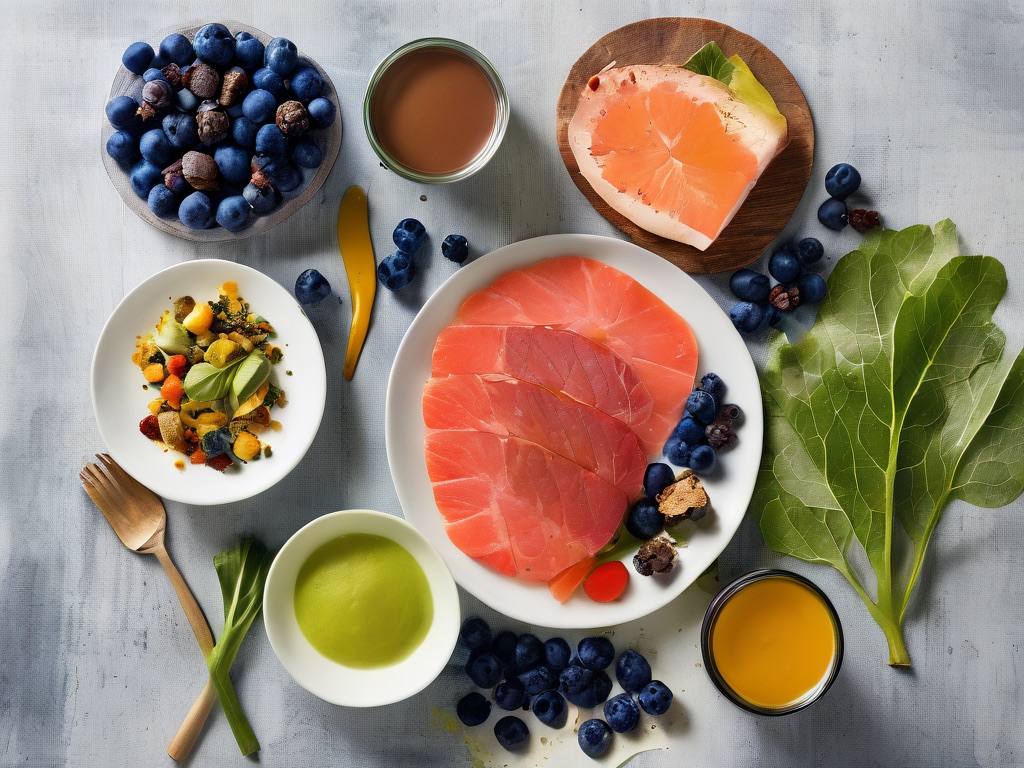
The core of the pattern is unglamorous and consistent: plants, fish, whole grains, and healthy fats, with minimal ultra-processed food. Here’s how the building blocks break down.
| Favor (anti-inflammatory) | Limit (pro-inflammatory) |
|---|---|
| Leafy greens (spinach, kale, arugula) | Refined white bread, pastries, and cereals |
| Berries and colorful fruit | Sugar-sweetened sodas and energy drinks |
| Oily fish (salmon, sardines, mackerel) | Processed and cured meats (bacon, deli meats) |
| Nuts, seeds, and olive oil | Deep-fried foods and trans fats |
| Whole grains and legumes | Packaged ultra-processed snacks |
| Herbs and spices (turmeric, ginger) | Excess red meat and high-sugar desserts |
Notice there is no exotic ingredient on the left column and nothing you have to buy from a specialty store. The pattern is defined as much by what it crowds out—ultra-processed food and added sugar—as by what it adds.
Why inflammation is linked to dementia
Chronic, low-grade inflammation is increasingly viewed as a shared mechanism across many age-related diseases, and the brain is no exception. When inflammatory signaling stays switched on for years, it appears to accelerate neuronal damage, impair the brain’s ability to clear waste proteins like amyloid and tau, and degrade the small blood vessels that keep brain tissue healthy. The GFAP marker used in this study is itself a readout of that inflammatory, glial-driven process—so it’s biologically coherent that an anti-inflammatory eating pattern would show the strongest signal there.
This isn’t a fringe idea. A 2023 analysis of more than 166,000 UK Biobank participants found that a more pro-inflammatory diet was associated with a measurably higher risk of all-cause dementia and, above a threshold, Alzheimer’s dementia specifically. A separate 2024 JAMA Network Open study of over 84,000 adults found that among people with cardiometabolic conditions like diabetes and heart disease, an anti-inflammatory diet was linked to roughly a 31% lower dementia risk, along with greater gray-matter volume and fewer white-matter lesions on brain MRI. The new 2026 study extends this line of evidence into the era of blood biomarkers—showing the association persists even in people flagged as high-risk by molecular testing.
The same inflammatory logic is why interest in anti-inflammatory foods and compounds has grown so quickly; we cover the supplement side of this question in our guide to the best anti-inflammatory supplements.
What the study can and can’t prove
This is the part that responsible reporting cannot skip. The 2026 study is observational. It tracked what people ate and what happened to them, but it did not randomly assign anyone to a diet. That design has real limits:
- Correlation isn’t causation. People who eat anti-inflammatory diets also tend to exercise more, smoke less, have higher incomes and education, and engage more socially—all of which independently protect the brain. Researchers statistically adjusted for many of these factors, but residual confounding can never be fully ruled out.
- Reverse causation is possible. Very early, undiagnosed brain changes can subtly alter appetite, motivation, and food choices years before a dementia diagnosis. Some of the association could reflect early disease shaping diet, rather than diet shaping disease.
- Diet was self-reported. Food-frequency questionnaires are useful at the population level but imprecise for any individual.
- The cohort was specific. Participants were older Swedish adults, predominantly of European ancestry. The findings may not transfer cleanly to younger, more diverse populations.
The authors themselves are explicit: the study “cannot prove that changing diet will improve prognosis or prevent dementia.” As Dr. Emer MacSweeney of Re:Cognition Health framed it, a dementia diagnosis “is not determined solely by biology”—but that is a statement about possibility, not a guarantee. What this study delivers is a strong, biologically plausible association, consistent with a decade of converging evidence. That is genuinely valuable. It is not a prescription.
Practical takeaways: how to eat this way
The encouraging news is that the dietary pattern in this research is neither extreme nor expensive. You don’t need to overhaul your kitchen overnight. The evidence rewards consistency over perfection.
- Anchor each meal in plants. Aim to fill half your plate with vegetables and fruit, prioritizing leafy greens and berries—the two food groups most consistently tied to brain benefits.
- Eat fish twice a week. Oily fish like salmon and sardines deliver omega-3 fatty acids that support both heart and brain.
- Swap refined grains for whole. Brown rice, oats, and whole-grain bread instead of their white counterparts.
- Cook with olive oil and add nuts. A handful of walnuts or almonds most days; extra-virgin olive oil as your default fat.
- Cut the ultra-processed. The single highest-leverage move is reducing sugary drinks, packaged snacks, and processed meats. Much of the “anti-inflammatory” benefit comes from removing the pro-inflammatory foods.
- Use spices generously. Turmeric and ginger add flavor and contain compounds studied for anti-inflammatory effects—though, as we explain in our deep dive on whether curcumin actually works, food-level amounts behave very differently from concentrated supplements.
The supplements angle
It’s tempting to read a study like this and reach for a pill—a curcumin capsule, a fish-oil softgel, a brain-health multivitamin. But it’s important to be clear about what the evidence does and doesn’t support. This study measured dietary patterns, not supplements. Whole foods deliver fiber, polyphenols, and nutrient combinations that isolated capsules can’t fully replicate, and the research consistently points to overall eating patterns as the active ingredient.
That said, the question of whether specific supplements can support brain aging is a legitimate one, and the answer is nuanced. The large COSMOS trials, for example, found a modest cognitive signal for a daily multivitamin in older adults—we unpack exactly what those trials found, and their caveats, in our analysis of whether a daily multivitamin can slow brain aging. The honest bottom line: supplements may play a supporting role for some people, but they are not a substitute for the dietary pattern this study actually examined.
Frequently Asked Questions
Can diet really lower dementia risk?
The evidence strongly suggests diet is associated with dementia risk, and the 2026 JAMA Network Open study found 21% to 29% lower risk linked to an anti-inflammatory diet even in people with elevated Alzheimer’s biomarkers. However, because this and most diet–dementia studies are observational, they show association rather than definitive proof that diet alone prevents dementia.
What is an anti-inflammatory diet?
It’s an overall eating pattern—not a branded program—rich in leafy greens, berries, oily fish, nuts, seeds, whole grains, legumes, and olive oil, while low in ultra-processed foods, sugary drinks, and processed meats. It closely resembles the Mediterranean and MIND diets and is measured in research using indices like the Empirical Dietary Inflammatory Index.
Does it work if you already have Alzheimer’s biomarkers?
This was the most striking part of the 2026 study. Among participants who already had elevated p-tau217, GFAP, or NfL in their blood, a more anti-inflammatory diet was still associated with 21% to 29% lower dementia risk. The biology raises risk, but the data suggest lifestyle may still influence whether and when dementia develops—though this remains an association, not a guarantee.
What foods cause inflammation in the brain?
The dietary patterns most associated with inflammation include ultra-processed foods, sugar-sweetened beverages, refined grains, processed and cured meats, deep-fried foods, and trans fats. A 2023 UK Biobank study of over 166,000 people linked a more pro-inflammatory diet to higher dementia risk.
How long before diet affects brain health?
Brain protection appears to be a long-term, cumulative effect rather than a quick fix. The 2026 study followed people for a mean of 8.4 years, and the broader evidence base measures dietary patterns sustained over years to decades. The practical implication is that consistency matters far more than short-term perfection.
Is the MIND diet the same as an anti-inflammatory diet?
They overlap heavily but aren’t identical. The MIND diet is a specific Mediterranean–DASH hybrid built for brain health, while “anti-inflammatory diet” is a broader category measured by how an eating pattern affects inflammatory markers. Both emphasize the same core foods—greens, berries, fish, nuts, whole grains—and both are linked to lower dementia risk.
Do anti-inflammatory supplements work as well as the diet?
No study has shown that supplements replicate the benefits of an anti-inflammatory dietary pattern. The 2026 research measured whole-food eating, not pills. Whole foods provide fiber and combinations of compounds that isolated supplements can’t match, so the diet itself remains the priority; supplements may play a limited supporting role for some people.
Is this study strong enough to change what I eat?
The study is observational, so it can’t prove cause and effect on its own. But it’s consistent with a large and growing body of evidence, and the dietary pattern it points to—more plants, fish, and whole grains; less ultra-processed food—is safe, affordable, and beneficial for heart and metabolic health regardless of its effect on the brain. For most people, adopting it is a low-risk, high-upside decision.
The Bottom Line
The 2026 JAMA Network Open study delivers a genuinely hopeful message grounded in real data: even among older adults whose blood already shows the molecular footprints of Alzheimer’s disease, a more anti-inflammatory diet was associated with 21% to 29% lower dementia risk. That suggests biology isn’t necessarily destiny. But the study is observational, the population was specific, and confounding can’t be excluded—so this is strong supporting evidence, not proof that diet alone prevents dementia. The reassuring part is that the recommended pattern carries essentially no downside. Eating more leafy greens, berries, fish, nuts, and whole grains while cutting ultra-processed foods is good for your heart, your metabolism, and quite possibly your brain. You don’t need certainty to justify a change that’s beneficial either way.
Sources
- Mrhar A, Carballo-Casla A, Grande G, et al. “Diet Quality and Dementia Risk in Older Adults With Alzheimer Pathology.” JAMA Network Open, 2026. https://pubmed.ncbi.nlm.nih.gov/42348207/
- Dove A, Dunk MM, Wang J, Guo J, Whitmer RA, Xu W. “Anti-Inflammatory Diet and Dementia in Older Adults With Cardiometabolic Diseases.” JAMA Network Open, 2024. https://jamanetwork.com/journals/jamanetworkopen/fullarticle/2822212
- Shi Y, Lin F, Li Y, et al. “Association of pro-inflammatory diet with increased risk of all-cause dementia and Alzheimer’s dementia: a prospective study of 166,377 UK Biobank participants.” BMC Medicine, 2023. https://pmc.ncbi.nlm.nih.gov/articles/PMC10362711/
- Morris MC, Tangney CC, Wang Y, et al. “MIND diet associated with reduced incidence of Alzheimer’s disease.” Alzheimer’s & Dementia, 2015. https://pmc.ncbi.nlm.nih.gov/articles/PMC4532650/