E. coli Outbreak Linked to GreenWise Frozen Organic Blueberries: What You Need to Know
Reviewed by the HealthyMag Editorial Team. Last updated: July 2026. This is a developing story; check CDC and FDA for the latest updates.
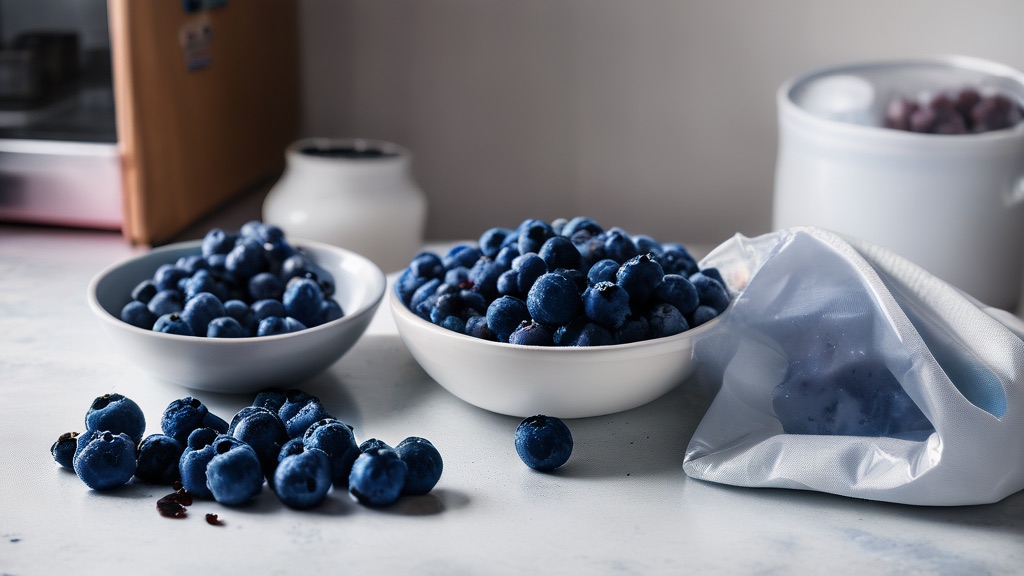
A recall of frozen organic blueberries sold at Publix is drawing national attention after federal health officials linked the product to an outbreak of E. coli infections across the Southeast. The U.S. Food and Drug Administration (FDA) and Centers for Disease Control and Prevention (CDC) are investigating illnesses tied to GreenWise brand organic blueberries, and the supplier has issued a voluntary recall. If you shop at Publix and keep frozen berries on hand, here is exactly what was recalled, why it matters, and what to do right now.
What’s happening: the outbreak at a glance
The FDA and CDC, working with state and local partners, are investigating a multistate outbreak of E. coli O145:H28 infections linked to frozen GreenWise brand organic blueberries. As of the CDC’s July 6, 2026 update, 12 people have been confirmed sick with the outbreak strain across 2 states — 11 in Florida and 1 in Georgia. Of those, 4 people have been hospitalized, and no deaths have been reported. Reported illnesses began on dates ranging from May 11, 2026, to June 5, 2026.
Health investigators caution that the true number of people affected is likely higher than the confirmed count, and the outbreak may not be limited to the two states with known illnesses. That is because many people who get sick from E. coli recover on their own without seeing a doctor and are never tested, so their cases do not show up in official tallies. This is an evolving situation, and the numbers above may change as more reports come in.
Which products are affected
The recall was initiated on July 3, 2026, by Frutas y Hortalizas del Sur S.A., of San Carlos, Chile, the supplier of the blueberries. It covers a specific lot of GreenWise brand organic frozen blueberries sold at Publix supermarkets. Only packages matching the details below are part of the recall — check your freezer carefully against the printed lot code and Best By date on the bag.
| Detail | Recalled product information |
|---|---|
| Brand | GreenWise (organic) |
| Product | Organic frozen blueberries (IQF) |
| Package size | 10 ounces |
| Lot code | 60401 |
| Best By date | February 9, 2028 |
| Sold at | Publix retail stores |
| Distributed to | Alabama, Florida, Georgia, Kentucky, North Carolina, South Carolina, Tennessee, Virginia |
| Recalling company | Frutas y Hortalizas del Sur S.A., San Carlos, Chile |
| Recall date | July 3, 2026 |
If the lot code and Best By date on your bag do not match those listed above, it is not part of this recall. When in doubt, follow the “when in doubt, throw it out” rule of food safety and contact Publix or the FDA.
What you should do right now
Take a few minutes to act on this, especially if you live in or shop in one of the eight affected states:
- Check your freezer. Look for 10-oz bags of GreenWise organic frozen blueberries with lot code 60401 and a Best By date of February 9, 2028.
- Do not eat them. Do not rinse, sort, or try to salvage part of the bag. Freezing does not kill E. coli.
- Throw them away or return them. Discard the product in a sealed bag so animals and other people can’t get to it, or return it to Publix for a full refund.
- Clean up. Wash any surfaces, containers, cutting boards, blender parts, or utensils that may have touched the berries using hot, soapy water or a dishwasher. Wash your hands afterward.
- Watch for symptoms. If you or a family member ate these blueberries recently, monitor for signs of E. coli infection and call a doctor if they appear (see below).
E. coli O145 symptoms and timeline
E. coli O145:H28 is a type of Shiga toxin-producing E. coli (STEC). These bacteria can cause illness ranging from mild to severe. Typical symptoms include:
- Severe stomach cramps
- Diarrhea, which is often bloody
- Vomiting
- A low-grade fever (usually under 101°F / 38.5°C), if any
Most people start feeling sick 3 to 4 days after swallowing the bacteria, but symptoms can begin anywhere from 1 to 10 days later. Many otherwise-healthy people recover within about a week without specific treatment. However, some infections lead to serious complications, which is why it’s important to know the warning signs.
When to seek medical care
Contact a healthcare provider right away if you or someone in your household has any of these signs after possible exposure:
- Diarrhea and a fever higher than 102°F (38.9°C)
- Bloody diarrhea
- Diarrhea lasting more than 3 days that isn’t improving
- So much vomiting that you can’t keep liquids down
- Signs of dehydration, such as very little urination, a dry mouth and throat, or feeling dizzy when standing up
Some STEC infections can progress to hemolytic uremic syndrome (HUS), a serious complication that damages the kidneys and can be life-threatening. HUS is most common in young children and older adults. Warning signs of HUS include decreased urination, extreme fatigue, and losing pink color in the cheeks and inside the lower eyelids. HUS is a medical emergency and is usually treated in a hospital. Seek care immediately if these appear.
Who is most at risk
Anyone can get sick from E. coli, but certain groups are more likely to develop severe illness or complications like HUS. Take extra caution for:
| Higher-risk group | Why extra caution is needed |
|---|---|
| Children under 5 | Highest risk of developing HUS and kidney damage |
| Adults 65 and older | Greater risk of severe illness and complications |
| Pregnant people | More vulnerable to foodborne illness and its effects |
| People with weakened immune systems | Less able to fight off infection (e.g., due to illness or medication) |
Frozen blueberries are often eaten raw — blended into smoothies, stirred into yogurt or oatmeal, or thawed onto cereal — which is one reason this recall is a particular concern. Because the berries typically aren’t cooked before eating, contamination isn’t destroyed by heat the way it might be for foods that are always cooked.
How to reduce foodborne-illness risk generally
Beyond this specific recall, a few everyday habits lower your risk of E. coli and other foodborne illnesses:
- Wash your hands with soap and water before and after handling food, and after using the bathroom.
- Keep raw meat separate from produce and ready-to-eat foods, and use separate cutting boards.
- Cook to safe temperatures — ground beef to 160°F (71°C), for example — and use a food thermometer.
- Refrigerate promptly and don’t leave perishable foods at room temperature for more than 2 hours.
- Follow recall notices and sign up for alerts so you learn quickly when a product you buy is affected.
For more health news and safety alerts, you can follow our ongoing coverage of breaking health news.
Where to get official updates
Because this is an active investigation, the safest source of current information is the government agencies leading it. The CDC’s outbreak page and the FDA’s investigation page are updated as new case counts, states, and product details are confirmed. If you believe you got sick after eating a recalled product, report it to your local health department, and consider reporting to the FDA. Links to the official pages are in the Sources section below.
Frequently Asked Questions
Which blueberries are being recalled?
The recall covers GreenWise brand organic frozen blueberries sold at Publix in 10-ounce packages with the printed lot code 60401 and a Best By date of February 9, 2028. The berries were supplied by Frutas y Hortalizas del Sur S.A. of San Carlos, Chile, and were distributed to Publix stores in Alabama, Florida, Georgia, Kentucky, North Carolina, South Carolina, Tennessee, and Virginia. Bags that don’t match that lot code and Best By date are not part of this recall.
What are the symptoms of E. coli O145?
E. coli O145 is a Shiga toxin-producing E. coli (STEC). Common symptoms are severe stomach cramps, diarrhea that is often bloody, and vomiting. Some people also have a low-grade fever. Most healthy adults recover within about a week, but a small number develop a serious kidney complication called hemolytic uremic syndrome (HUS).
How long after eating contaminated food do symptoms appear?
Symptoms of a STEC infection usually start 3 to 4 days after swallowing the bacteria, but they can begin anywhere from 1 to 10 days later. If you recently ate a recalled product, watch for symptoms during that window and contact a doctor if any warning signs appear.
What should I do if I have the recalled blueberries?
Do not eat them. Throw the product away in a sealed bag or return it to Publix for a full refund. Then wash any surfaces, utensils, containers, or blender parts that may have touched the berries with hot, soapy water or in a dishwasher, and wash your hands afterward.
Is it safe to eat cooked recalled blueberries?
The safest choice is not to eat the recalled product at all — throw it away or return it. Thorough cooking does kill E. coli, but frozen blueberries are frequently eaten raw or lightly used, and cross-contamination of kitchen surfaces is a real risk. Given the outbreak, health officials advise discarding the recalled berries rather than trying to make them safe by cooking.
When should I see a doctor?
Contact a healthcare provider if you have bloody diarrhea, a fever over 102°F (38.9°C), diarrhea lasting more than 3 days without improvement, so much vomiting that you can’t keep liquids down, or signs of dehydration such as little urination, dizziness, or a very dry mouth. Seek care urgently for signs of HUS, especially in young children and older adults.
What is HUS?
Hemolytic uremic syndrome (HUS) is a serious complication that can follow a STEC infection. It damages the kidneys and can be life-threatening. HUS is most common in children under 5 and in older adults. Warning signs include decreased urination, extreme tiredness, and loss of pink color in the cheeks and inside the lower eyelids. It is a medical emergency requiring immediate hospital care.
How many people are sick?
As of the CDC’s July 6, 2026 update, 12 people infected with the outbreak strain have been reported from 2 states (11 in Florida and 1 in Georgia), with 4 hospitalizations and no deaths. Officials expect the real number is higher because many people recover without being tested, and the count may rise as the investigation continues.
The Bottom Line
If you buy frozen blueberries at Publix, check your freezer now for GreenWise organic 10-oz bags with lot code 60401 and a Best By date of February 9, 2028. If you have them, don’t eat them — discard or return the product and clean any surfaces they touched. Most people who get E. coli recover on their own, but this strain can cause severe illness and, rarely, a dangerous kidney complication, so watch for bloody diarrhea, dehydration, and signs of HUS, and call a doctor if they appear. This is a developing story; the confirmed case numbers reflect the July 6, 2026 CDC update and may rise. For the latest, rely on the CDC and FDA pages linked below, and talk to your healthcare provider about any personal health concerns.
Sources
- Centers for Disease Control and Prevention (CDC), “E. coli Outbreak Linked to Frozen Blueberries,” 2026, https://www.cdc.gov/ecoli/outbreaks/blueberries-07-26/index.html
- Centers for Disease Control and Prevention (CDC), “Investigation Update: E. coli Outbreak, July 2026,” 2026, https://www.cdc.gov/ecoli/outbreaks/blueberries-07-26/investigation.html
- U.S. Food and Drug Administration (FDA), “Outbreak Investigation of E. coli: Frozen Blueberries (July 2026),” 2026, https://www.fda.gov/food/outbreaks-foodborne-illness/outbreak-investigation-e-coli-frozen-blueberries-july-2026
- U.S. Food and Drug Administration (FDA), “Frutas y Hortalizas del Sur S.A. Initiates Recall of Frozen GreenWise Organic IQF Blueberries Due to Potential E. coli O145 Contamination,” 2026, https://www.fda.gov/safety/recalls-market-withdrawals-safety-alerts/frutas-y-hortalizas-del-sur-sa-initiates-recall-frozen-greenwise-organic-iqf-blueberries-due