Your Takeout Has More Salt Than the Menu Says: What a 2026 Study Found
Reviewed by the HealthyMag Editorial Team. Last updated: July 2026.
Ordering a takeaway is one of life’s small pleasures, and there’s nothing wrong with an occasional restaurant meal. But if you’ve ever glanced at the salt figure on a menu or label and assumed it was accurate, a new 2026 study suggests you might want to take that number with, well, a pinch of salt. Researchers at the University of Reading measured the actual sodium content of takeaway meals bought from real outlets — and found that in nearly half of cases, the food contained more salt than the label claimed.
This isn’t a reason to panic or swear off takeout forever. It is a reason to understand how much salt is really in restaurant food, why the numbers on menus can undercount, and how a single meal can quietly deliver a whole day’s worth of sodium — especially relevant if you or someone in your household is managing blood pressure.
What the 2026 study found
The study, led by Professor Gunter Kuhnle and colleagues at the University of Reading (with a co-author from Queen’s University Belfast), was published in the peer-reviewed journal PLOS One in January 2026. The team analysed 39 different takeaway meals collected from 23 outlets across Reading, in the UK — a mix of mainstream restaurant chains and local independent takeaways, chosen to reflect the kinds of food people actually buy in a typical town.
Rather than relying on menu claims, the researchers measured the mineral content of the food directly in the lab using a precise technique called inductively coupled plasma mass spectrometry (ICP-MS), taking three samples of each item over three consecutive weeks. The headline result: 47% of the takeaway foods analysed exceeded their declared salt levels. In almost half of all the food categories tested, at least some samples contained more salt than the label or menu stated.
In plain terms: the salt figure you’re shown is often a starting point, not a ceiling. For most casual diners that discrepancy goes completely unnoticed. But for anyone counting sodium for health reasons, an undercount of even a gram or two per meal adds up fast.
The saltiest offenders: pasta, curry and pizza
Not all takeaways are created equal. The study found dramatic differences between dish types, and a few categories stood out as consistently high in salt.
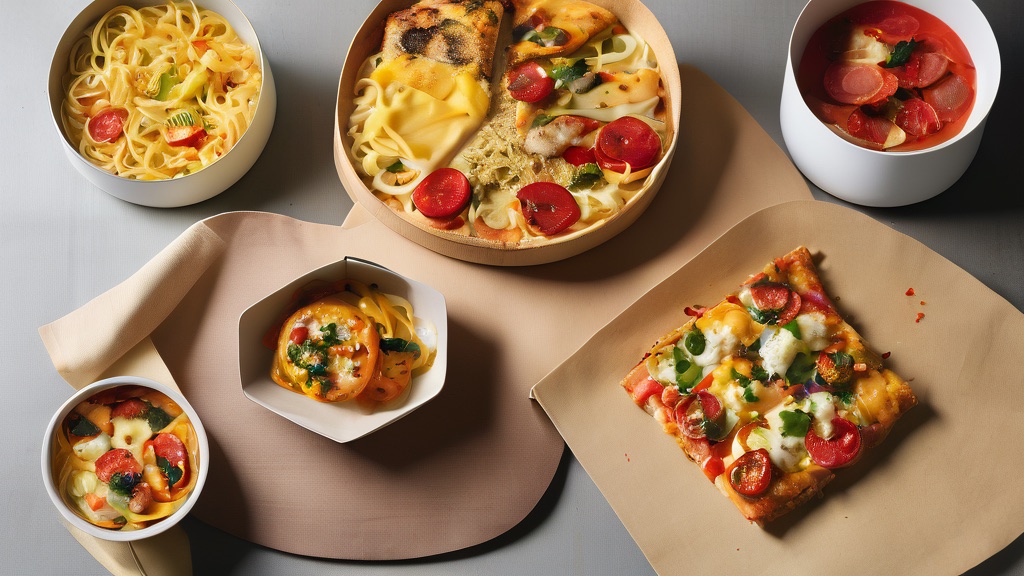
Pasta dishes were among the worst. On average, a takeaway pasta serving contained around 7.2 g of salt — that alone is more than a full day’s recommended intake in a single meal. And the worst offender in the sample reached a startling 11.2 g of salt in one dish, close to two days’ worth in a single sitting.
Curries showed the greatest variability of any category, ranging from about 2.3 g to 9.4 g of salt per dish. That’s a huge spread — meaning your curry could be relatively moderate or nearly a day-and-a-half of salt depending entirely on where you bought it and how it was prepared. This variability is part of why labels struggle to keep up.
Meat pizzas had the highest salt concentration of the pizzas tested, at roughly 1.6 g of salt per 100 g. Because a whole pizza weighs several hundred grams, that concentration adds up quickly once you finish the box.
Here’s how those figures compare to a full day’s recommended limit:
| Takeaway dish | Salt content (study) | Share of a 6 g daily limit (UK) |
|---|---|---|
| Pasta (average serving) | ~7.2 g per serving | ~120% (a full day, exceeded) |
| Pasta (highest measured) | ~11.2 g per serving | ~187% (nearly two days) |
| Curry (higher end) | up to ~9.4 g per dish | ~157% |
| Curry (lower end) | ~2.3 g per dish | ~38% |
| Meat pizza | ~1.6 g per 100 g | ~27% per 100 g (adds up fast) |
The point isn’t that these foods are “bad” — it’s that a single takeaway can easily deliver an entire day’s salt (or more) before you’ve eaten anything else, and the menu often won’t warn you.
How much salt is too much?
To make sense of those numbers, you need a benchmark. Guidance differs slightly by country, but it lands in a similar place.
In the UK, the National Health Service and government advice is that adults should eat no more than 6 g of salt per day — roughly one level teaspoon.
In the United States, guidance is usually expressed as sodium rather than salt. The American Heart Association recommends no more than 2,300 mg of sodium per day (about a teaspoon of salt, or roughly 5.75 g), moving toward an ideal limit of 1,500 mg per day for most adults. The AHA notes that the average American already consumes well over 3,100 mg of sodium daily, and that more than 70% of that comes from packaged, prepared and restaurant food — not the salt shaker at the table.
The World Health Organization goes a little lower, recommending less than 2,000 mg of sodium (under 5 g of salt) per day for adults. However you slice it, the study’s saltiest dishes — a 7.2 g pasta or a 9.4 g curry — clear a full day’s allowance in one order. (Note that this study was conducted in the UK; US readers should map the dish figures onto the ~2,300 mg / ~5.75 g sodium benchmark, which is broadly comparable.)
One quick conversion to keep handy: salt (g) × 400 ≈ sodium (mg), or sodium × 2.5 ≈ salt. So a 6 g salt limit is about 2,400 mg of sodium.
Why excess sodium matters
Salt itself isn’t a villain — your body needs some sodium to function. The concern is consistently getting far more than you need, day after day.
The World Health Organization describes high sodium intake as “a well-established cause of raised blood pressure and increased risk of cardiovascular disease.” Raised blood pressure is the main mechanism: eating a lot of salt causes your body to hold onto extra water to dilute it, which increases the volume of blood your heart has to move and the pressure on your artery walls. Over years, sustained high blood pressure raises the risk of heart attack, stroke and kidney damage. WHO estimates that excess sodium was linked to roughly 1.7 million deaths annually as of recent figures.
The encouraging flip side: the effect works in reverse too. The American Heart Association notes that for most people, cutting back by about 1,000 mg of sodium a day can measurably improve blood pressure. You don’t have to be perfect — meaningful reductions come from small, sustainable changes.
If you’re tracking your broader heart-disease risk, blood pressure is only one piece of the picture. Cholesterol markers matter too, and if you want to understand the difference between the standard test and a more predictive one, our explainer on ApoB versus LDL cholesterol testing is a useful companion read.
Why menu labels undercount
If a restaurant publishes a salt figure, why is it wrong nearly half the time? The Reading study points to a simple, human answer: variability.
A packaged supermarket food is made to a fixed recipe on a controlled production line, so its label tends to be accurate. A takeaway is cooked fresh, often by hand, by different staff on different days. The amount of salt, soy sauce, stock, cheese or cured meat that lands in your dish can swing meaningfully from one order to the next. The curries in the study — ranging from 2.3 g to 9.4 g — are a perfect illustration of how much a single “menu item” can vary in practice.
On top of that, published nutrition figures for prepared meals are often based on a standard recipe or a one-off analysis, not on continuous testing of what’s actually served. Portion sizes drift, ingredients get swapped, and a generous hand with the seasoning goes unrecorded. None of this necessarily implies bad intent — it’s the nature of fresh, made-to-order cooking. But it does mean the number on the menu is best treated as a rough guide rather than a precise measurement.
This pattern — real-world food being less predictable than its label suggests — echoes what researchers keep finding across processed and prepared foods. If that broader theme interests you, see our coverage of what the latest research says about ultra-processed foods.
How to cut back without giving up takeout
You don’t need to abandon takeaway to keep your sodium in check. A few practical habits make a real difference:
- Watch frequency, not just individual meals. An occasional salty takeaway is fine within an otherwise balanced diet. The problem is when high-salt restaurant food becomes a several-times-a-week default.
- Know which categories tend to be saltiest. Based on this and similar research, pasta, some curries, pizza, and cured-meat toppings tend to run high. Grilled or plainer dishes with sauces on the side are often lower.
- Ask for sauces and dressings on the side. Soy sauce, gravies, and dressings are major hidden salt sources. Adding your own lets you use far less.
- Balance the rest of your day. If dinner is a takeaway, keep breakfast and lunch lower in salt — think fresh fruit, plain yoghurt, unsalted nuts, home-cooked grains and vegetables.
- Share or halve large portions. Since concentration matters (that 1.6 g-per-100 g pizza), simply eating a smaller portion cuts the salt proportionally.
- Add potassium-rich foods. Vegetables, fruit and legumes provide potassium, which helps counterbalance sodium’s effect on blood pressure. Bulk out a takeaway with a side salad.
- Drink water and go easy on ultra-salty extras. Skip or split the salted fries, pickles and extra cheese if the main dish is already salt-heavy.
- Retrain your palate gradually. Taste for salt adapts over a few weeks. Cooking more meals at home with herbs, spices, citrus and garlic makes heavily salted takeaways taste noticeably saltier — a helpful built-in check.
Who should be most careful
Salt needs vary from person to person, and some people are considerably more sensitive to sodium than others. You should be especially mindful of takeaway salt if you:
- Have high blood pressure (hypertension) or are working to prevent it — sodium reduction is one of the most consistently recommended dietary steps.
- Have kidney disease — impaired kidneys can’t clear excess sodium as efficiently, and salt intake is often actively managed as part of treatment.
- Are “salt-sensitive” — a subset of people whose blood pressure rises more sharply with salt. This is more common with age and in some ethnic groups.
- Have heart failure or a history of stroke — fluid balance and blood pressure control are especially important.
- Are older adults — blood pressure sensitivity to salt tends to increase with age.
If any of these apply to you, this isn’t a call to be anxious about every meal — it’s a reason to know your numbers, favour lower-salt options more often, and talk to your doctor or a dietitian about a target that fits your situation. This article is general information, not medical advice, and it can’t replace guidance tailored to you.
Frequently Asked Questions
How much salt is in takeaway food?
It varies enormously by dish, but it’s often more than you’d expect — and more than the label says. In the 2026 University of Reading study, takeaway pasta averaged about 7.2 g of salt per serving and some curries reached 9.4 g, each exceeding a full day’s recommended intake in a single meal. Crucially, 47% of the foods tested contained more salt than their declared values.
What is the saltiest takeaway food?
In this study, pasta dishes were the standout, averaging around 7.2 g of salt per serving with one dish reaching 11.2 g. Curries also ran high at the top of their range (up to 9.4 g), and meat pizza had the highest salt concentration at about 1.6 g per 100 g. In general, pasta, some curries, pizza and cured-meat-heavy dishes tend to be among the saltiest.
How much salt should you eat per day?
UK guidance is no more than 6 g of salt per day (about one teaspoon). In the US, the American Heart Association recommends no more than 2,300 mg of sodium per day, ideally moving toward 1,500 mg. The World Health Organization advises under 2,000 mg of sodium (under 5 g of salt) daily. As a rough conversion, salt in grams multiplied by 400 gives sodium in milligrams.
Does salt raise blood pressure?
For most people, consistently high salt intake raises blood pressure, and the World Health Organization calls high sodium “a well-established cause of raised blood pressure and increased risk of cardiovascular disease.” The good news is the effect is partly reversible — the American Heart Association notes that cutting about 1,000 mg of sodium a day can improve blood pressure for many people. Sensitivity varies from person to person.
Why does restaurant food have so much salt?
Salt is cheap, enhances flavour, and is used generously in sauces, stocks, cured meats, cheeses and seasonings. Because takeaways are cooked fresh by hand rather than to a fixed factory recipe, the amount added also varies from order to order — which is a big reason menu labels can undercount the real salt content.
How can I reduce salt when eating takeout?
Order sauces and dressings on the side, choose plainer grilled dishes over heavily sauced ones, share or halve large portions, and balance a takeaway dinner with lower-salt meals earlier in the day. Adding potassium-rich vegetables and fruit, drinking water, and going easy on salty extras like fries and pickles all help. Most of all, watch how often you order salt-heavy food rather than obsessing over a single meal.
What are the signs of too much salt?
Short-term, a very salty meal can leave you feeling thirsty, bloated or puffy (water retention), and may temporarily nudge blood pressure up. The bigger concern is long-term: sustained high intake contributes to persistently raised blood pressure, which often has no obvious symptoms — which is exactly why it’s worth monitoring. If you have concerns about your blood pressure or fluid balance, check with a healthcare professional.
Is the salt on a menu or label accurate?
Not always. The 2026 study found that 47% of takeaway foods contained more salt than their declared values, largely because fresh, made-to-order cooking varies from batch to batch. Treat menu salt figures as a rough guide rather than a precise measurement, especially for dishes like curries where the study found a wide range.
The Bottom Line
The 2026 University of Reading study delivers a simple, useful message: the salt figure on a takeaway menu can undercount what’s actually on your plate, and a single order — a 7.2 g pasta, a 9.4 g curry — can exceed a whole day’s recommended salt in one sitting. Nearly half the meals tested had more salt than their labels claimed.
This isn’t cause for alarm or guilt. Occasional takeaway is a normal, enjoyable part of life, and salt needs genuinely vary between people. The takeaway here is awareness: know which dishes tend to be saltiest, pay more attention to how often you order them than to any single meal, and lean on simple habits — sauces on the side, smaller portions, more vegetables — to keep your sodium in a sensible range. If you’re managing blood pressure, kidney health, or salt sensitivity, that awareness is worth a little extra care, and a conversation with your doctor is the right next step.
Sources
- Mavrochefalos AI, Dodson A, Kuhnle GGC. Sodium and mineral content of takeaway foods. PLOS One, January 2026. https://journals.plos.org/plosone/article?id=10.1371/journal.pone.0339339
- University of Reading. “Takeaways have more salt than labels claim.” Research News, 2026. https://www.reading.ac.uk/news/2026/Research-News/Takeaways-have-more-salt-than-labels-claim
- American Heart Association. “How much sodium should I eat per day?” https://www.heart.org/en/healthy-living/healthy-eating/eat-smart/sodium/how-much-sodium-should-i-eat-per-day
- World Health Organization. “Salt reduction” fact sheet. https://www.who.int/news-room/fact-sheets/detail/salt-reduction