Omega-3 for Dry Eye: Both Groups Improved 13 Points, One Was Olive Oil
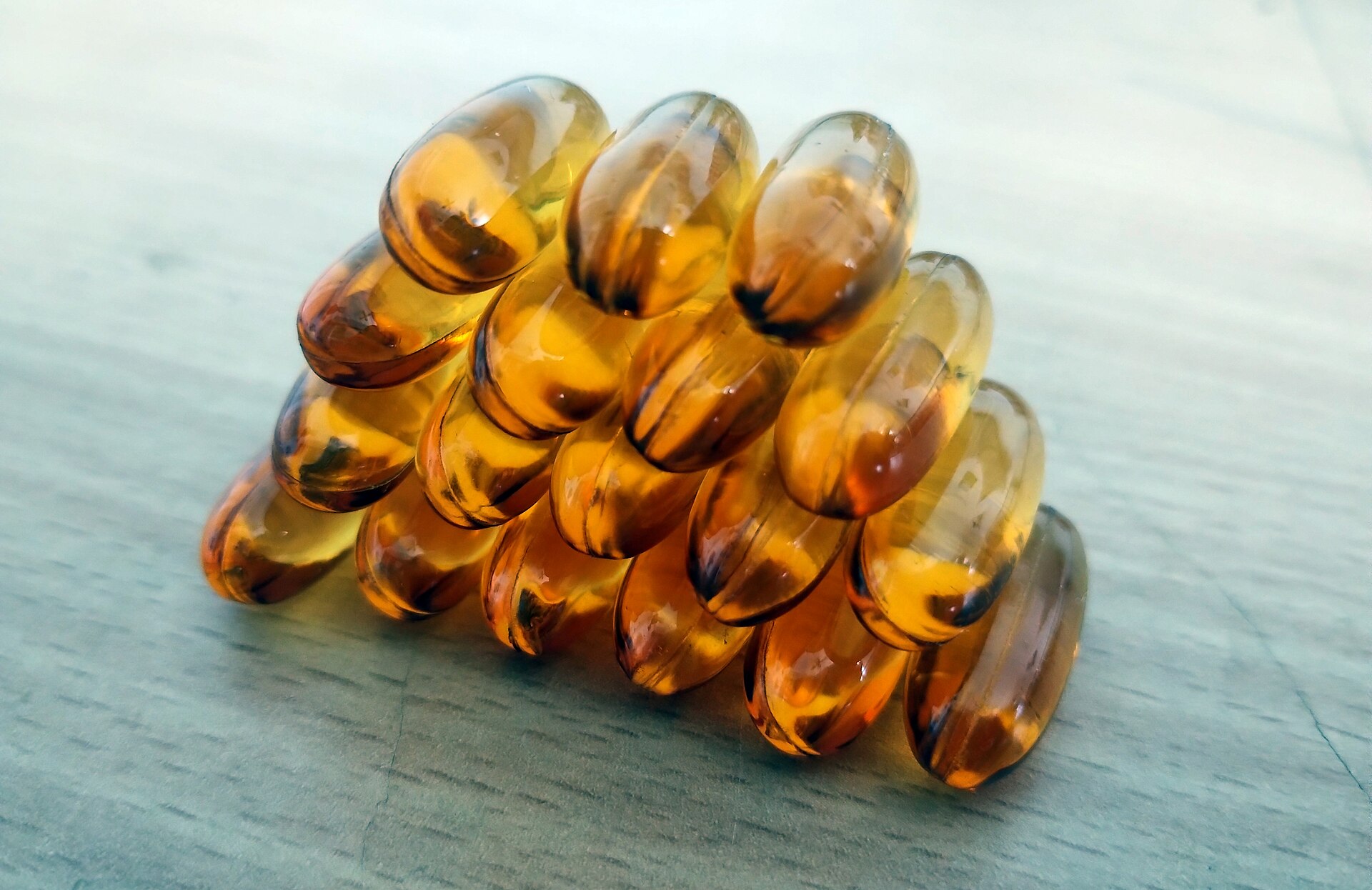
olive oil. In the DREAM trial, published in the New England Journal of Medicine, 535
patients with moderate-to-severe dry eye (349 assigned to the supplement, 186 to placebo) took either 3000 mg a day of EPA and DHA or an
olive oil placebo for a year. Symptom scores improved in both groups:
−13.9 points on the Ocular Surface Disease Index for fish oil,
−12.5 for placebo. The difference between them was 1.9 points
(95% CI −5.0 to 1.1, P=0.21), and the trial states the result was
consistent across prespecified subgroups. None of the objective signs moved either: conjunctival
staining 0.0, corneal staining 0.1, tear break-up time 0.2 seconds, Schirmer’s test 0.0 mm. And nobody can
claim the participants failed to take it, because adherence was verified biochemically at
85.2% from n-3 levels in red blood cells. A 2026 meta-analysis of 27 randomised
trials then adds the part that actually helps you decide: the answer depends on why your
eyes are dry.
People taking fish oil for dry eye do get better. That is not in dispute and it is the reason the
supplement has the reputation it has. The question this trial answers is whether the fish oil is what did
it.
The trial
DREAM: multicentre, double-blind, randomised. 349 patients assigned to the active
supplement and 186 to placebo, with 329 and 170 in the primary analysis.
- Active: 3000 mg daily of fish-derived eicosapentaenoic and docosahexaenoic acid
- Placebo: olive oil
- Duration: 12 months
- Primary outcome: change in Ocular Surface Disease Index, averaged over months 6 and
12
| Outcome | Fish oil | Olive oil | Difference |
|---|---|---|---|
| OSDI symptom score | −13.9 | −12.5 | −1.9 (CI −5.0 to 1.1), P=0.21 |
| Conjunctival staining | no difference | 0.0 (CI −0.2 to 0.1) | |
| Corneal staining | no difference | 0.1 (CI −0.2 to 0.4) | |
| Tear break-up time | no difference | 0.2 s (CI −0.1 to 0.5) | |
| Schirmer’s test | no difference | 0.0 mm (CI −0.8 to 0.9) | |
Read the first row again
Both groups improved by roughly 13 points. On a 0 to 100 scale where higher means worse
symptoms, that is a substantial, noticeable improvement. People in this trial genuinely felt better.
The olive oil group improved 12.5 points.
So if you take fish oil for dry eye and your eyes feel better after a few months, that experience is real
and this trial predicts it. What it also predicts is that you would have had almost exactly the same
experience taking olive oil, or nothing that acted on the eye at all.
That gap is the whole subject. Improvement is not the same as effect, and a personal before-and-after
cannot tell the two apart. Only a placebo group can, which is what this one was for.
The objection that does not work
The standard defence when a supplement trial comes back null is that the participants did not take it, or
did not take enough.
DREAM closed that off. Adherence at 12 months was 85.2%, and it was not
self-reported — it was measured from the level of n-3 fatty acids in red blood cells. The
fish oil got into the participants. It just did not get into the outcome.
The dose was also not shy. 3000 mg a day of combined EPA and DHA is substantially more than most
over-the-counter fish oil regimens.
And when they took it away
An extension study followed a subset of the DREAM participants for a second year. Everyone in it had
already been taking omega-3 for 12 months. They were then re-randomised either to keep taking it or to
switch to the olive oil placebo.
Between month 12 and month 24 the mean change in symptom score differed by
−0.6 points (95% CI −10.7 to 9.5, P=0.91). Conjunctival
staining, corneal staining, tear break-up time and Schirmer’s test again showed no significant differences.
The authors’ conclusion is that those discontinuing omega-3 for a further 12 months
did not have significantly worse outcomes compared to those who continued use.
The honest caveat: this extension was small — 22 patients continued and
21 switched. With 43 people the confidence interval runs from −10.7 to 9.5, which is
wide enough to contain a real effect in either direction. Treat it as consistent with the main trial rather
than as independent proof. It is reported here because the withdrawal question is the one readers ask next,
and because a study this small deserves to be labelled as such rather than quoted as though it settled
anything.
What a 2026 meta-analysis adds, and this is the useful part
A systematic review and meta-analysis of 27 randomised controlled trials, published in
2026, looked at omega-3 across different formulations and different causes of dry eye. Its headline pooled
result is the opposite of DREAM’s: systemic omega-3 supplementation appeared to improve all assessed
outcomes.
Then it broke that down, and the breakdown is where the answer lives:
| Cause of the dry eye | Did omega-3 help? |
|---|---|
| Meibomian gland dysfunction | No significant benefit |
| Unspecified cause | No significant benefit |
| Screen-related (video display terminal) | Significant improvement |
| Contact lens-associated | Significant improvement |
| Rosacea-associated, Sjögren’s | Beneficial, but synthesised qualitatively on limited evidence |
| After LASIK | No clinically meaningful improvement |
Two more findings from the same review. Short-chain omega-3, and combinations of
long- and short-chain, did not reach statistical significance. And topical omega-3 drops failed to
show significant benefit compared with artificial tears.
The authors’ own conclusion:
Omega-3 supplements in different forms fail to demonstrate consistent effectiveness for DED
of various etiological origins.
The mechanism you have probably read about
The usual explanation for why omega-3 should work is that it improves the oil film produced by the
meibomian glands along the lash line, so tears evaporate more slowly. It is a clean, plausible mechanism and
it is repeated widely.
Look at where it sits in the evidence above. Meibomian gland dysfunction is the one subgroup the
27-trial meta-analysis singled out as showing no significant benefit, alongside dry eye of
unspecified cause. The mechanism that is offered as the reason to take it is the mechanism the trials failed
to confirm.
That is not unusual and it is worth understanding rather than dismissing. A plausible mechanism is a
reason to run the trial. It is not a substitute for the result of the trial. Here the trials were run, at a
high dose, for a year, against an active placebo, and in the population where the mechanism should have
applied most directly they did not separate.
Why the two results are not actually in conflict
DREAM enrolled patients with moderate-to-severe dry eye, which is dominated by
meibomian gland dysfunction and by cases where no single cause is identified. Those are precisely the two
subgroups where the 27-trial meta-analysis also found no significant benefit.
So the picture is consistent: for the commonest presentations, omega-3 has been tested at high dose over
a year against an active-looking placebo and did not separate. For narrower, more mechanical situations —
screen use, contact lenses — there is a signal.
This is why “does fish oil help dry eye” is the wrong question. The answerable question is
why are your eyes dry.
What the evidence points at instead
Notice which comparator kept winning. Topical omega-3 could not beat artificial tears,
which means artificial tears were the thing to beat.
For meibomian gland dysfunction specifically — the group where supplements did least — the interventions
that address the mechanism are physical rather than nutritional: warmth and lid hygiene to keep the oil
glands along the lash line flowing, because the problem is a blocked oil layer rather than a missing
nutrient.
What kept beating the supplement
Topical omega-3 failed to beat artificial tears in the pooled
analysis, so that is the comparator worth owning. Preservative-free is the version to look for if you use
drops more than a few times a day, because the preservative in multi-use bottles is itself an irritant at
high frequency. And for the meibomian gland pattern — the subgroup where supplements did nothing — a
warm compress is aimed at the actual mechanism.
REFRESH TEARS PF Preservative-Free Artificial Tears Lubricant Eye Drops, 0.33… (Amazon)
MyHalos Heated Eye Mask, Warm Compress for Dry Eyes, Blepharitis & MGD (Amazon)
As an Amazon Associate we earn from qualifying
purchases. There is no fish oil in this box, because the trial above could not separate 3000 mg of it from
olive oil.
If you still want to try omega-3
It is a low-risk supplement and DREAM found rates of adverse events similar in both groups, so trying it
is defensible. Two conditions make the trial meaningful rather than decorative:
- Know which subgroup you are in. If your dry eye is screen-related or contact
lens-associated, the meta-analysis found a signal. If it is meibomian gland dysfunction, it did not. - Judge it against a real comparator. Both DREAM groups improved by about 13 points. If
you improve after starting, that alone tells you nothing, because the olive oil group did too.
Frequently Asked Questions
Does fish oil help dry eye?
In the largest trial, no better than olive oil. DREAM randomised 535 patients with moderate-to-severe dry
eye to 3000 mg daily of EPA and DHA or an olive oil placebo for a year. Symptom scores fell by 13.9 points
with fish oil and 12.5 with placebo, a difference of 1.9 points (95% CI −5.0 to 1.1, P=0.21), described
as consistent across prespecified subgroups. No objective sign differed either: conjunctival staining 0.0,
corneal staining 0.1, tear break-up time 0.2 seconds, Schirmer’s test 0.0 mm.
But my eyes felt better on fish oil. Was that imaginary?
No, and this is the most important thing on the page. The fish oil group improved by 13.9 points, which is
a real and noticeable change. So did the olive oil group, by 12.5. Both groups genuinely got better over the
year. What the trial shows is that the improvement was not attributable to the fish oil, which a personal
before-and-after cannot detect. That is the entire purpose of having a placebo group.
Maybe the participants did not take the capsules?
They did, and it was measured rather than asked. At 12 months adherence in the active group was 85.2%,
determined from the level of n-3 fatty acids in red blood cells. The dose was also generous at 3000 mg a day
of combined EPA and DHA, more than most retail regimens. The supplement reached the bloodstream; it did not
reach the outcome.
What happens if I stop taking omega-3 for dry eye?
In the DREAM extension study, nothing measurable. Patients who had taken omega-3 for 12 months were
re-randomised to continue or switch to olive oil for a second year. The difference in symptom score change
between month 12 and 24 was −0.6 points (95% CI −10.7 to 9.5, P=0.91), with no significant
difference in conjunctival staining, corneal staining, tear break-up time or Schirmer’s test. The caveat
matters though: only 43 patients were in that extension, 22 continuing and 21 switching, so the confidence
interval is wide.
Does it depend on why my eyes are dry?
Yes, and this is where a 2026 meta-analysis of 27 randomised trials is more useful than any single answer.
It found no significant benefit in meibomian gland dysfunction or in cases of unspecified cause, but
significant improvement in screen-related and contact lens-associated dry eye, and no clinically meaningful
improvement after LASIK. Its overall conclusion is that omega-3 supplements in different forms fail to
demonstrate consistent effectiveness across different causes.
What about omega-3 eye drops rather than capsules?
The same meta-analysis reports that topical omega-3 delivery failed to demonstrate significant benefit
compared with artificial tears. That is worth reading carefully: the comparison was not against nothing, it
was against ordinary artificial tears, and the omega-3 drops did not beat them. It also found that
short-chain omega-3 and combinations of long- and short-chain forms did not reach statistical
significance.
Why do the two studies seem to disagree?
They largely do not. DREAM enrolled moderate-to-severe dry eye, which is dominated by meibomian gland
dysfunction and unspecified causes, and those are exactly the two subgroups in which the 27-trial
meta-analysis also found no significant benefit. The meta-analysis’s positive pooled headline comes from
including narrower populations such as screen-related and contact lens-related dry eye. Same evidence,
different mix of patients.
So what should I actually do?
Work out the cause before buying a supplement for it, because the cause determines whether any of this
applies to you. If the pattern is meibomian gland dysfunction, the interventions aimed at the mechanism are
lid warmth and hygiene rather than a capsule. Artificial tears were the comparator that topical omega-3 could
not beat, which makes them the sensible default. And persistent dry eye is worth an optometrist or
ophthalmologist appointment, partly because the diagnosis is what makes the rest of this page usable.
Is omega-3 harmful?
Nothing in DREAM suggests so. Rates of adverse events were similar in the active supplement and placebo
groups over 12 months at 3000 mg daily. This is a page about a supplement that appears not to work for a
specific condition, not about one that causes harm. The cost of taking it for dry eye is mostly the money and
the delay in addressing the actual cause.
Sources
- Dry Eye Assessment and Management (DREAM) Study Research Group; Asbell PA, Maguire MG, Pistilli M, Ying
GS, Szczotka-Flynn LB, Hardten DR, Lin MC, Shtein RM. n-3 Fatty Acid Supplementation for the Treatment of Dry
Eye Disease. N Engl J Med. 2018;378(18):1681-1690. PMID 29652551. Multicentre, double-blind trial; patients
with moderate-to-severe dry eye disease randomly assigned to a daily oral dose of 3000 mg of fish-derived n-3
eicosapentaenoic and docosahexaenoic acids or an olive oil placebo; 349 assigned to active supplement and 186
to placebo, with 329 and 170 in the primary analysis. The mean change in OSDI score was not significantly
different between groups (−13.9 and −12.5 points respectively; mean difference after imputation
−1.9 points, 95% CI −5.0 to 1.1, P=0.21), and this result was consistent across prespecified
subgroups. No significant differences in conjunctival staining (0.0, 95% CI −0.2 to 0.1), corneal
staining (0.1, 95% CI −0.2 to 0.4), tear break-up time (0.2 seconds, 95% CI −0.1 to 0.5) or
Schirmer’s test (0.0 mm, 95% CI −0.8 to 0.9). At 12 months adherence in the active group was 85.2%
according to the level of n-3 fatty acids in red cells. Rates of adverse events were similar in the two
groups. Checked August 2026 —
PubMed 29652551 - Hussain M, Shtein RM, Pistilli M, Maguire MG, Oydanich M, Asbell PA. The Dry Eye Assessment and Management
(DREAM) extension study — A randomized clinical trial of withdrawal of supplementation with omega-3
fatty acid in patients with dry eye disease. Ocul Surf. 2020;18(1):47-55. PMID 31425752. Among 22 patients
assigned to ω3 and 21 to placebo supplements, the mean change in OSDI score between month 12 and 24 was
similar between treatment groups (mean difference in change −0.6 points, 95% CI −10.7 to 9.5,
p=0.91). No significant differences between groups in mean change in conjunctival staining (−0.5
points, 95% CI −1.2 to 0.3), corneal staining (−0.3 points, 95% CI −1.2 to 0.3), tear
break-up time (−0.8 s, 95% CI −2.6 to 0.9) or Schirmer test (0.6 mm, 95% CI −2.0 to 3.2).
Rates of adverse events were similar in both groups. Conclusion: among patients who received ω3
supplements for 12 months in the primary trial, those discontinuing use for an additional 12 months did not
have significantly worse outcomes compared to those who continued use. Note the sample size: 43 patients in
total, which is why this is reported here as consistent with the main trial rather than as independent
evidence. Checked August 2026 —
PubMed 31425752 - Chen G, Yan X, Yang S, Li X. The effects of different forms of omega-3 polyunsaturated fatty acids on dry
eye disease resulting from various etiologies: a meta-analysis and systematic review. BMC Ophthalmol.
2026;26(1):441. PMID 42304315. Twenty-seven randomised controlled trials included. Systemic omega-3
supplementation appeared to improve all assessed outcomes in the overall pooled analysis; however subgroup
analyses revealed formulation- and etiology-dependent effects. Among systemic long-chain omega-3
formulations, no significant benefits were observed in meibomian gland dysfunction-associated dry eye or in
cases of unspecified etiology, whereas significant improvements were found in video display terminal-related
and contact lens-associated dry eye. Beneficial effects were synthesised qualitatively for rosacea-associated
and Sjögren’s syndrome-related dry eye on limited evidence, whereas no clinically meaningful improvement was
observed in LASIK-induced dry eye. Neither systemic short-chain fatty acids nor the combination of long- and
short-chain omega-3 achieved statistical significance, and topical omega-3 delivery failed to demonstrate
significant benefits compared with artificial tears. Authors’ conclusion: omega-3 supplements in different
forms fail to demonstrate consistent effectiveness for DED of various etiological origins. Checked August
2026 —
PubMed 42304315
All figures on this page are quoted from the two named studies and
were checked against them in August 2026. Where the trial and the meta-analysis appear to disagree, both are
reported and the reason for the difference is given rather than one being chosen. This page summarises
published research, cannot examine your eyes, and is not a diagnosis.