Selenium Supplements: More Diabetes, and No Cancer Prevention in 35,533 Men
story is confusing. Two randomised trials tested it at 200 micrograms a day, the standard
supplement dose. The first followed 1,202 people for an average of 7.7 years and found
type 2 diabetes in 58 selenium recipients against 39 on placebo — 12.6 cases per
1,000 person-years versus 8.4, a hazard ratio of 1.55 (95% CI 1.03 to 2.33). Its authors
concluded that selenium supplementation does not seem to prevent type 2 diabetes, and it may increase
risk for the disease. The second trial, SELECT, randomised 35,533 men to test whether
selenium prevents prostate cancer. It did not: 575 cases in the selenium group against 529 on placebo,
hazard ratio 1.09, not significant. The vitamin E arm of the same trial went further in the
wrong direction, with 620 cases, hazard ratio 1.17, P=0.008, and the authors concluded that
vitamin E significantly increased the risk of prostate cancer among healthy men. The detail that
makes this usable rather than just alarming: in the diabetes trial the risk was concentrated in the people
who already had the most selenium at baseline — hazard ratio 2.70 (95% CI
1.30 to 5.61) in the highest tertile. This is a nutrient where your starting level decides whether
more is medicine or a problem.
Nobody disputes that selenium is essential. It is a component of enzymes you cannot function without, and
genuine deficiency causes genuine disease.
The question this page answers is different and much narrower: what happened when researchers gave 200
micrograms a day to people who were not deficient, in order to prevent something.
Trial one: the diabetes signal
The Nutritional Prevention of Cancer trial ran in low-selenium areas of the eastern United States. The
diabetes analysis covered 1,202 people who did not have type 2 diabetes at baseline,
randomised to 200 micrograms a day of selenium or placebo, and followed for an average of
7.7 years.
| Outcome | Selenium | Placebo |
|---|---|---|
| New type 2 diabetes cases | 58 | 39 |
| Incidence per 1,000 person-years | 12.6 | 8.4 |
| Hazard ratio | 1.55 (95% CI 1.03 to 2.33) | |
The authors’ own conclusion, in their words:
Selenium supplementation does not seem to prevent type 2 diabetes, and it may increase risk
for the disease.
The number that turns this into advice
A single hazard ratio tells you a group did worse. It does not tell you who.
This trial answered that too. It split participants by their baseline plasma selenium
and found an exposure-response gradient across the tertiles. In the highest tertile —
the people who already had the most selenium in their blood before taking anything — the hazard ratio
for developing type 2 diabetes was 2.70 (95% CI 1.30 to 5.61).
That is the whole lesson of this page in one figure. The harm signal was not spread evenly across
everyone who swallowed a capsule. It was concentrated in the people who needed it least.
Which is also the group most likely to be taking it, because supplementing is correlated with health
interest rather than with deficiency.
Trial two: the cancer prevention that did not happen
SELECT was built to settle the cancer question at scale. 35,533 men randomised across
427 sites in the United States, Canada and Puerto Rico, with 34,887 in the primary analysis, split four
ways: selenium alone, vitamin E alone, both, or neither.
- Selenium: 200 micrograms a day from L-selenomethionine
- Vitamin E: 400 IU a day of all rac-α-tocopheryl acetate
- Planned follow-up: minimum 7 years, maximum 12
| Group | Prostate cancers | Hazard ratio (99% CI) |
|---|---|---|
| Placebo | 529 | reference |
| Selenium | 575 | 1.09 (0.93–1.27), P=0.18 |
| Vitamin E | 620 | 1.17 (1.004–1.36), P=0.008 |
| Both together | 555 | 1.05 (0.89–1.22), P=0.46 |
Selenium did not prevent prostate cancer. The point estimate leaned slightly the wrong way and did not
reach significance, which is a fair description of a null result rather than a scare.
Vitamin E is the one that crossed the line. The authors’ conclusion:
Dietary supplementation with vitamin E significantly increased the risk of prostate cancer
among healthy men.
In absolute terms, per 1,000 person-years compared with placebo, the increase was 1.6
for vitamin E, 0.8 for selenium and 0.4 for the combination. Small numbers
per person, across a very large number of people, in a trial that was supposed to demonstrate the
opposite.
Why two antioxidants failing together is not a coincidence
Both trials were built on the same reasoning: oxidative damage contributes to cancer, these compounds
reduce oxidative damage, therefore they should reduce cancer.
The reasoning is clean and the trials were well run. The results still went the other way, and the
diabetes gradient hints at why: for a nutrient with a job to do, having enough is the goal, and
more than enough is a different state, not a better version of the same one.
That is unremarkable for something like iron, where nobody is confused about overload. It is oddly
controversial for the ones marketed as antioxidants.
What this does not say
- It does not say selenium is dangerous in food. These were 200 microgram daily
supplements over years, not dietary intake. - It does not say deficiency does not matter. Real deficiency is a real condition, and
correcting it is a different intervention from topping up someone who is already replete. - It does not say the diabetes finding is settled. The trial’s own limitations section
notes that diabetes was a secondary outcome, that diagnoses were self-reported though validated in most
participants, and that the sample was mostly older and white.
That third bullet is why the honest verdict is “this is a reason to check before supplementing” rather
than “selenium causes diabetes.”
The measurement, not the capsule
The strongest finding on this page is that risk tracked baseline
level, with a hazard ratio of 2.70 in the highest tertile. That makes this one of the few
supplement questions where a number, not a guess, decides the answer. A selenium blood test
tells you which tertile you are in before you decide anything.
One caveat on how to get that number: a serum or plasma selenium level is a laboratory test your clinician orders, not something sold as a home finger-prick kit. We looked, and the consumer “selenium test kits” on sale are not selenium tests at all. Ask for it by name at the appointment where you discuss whether to supplement.
As an Amazon Associate we earn from qualifying
purchases. We are pointing at a test rather than a supplement because both trials on this page measured a
level, and the harm signal was concentrated in people whose level was already high.
Frequently Asked Questions
Does selenium prevent cancer?
Not in the trial built to find out. SELECT randomised 35,533 men, with 34,887 in the primary analysis, to
200 micrograms a day of selenium, 400 IU of vitamin E, both or placebo, for a planned minimum of 7 years.
Prostate cancer occurred in 575 men on selenium against 529 on placebo, a hazard ratio of 1.09 with a 99%
confidence interval of 0.93 to 1.27 and P=0.18. That is a null result: no prevention, with the point estimate
leaning slightly the wrong way but not significantly so.
Does selenium cause diabetes?
The accurate phrasing is that a trial found more of it, and the trial’s authors were careful about how
much weight that carries. Over an average of 7.7 years in 1,202 people, type 2 diabetes developed in 58
selenium recipients and 39 placebo recipients, an incidence of 12.6 versus 8.4 cases per 1,000 person-years,
hazard ratio 1.55 with a 95% confidence interval of 1.03 to 2.33. Their conclusion was that selenium
supplementation does not seem to prevent type 2 diabetes and may increase risk for the disease. The stated
limitations matter: diabetes was a secondary outcome in the parent trial, diagnoses were self-reported though
validated in most participants, and the sample was mostly older and white.
Why does my baseline level matter so much?
Because the risk was not spread evenly. The trial found an exposure-response gradient across tertiles of
baseline plasma selenium, and in the highest tertile the hazard ratio for type 2 diabetes was 2.70, with a
95% confidence interval of 1.30 to 5.61. People who already had the most selenium before the trial started
had the worst outcome from being given more. This is the practical core of the page: for this nutrient, what
supplementing does to you depends on where you were starting from.
What about the vitamin E result?
It is the one finding here that reached clear statistical significance, and it went against the
supplement. In SELECT, 620 men taking 400 IU of vitamin E daily developed prostate cancer against 529 on
placebo, a hazard ratio of 1.17 with a 99% confidence interval of 1.004 to 1.36 and P=0.008. The authors
concluded that dietary supplementation with vitamin E significantly increased the risk of prostate cancer
among healthy men. In absolute terms the increase was 1.6 cases per 1,000 person-years.
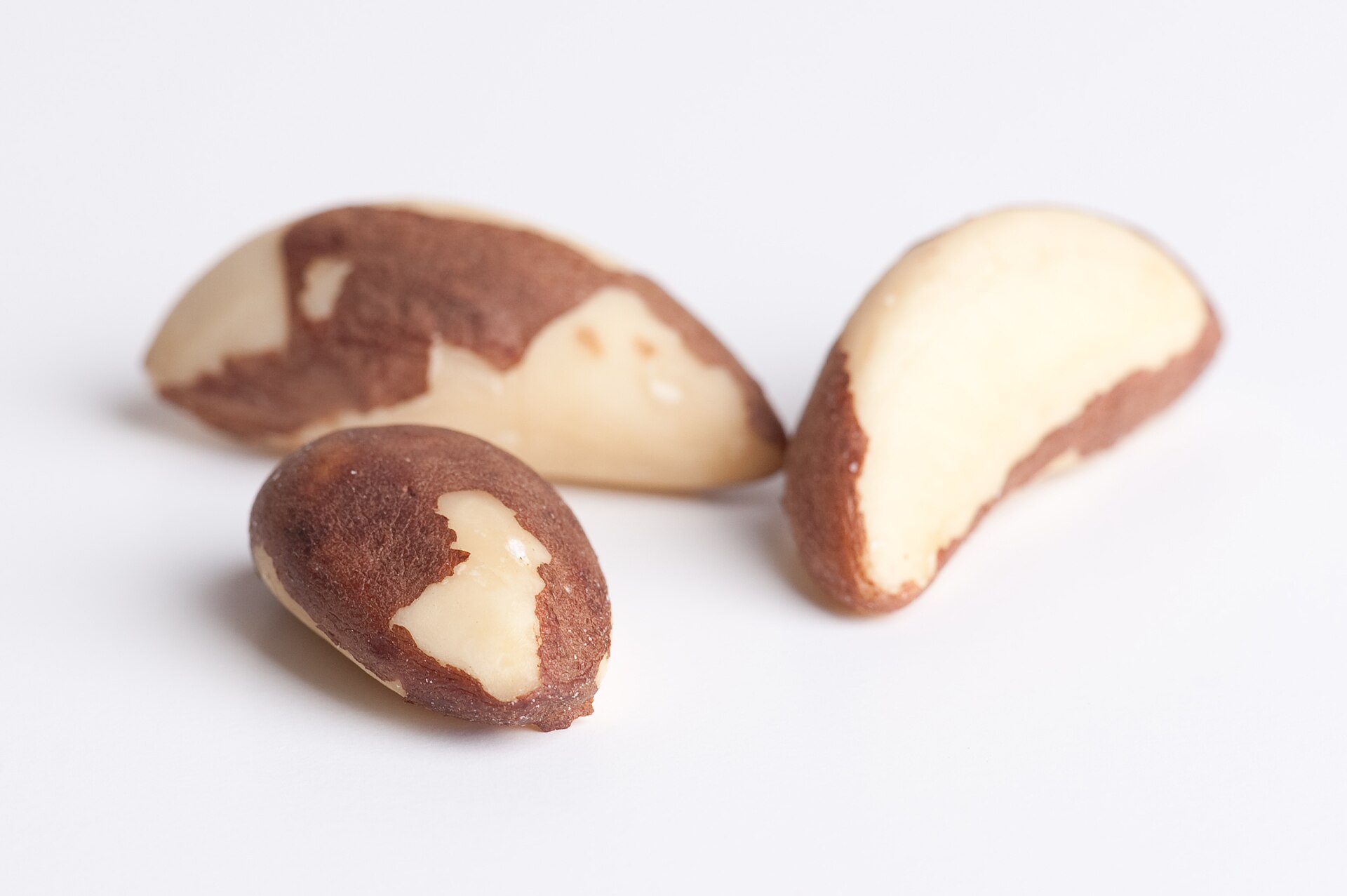
Are Brazil nuts a problem?
This page cannot answer that from these trials, and it would be dishonest to pretend otherwise. Both
studies tested 200 microgram daily supplements taken for years, not food. What the trials do support is a
general caution about deliberately pushing your intake well above sufficiency for a preventive purpose,
because that is the scenario they tested and it did not work. If you are eating Brazil nuts specifically in
order to raise your selenium, that is the behaviour the evidence here questions, and knowing your level first
turns the guess into a decision.
So is selenium bad for you?
No, and framing it that way loses the point. Selenium is essential, deficiency is a real problem, and
nothing on this page argues against adequate intake. What failed was a specific idea: that taking more than
you need, on purpose, for years, prevents disease. Two trials tested that idea directly. One found no cancer
prevention across 35,533 men, and the other found more diabetes concentrated in the people who needed it
least.
What should I do with this?
If you are taking a selenium supplement to prevent cancer, that specific reason did not survive SELECT,
which is the largest test of it. If you are taking one without knowing your level, the 2.70 hazard ratio in
the highest baseline tertile is a reason to find out before continuing rather than after. And if you have a
diagnosed deficiency being treated, none of this applies to you, because correcting a deficiency and topping
up an adequate level are different things that happen to involve the same bottle.
Sources
- Stranges S, Marshall JR, Natarajan R, Donahue RP, Trevisan M, Combs GF, Cappuccio FP, Ceriello A, Reid
ME. Effects of long-term selenium supplementation on the incidence of type 2 diabetes: a randomized trial.
Ann Intern Med. 2007;147(4):217-23. PMID 17620655. Secondary analysis of a randomised, double-blind,
placebo-controlled trial in areas of low selenium consumption of the eastern United States. 1,202 persons
seen in dermatology clinics who did not have type 2 diabetes at baseline; oral selenium 200 microgram/day or
placebo. During an average follow-up of 7.7 years (SD 2.7), type 2 diabetes developed in 58 selenium
recipients and 39 placebo recipients (incidence 12.6 cases per 1,000 person-years vs 8.4; hazard ratio 1.55,
95% CI 1.03 to 2.33). The lack of benefit persisted in analyses stratified by age, sex, body mass index and
smoking status. An exposure-response gradient was found across tertiles of baseline plasma selenium level,
with a statistically significantly increased risk in the highest tertile (hazard ratio 2.70, 95% CI 1.30 to
5.61). Stated limitations: diabetes was a secondary outcome in the parent trial; diagnoses were self-reported
but validated in most participants; the sample was mostly older and white. Conclusion: selenium
supplementation does not seem to prevent type 2 diabetes, and it may increase risk for the disease. Checked
August 2026 —
PubMed 17620655 - Lippman SM, Klein EA, Goodman PJ, et al. Effect of selenium and vitamin E on risk of prostate cancer and
other cancers: the Selenium and Vitamin E Cancer Prevention Trial (SELECT). JAMA. 2009;301(1):39-51. PMID
19066370. The initial SELECT report. Hazard ratios for prostate cancer compared with placebo (n=416): vitamin
E 1.13 (99% CI 0.95 to 1.35; n=473), selenium 1.04 (99% CI 0.87 to 1.24; n=432), selenium plus vitamin E 1.05
(99% CI 0.88 to 1.25; n=437). No significant differences in other prespecified cancer endpoints (all P>.15).
Conclusion: selenium or vitamin E, alone or in combination at the doses and formulations used, did not
prevent prostate cancer in this population of relatively healthy men. Cited here because it shows the null
result was reported first in 2009 and then held with longer follow-up in 2011. Checked August 2026 —
PubMed 19066370 - Klein EA, Thompson IM Jr, Tangen CM, Crowley JJ, Lucia MS, Goodman PJ, Minasian LM, Ford LG, Parnes HL,
Gaziano JM, Karp DD, Lieber MM, Walther PJ, Klotz L, Parsons JK, Chin JL, Darke AK, Lippman SM, Goodman GE,
Meyskens FL Jr, Baker LH. Vitamin E and the risk of prostate cancer: the Selenium and Vitamin E Cancer
Prevention Trial (SELECT). JAMA. 2011;306(14):1549-56. PMID 21990298. 35,533 men from 427 study sites in the
United States, Canada and Puerto Rico randomised between 22 August 2001 and 24 June 2004; primary analysis
included 34,887 men assigned to selenium (8,752), vitamin E (8,737), both (8,702) or placebo (8,696). Oral
selenium 200 microgram/day from L-selenomethionine; vitamin E 400 IU/day of all rac-alpha-tocopheryl acetate;
planned follow-up minimum 7 and maximum 12 years. Compared with placebo, in which 529 men developed prostate
cancer: 620 in the vitamin E group (hazard ratio 1.17; 99% CI 1.004 to 1.36; P=0.008), 575 in the selenium
group (HR 1.09; 99% CI 0.93 to 1.27; P=0.18), and 555 in the selenium plus vitamin E group (HR 1.05; 99% CI
0.89 to 1.22; P=0.46). Absolute increase in risk per 1,000 person-years compared with placebo: 1.6 for
vitamin E, 0.8 for selenium, 0.4 for the combination. Conclusion: dietary supplementation with vitamin E
significantly increased the risk of prostate cancer among healthy men. Checked August 2026 —
PubMed 21990298
Every figure on this page is quoted from the two named trials and
was checked against them in August 2026, including each trial’s own statement of its limitations. This page
summarises published research about supplementation in people who were not deficient. It is not a diagnosis,
and it is not advice about treating a diagnosed deficiency.