Best Creatine for Older Adults: Monohydrate, and Only With Lifting
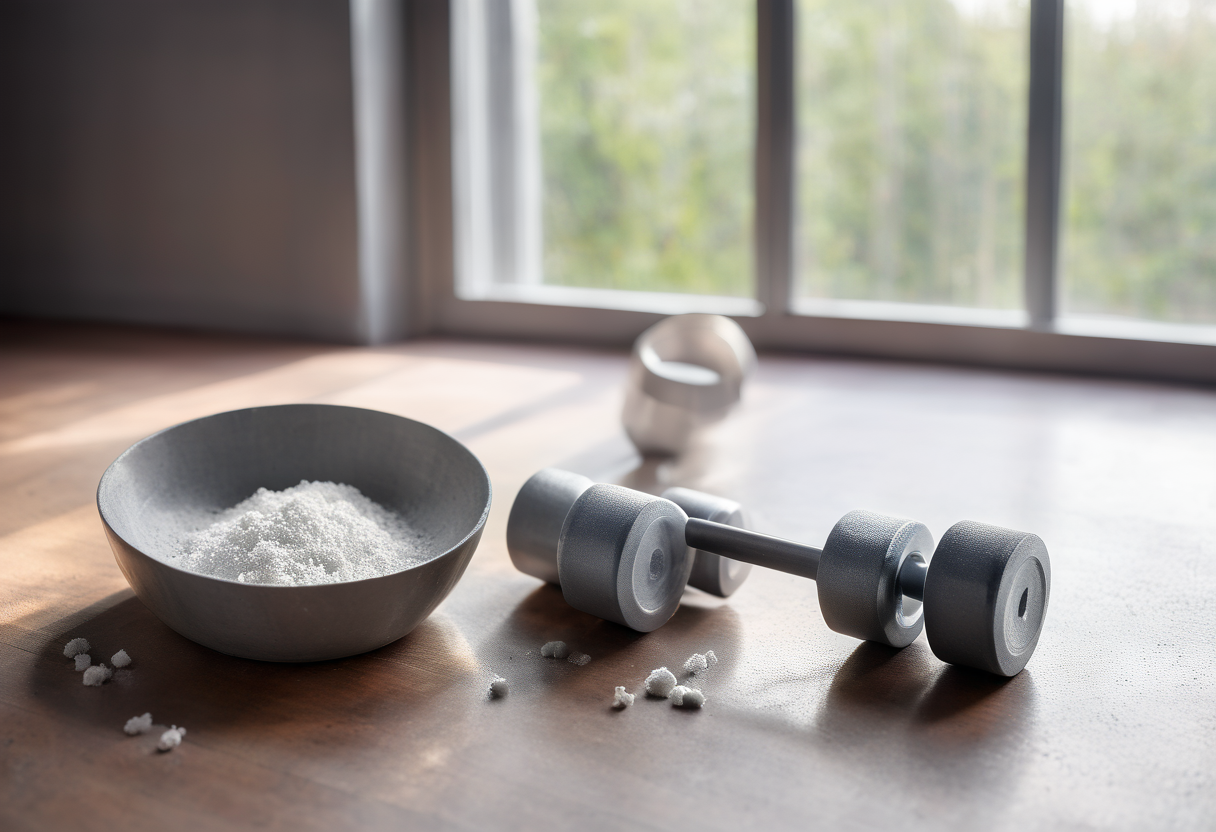
Quick Answer: The best creatine for older adults is plain creatine monohydrate, 3 to 5 grams a day, taken while doing resistance training. In a meta-analysis of 22 trials and 721 adults aged roughly 57 to 70, creatine added to strength training produced 1.37 kg more lean mass than training alone, plus modestly greater chest and leg press strength. The benefit depends on the training: in postmenopausal women, trials using 5 g or more a day with resistance training found gains, while trials using 3 g or less without training found no measurable effect. Creatine raises the creatinine number on a kidney blood test without changing measured kidney filtration in the trials, so tell your doctor you take it. Expensive "advanced" forms have no evidence of doing better in older adults.
Creatine is one of the few supplements with a substantial body of trials in people over 60, and the results are more consistent than for almost anything else sold for aging muscle. But the headlines leave out two things that decide whether it will do anything for you: the expensive forms have no evidence behind them, and it works alongside lifting, not instead of it.
What the trials in older adults found
Four meta-analyses have pooled the trials of creatine in older adults doing resistance training, and they agree on the direction.
| Review | Who | What creatine added to training |
|---|---|---|
| Devries & Phillips, 2014 | 357 older adults, mean age about 64, about 13 weeks of training | More fat-free mass; greater chest press and leg press strength; better 30-second chair stand |
| Chilibeck et al., 2017 | 22 trials, 721 adults, mean age 57 to 70, 7 to 52 weeks | +1.37 kg lean mass; chest press SMD 0.35; leg press SMD 0.24 |
| Davies et al., 2024 | 33 trials, 1,076 older adults and adults with chronic disease | Sit-to-stand SMD 0.51; handgrip SMD 0.23; +1.08 kg lean mass; evidence quality low |
| Liu et al., 2025 | Older adults, creatine plus training vs placebo plus training | Leg strength SMD 0.29; lean mass SMD 0.27; no significant upper-body strength gain overall |
A standardised mean difference of 0.2 to 0.3 is a small effect, and 0.5 is moderate. In practical terms, creatine makes the gains from a strength programme somewhat larger. It does not replace the programme. Devries and Phillips also found no extra benefit on knee extension or biceps curl strength, and the 2024 review rated the certainty of its evidence as low or very low because of risk of bias in the trials.
Why "with lifting" is not optional
Most of the trials behind these numbers combined creatine with two or three strength sessions a week. The one review that split trials by training status makes the point directly. A 2026 meta-analysis of creatine monohydrate in postmenopausal women, 7 trials with 608 women averaging about 62, found lean mass up 0.37 kg and leg press up 7.5 kg with creatine. The benefit was evident when 5 g or more a day was combined with resistance training. Trials using 3 g or less a day without training showed no measurable effect, and bone density did not change overall.
If you are not ready to lift, spend the effort there first. Our guide to building muscle after 60 covers how to start safely, and eccentric exercise is a gentler way in for people with sore joints.
What to look for on the label
The research on creatine in aging is overwhelmingly research on creatine monohydrate. None of the reviews above found, or tested, any advantage for creatine hydrochloride, buffered creatine, creatine ethyl ester or liquid creatine in older adults. Those forms usually cost more per gram.
- Ingredient list: creatine monohydrate and nothing else. Flavoured blends and "muscle stacks" add sugar, stimulants or ingredients the trials never tested.
- Third-party testing: supplements are not checked by the FDA before sale. A seal from NSF Certified for Sport or Informed Sport means an independent lab tested batches for banned substances and contaminants.
- Powder over capsules: a 5 g dose is one level teaspoon of powder, but usually five or six capsules. Powder is cheaper and easier to take at that dose.
- Micronised is fine, not necessary: it dissolves more easily in water; there is no evidence it works better.
How much, and does it need loading?
The 2021 Nutrients meta-analysis by Forbes and colleagues looked at dosing in older adults. Creatine improved lean mass and strength compared with placebo regardless of dosing strategy. A loading phase of 20 g a day for 5 to 7 days followed by 5 g or less improved chest press strength, and doses above 5 g improved leg press strength. When trials with a loading phase were removed, creatine had no greater effect on strength than placebo, although lean mass still improved. Taking creatine only on training days also worked.
In practice, 3 to 5 g a day with no loading is the simple choice, and it is the dose range most of the trials used after any loading phase. Loading means taking four times as much for a week, which some people find upsets their stomach and which adds water weight quickly. Take it at any time of day that you will remember, with food if it upsets your stomach.
A note on who wrote the research: several authors of the dosing and postmenopausal reviews disclose ties to creatine manufacturers or organisations funded by them. The independent 2024 and 2025 reviews point in the same direction, which is reassuring, but it is one reason the effect sizes above are best read as modest.
Creatine and your kidneys
This is the question older adults ask most, and there is a real, practical catch. Creatine is broken down into creatinine, the same substance your doctor measures to estimate kidney function. A 2026 meta-analysis of 20 randomised trials found creatine raised serum creatinine by an average of 0.13 mg/dL, with no difference in urea or in estimated glomerular filtration rate. A 2025 review of 21 studies reached the same conclusion: a modest rise in creatinine, likely from creatine turnover rather than kidney damage, with no significant change in filtration rate.
Two things follow. First, tell your doctor you take creatine before a blood test, so a slightly higher creatinine is not read as a kidney problem. Second, if you already have chronic kidney disease, diabetes affecting the kidneys, or take medicines that stress the kidneys, do not start creatine without your doctor’s agreement. The trials enrolled healthy people, and the 2026 authors call for trials longer than a year.
Creatine vs HMB and protein
Creatine is not the first thing to fix. Protein intake has a larger role in older muscle, and many older adults eat too little; our guide to how much protein you need after 60 gives the numbers. HMB has a different niche: protecting muscle during bed rest and illness, when you cannot train. The HMB guide covers who that suits, and sarcopenia supplements compares the options side by side. If weakness is the main complaint, rule out a deficiency first: vitamins for muscle weakness explains which blood tests matter.
What to buy: unflavoured creatine monohydrate powder, nothing else on the ingredient list, ideally with an NSF Certified for Sport or Informed Sport seal. Take 3 to 5 g a day alongside two or three strength sessions a week. Compare unflavoured creatine monohydrate on Amazon.
Affiliate link: as an Amazon Associate we earn from qualifying purchases, at no extra cost to you. Check with your doctor first if you have kidney disease.
Frequently Asked Questions
What is the best creatine for seniors?
Plain creatine monohydrate powder. It is the form used in the research on older adults, it is the cheapest per gram, and no other form has been shown to work better in this age group. Look for a single ingredient and a third-party testing seal.
How much creatine should a 70-year-old take?
Trials in older adults mostly used 3 to 5 grams a day after an optional loading phase. A review in postmenopausal women found benefits at 5 g or more a day with resistance training, and no measurable effect at 3 g or less without training. A loading phase is not necessary.
Does creatine work for older adults who do not exercise?
The evidence says little or nothing. The gains in muscle and strength in the meta-analyses come from trials that combined creatine with resistance training, and trials of low-dose creatine without training in postmenopausal women found no measurable effect.
Is creatine safe for seniors’ kidneys?
In randomised trials in healthy people, creatine raised blood creatinine by about 0.13 mg/dL on average without changing estimated kidney filtration. That rise can look like a kidney problem on a routine test, so tell your doctor you take it. People with existing kidney disease should not start creatine without medical advice.
Does creatine cause weight gain in older adults?
It can add some water inside the muscle, more noticeably with a loading phase, so the scale may rise a little. It did not increase fat mass in the pooled trials of older adults.
Is creatine better than protein powder for older adults?
They do different jobs. Enough protein is the foundation for maintaining muscle, and creatine adds modestly to the gains from strength training. Most older adults benefit more from reaching their protein target first.
The Bottom Line
For older adults, the "best" creatine is the boring one: unflavoured monohydrate, 3 to 5 grams a day, from a brand with third-party testing. Across four meta-analyses it added modest gains in lean mass, leg strength and chair-stand performance on top of resistance training, and without the training the evidence largely disappears. Expect a small bump in the creatinine number on blood tests and mention it to your doctor, and skip it if you have kidney disease unless your doctor agrees.
Sources
- Devries MC, Phillips SM. Creatine supplementation during resistance training in older adults: a meta-analysis. Medicine & Science in Sports & Exercise, 2014;46(6):1194-1203. PMID 24576864. 357 older adults, about 13 weeks of training; greater fat-free mass, chest and leg press, 30-s chair stand; no effect on fat mass. Checked 23 September 2026.
- Chilibeck PD, Kaviani M, Candow DG, Zello GA. Effect of creatine supplementation during resistance training on lean tissue mass and muscular strength in older adults: a meta-analysis. Open Access Journal of Sports Medicine, 2017;8:213-226. PMID 29138605. 22 studies, 721 participants, 7-52 weeks of training; lean mass +1.37 kg, chest press SMD 0.35, leg press SMD 0.24. Checked 23 September 2026.
- Forbes SC, Candow DG, Ostojic SM, Roberts MD, Chilibeck PD. Meta-analysis examining the importance of creatine ingestion strategies on lean tissue mass and strength in older adults. Nutrients, 2021;13(6):1912. PMID 34199420. Loading 20 g/day for 5-7 days; lower dose 5 g/day or less; no strength advantage once loading studies excluded. Author disclosures include industry ties. Checked 23 September 2026.
- Davies TW, Watson N, Pilkington JJ, et al. Creatine supplementation for optimization of physical function in the patient at risk of functional disability: a systematic review and meta-analysis. JPEN Journal of Parenteral and Enteral Nutrition, 2024;48(4):389-405. PMID 38417175. 33 RCTs, 1,076 participants; sit-to-stand SMD 0.51, handgrip SMD 0.23, lean mass +1.08 kg; low or very low certainty. Checked 23 September 2026.
- Liu S, Huang N, Wu W, et al. The impact of creatine supplementation associated with resistance training on muscular strength and lean tissue mass in the aged: a systematic review and meta-analysis. European Review of Aging and Physical Activity, 2025;22(1):26. PMID 41388441. Lower-limb strength SMD 0.29, lean mass SMD 0.27. Checked 23 September 2026.
- Naddafha S, Antonio J, Kreider RB, Stout JR. Creatine monohydrate for lean mass, strength, and bone density in postmenopausal women: a systematic review and meta-analysis. Journal of the International Society of Sports Nutrition, 2026;23(1):2668435. PMID 42141930. 7 RCTs, 608 women, mean age about 62; lean mass +0.37 kg, leg press +7.5 kg; no effect at 3 g/day or less without training. Author disclosures include industry ties. Checked 23 September 2026.
- Tsiaras A, Loufopoulos G, Theodoridis X, et al. The effect of creatine supplementation on kidney function: a systematic review and meta-analysis of randomized controlled trials. Journal of Renal Nutrition, 2026. PMID 42035842. Serum creatinine +0.13 mg/dL; no difference in urea or eGFR. Checked 23 September 2026.
- Naeini EK, Eskandari M, Mortazavi M, et al. Effect of creatine supplementation on kidney function: a systematic review and meta-analysis. BMC Nephrology, 2025;26(1):622. PMID 41199218. 21 studies; modest transient creatinine rise, no significant change in GFR. Checked 23 September 2026.