How Much Choline Per Day? 550 mg, and Only 11% of Men Get It
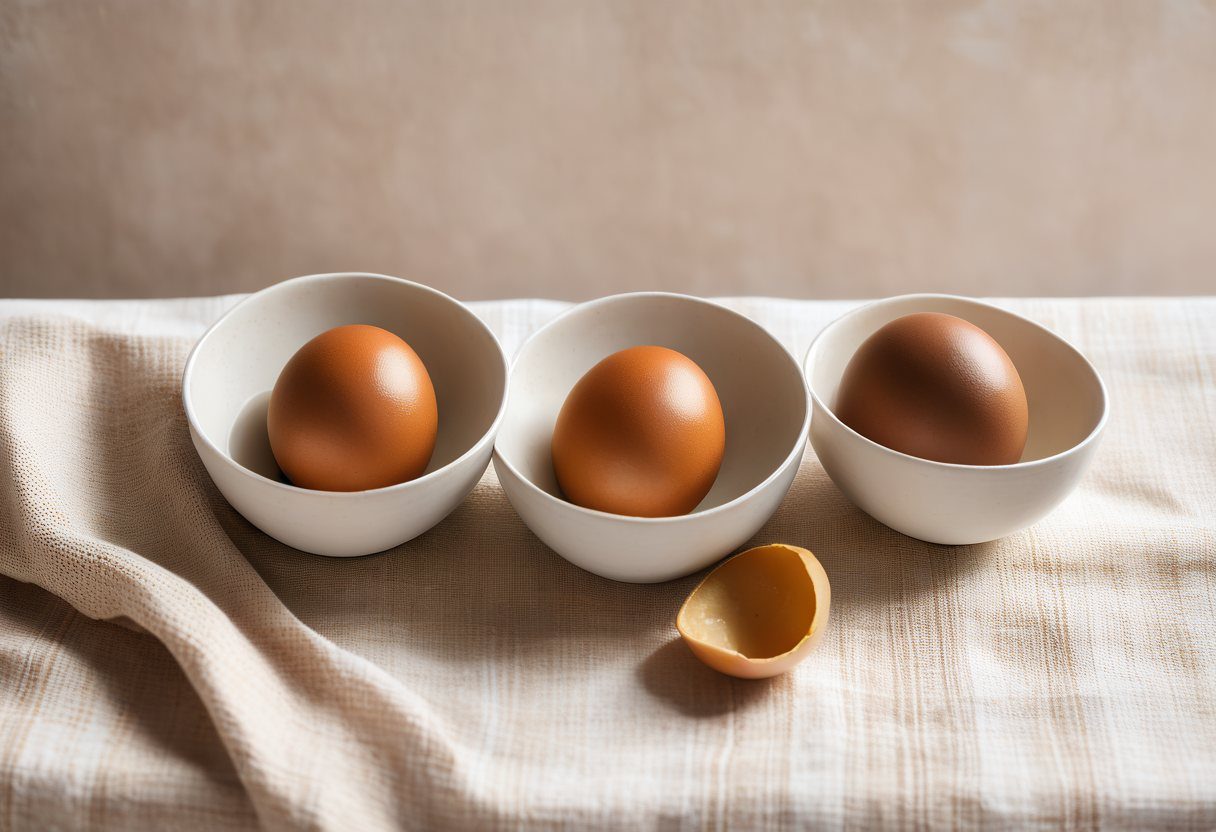
Quick Answer: The Adequate Intake for choline is 550 mg a day for men and 425 mg for women, rising to 450 mg in pregnancy and 550 mg while breastfeeding; the upper limit is 3,500 mg. Most Americans fall short: in the national food survey for 2013 to 2016, the median man got 385 mg and the median woman 275 mg, and only 11% of men and 6% of women reached the Adequate Intake. One large egg has 147 mg and 3 ounces of beef liver 356 mg, which makes eggs the easiest way to close the gap. Pregnancy is where it matters most: an estimated 90% to 95% of pregnant women are below the Adequate Intake, and in our check of 387 prenatal multivitamin labels on the market, 68% listed no choline at all and only 2 provided the full 450 mg.
Choline is the nutrient most people have never thought about. It is not a vitamin in the strict sense, the body makes some of it, and it was only given an official intake level in 1998. But the body does not make enough, and the evidence that people fall short is some of the clearest in the national nutrition data.
How much choline you need
| Group | Adequate Intake per day | Upper limit per day |
|---|---|---|
| Men 19 and older | 550 mg | 3,500 mg |
| Women 19 and older | 425 mg | 3,500 mg |
| Pregnancy | 450 mg | 3,500 mg (3,000 mg under 19) |
| Breastfeeding | 550 mg | 3,500 mg (3,000 mg under 19) |
| Teens 14 to 18 | 550 mg boys, 400 mg girls | 3,000 mg |
| Children 9 to 13 | 375 mg | 2,000 mg |
| Children 4 to 8 | 250 mg | 1,000 mg |
| Children 1 to 3 | 200 mg | 1,000 mg |
These are Adequate Intakes, not Recommended Dietary Allowances. There was not enough data to set an average requirement, so the Food and Nutrition Board set the level based on preventing liver damage, measured by the liver enzyme ALT. An intake below the Adequate Intake is not proof of deficiency; it means adequacy cannot be assumed.
The study behind the number
The clearest evidence that people need dietary choline comes from a depletion study at the University of North Carolina, published in 2007. Fischer and colleagues fed 57 adults a diet with almost no choline, under 50 mg a day, for up to 42 days. 77% of the men and 80% of the postmenopausal women developed fatty liver or muscle damage, compared with 44% of premenopausal women, whose estrogen boosts the body’s own choline production. Organ function returned to normal when choline was added back.
The less reassuring finding: six men developed these signs while eating 550 mg a day, the Adequate Intake itself, and the authors concluded that the AI was not enough to prevent organ dysfunction in 19 of the participants. For some people, especially men and women after menopause, the official figure may be a floor rather than a comfortable margin.
How much Americans actually get
The USDA’s usual-intake tables from NHANES 2013 to 2016, from food and drinks:
| Group | Median per day | Adequate Intake | Share reaching the AI |
|---|---|---|---|
| Men 19 to 30 | 376 mg | 550 mg | 10% |
| Men 31 to 50 | 392 mg | 550 mg | 13% |
| Men 51 to 70 | 394 mg | 550 mg | 13% |
| Men 71 and older | 352 mg | 550 mg | 7% |
| Women 19 to 30 | 268 mg | 425 mg | 5% |
| Women 31 to 50 | 280 mg | 425 mg | 6% |
| Women 51 to 70 | 278 mg | 425 mg | 6% |
| Women 71 and older | 262 mg | 425 mg | 4% |
| Teen boys 14 to 18 | 311 mg | 550 mg | under 3% |
| Teen girls 14 to 18 | 215 mg | 400 mg | under 3% |
The typical gap is about 165 mg a day for men and 150 mg for women. The survey measured food only, so supplements are not counted, but as the next section shows, most supplements do not add much choline.
Where to get it
Choline is concentrated in animal foods, per the NIH Office of Dietary Supplements:
| Food | Choline |
|---|---|
| Beef liver, pan fried, 3 oz | 356 mg |
| Egg, hard boiled, 1 large | 147 mg |
| Beef top round, braised, 3 oz | 117 mg |
| Soybeans, roasted, 1/2 cup | 107 mg |
| Chicken breast, roasted, 3 oz | 72 mg |
| Cod, cooked, 3 oz | 71 mg |
| Red potato, baked with skin, 1 large | 57 mg |
| Kidney beans, canned, 1/2 cup | 45 mg |
| Quinoa, cooked, 1 cup | 43 mg |
| Milk, 1%, 1 cup | 43 mg |
| Broccoli, boiled, 1/2 cup | 31 mg |
One egg covers most of the typical gap on its own. Plant foods contain choline too, but in smaller amounts, so people on a vegan diet have to rely on soy, beans, quinoa and cruciferous vegetables and eat them regularly.
Pregnancy: the gap that matters most
The NIH Office of Dietary Supplements estimates that about 90% to 95% of pregnant women consume less choline than the Adequate Intake, and notes that prenatal supplements typically contain little if any choline.
We checked 387 prenatal labels
To see whether that is still true, we pulled every on-market product in the NIH Dietary Supplement Label Database with “prenatal” in its name and folate or folic acid on its label, which gave 387 prenatal multivitamin label records in September 2026. We then read the choline amount on every label that listed it, using the daily dose in the directions.
| Choline per daily dose | Labels | Share of 387 |
|---|---|---|
| None listed | 262 | 68% |
| Listed, no amount given | 4 | 1% |
| Under 50 mg | 68 | 18% |
| 50 to 99 mg | 21 | 5% |
| 100 to 449 mg | 30 | 8% |
| 450 mg or more (the full pregnancy AI) | 2 | 0.5% |
Among the 121 labels that gave an amount, the median was 25 mg a day, about 6% of the 450 mg pregnancy target. Only 32 labels gave 100 mg or more, and only 2 reached 450 mg. So a prenatal vitamin is not a reliable way to cover choline: if yours lists it at all, the amount is usually small. The database counts label versions, so a few products appear more than once, but the pattern is clear.
What higher intake did in a trial
At Cornell, Caudill and colleagues randomized 26 women entering their third trimester to eat either 480 mg of choline a day, close to the Adequate Intake, or 930 mg, with all food provided. Infants of mothers in the 930 mg group had faster average reaction times on information-processing tests at 4 to 13 months. In a follow-up at age 7, with 20 of the children, the 930 mg group did better on a test of sustained attention. The trial was tiny, and the follow-up was part-funded by the Egg Nutrition Center, so it is a signal rather than proof. It does suggest that, in pregnancy, the Adequate Intake is not an amount to overshoot anxiously; getting to it is the first step. Talk to your obstetrician or midwife before adding any supplement.
Too much choline
The upper limit for adults is 3,500 mg a day, set on the basis of low blood pressure and a fishy body odor at high doses; very high intakes are also linked to vomiting, heavy sweating and salivation, and liver toxicity. Food alone will not get you near it. There is also a research question about TMAO, a compound gut bacteria make from choline and carnitine that has been linked to heart disease in some studies; the NIH fact sheet describes the evidence as mixed.
Does choline help memory in adults?
A 2015 systematic review in Nutrition Reviews found some observational evidence that choline during pregnancy may benefit the child’s neurological health, and that choline may benefit adult cognition, but that high-quality intervention studies are lacking. Choline supplements are not a proven memory aid for healthy adults.
We do not link to any product on this page. For most people the fix is on the plate: an egg a day, or regular servings of meat, fish, soy or beans.
Frequently Asked Questions
How much choline do you need per day?
The Adequate Intake is 550 mg a day for men and 425 mg for women, 450 mg during pregnancy and 550 mg while breastfeeding. The upper limit for adults is 3,500 mg a day.
Do most people get enough choline?
No. In NHANES 2013 to 2016, only 11% of men and 6% of women reached the Adequate Intake from food. The median man got 385 mg and the median woman 275 mg. Falling below the Adequate Intake does not prove deficiency, but it means adequacy cannot be assumed.
How much choline is in an egg?
A large hard-boiled egg has about 147 mg of choline, which is about 27% of the Daily Value and enough to close most of the typical gap on its own.
How much choline should you take while pregnant?
The Adequate Intake in pregnancy is 450 mg a day, and 550 mg while breastfeeding. About 90% to 95% of pregnant women fall below it, and most prenatal vitamins contain little choline, so check the label and ask your provider how to close the gap.
What are the symptoms of low choline?
In controlled studies, a very low-choline diet caused fatty liver and muscle damage in most men and postmenopausal women within weeks. These changes are not something people can feel, which is why deficiency is usually detected only in research or clinical settings.
Can you take too much choline?
Yes, but not from food. The adult upper limit is 3,500 mg a day; high intakes can cause low blood pressure, a fishy body odor, sweating and vomiting.
The Bottom Line
Choline needs are 550 mg a day for men and 425 mg for women, and nearly nine in ten Americans fall short. An egg covers most of the gap. In pregnancy the target rises to 450 mg, almost nobody reaches it, and 68% of prenatal vitamin labels we checked list no choline at all, so food, or a conversation with your provider, has to cover it.
Sources
- NIH Office of Dietary Supplements. Choline: Fact Sheet for Health Professionals (updated 2 June 2022): Adequate Intakes (19+: 550 mg men, 425 mg women, 450 mg pregnancy, 550 mg lactation; 14-18: 550/400 mg; 9-13: 375 mg; 4-8: 250 mg; 1-3: 200 mg); ULs (19+: 3,500 mg; 14-18: 3,000 mg; 9-13: 2,000 mg; 1-8: 1,000 mg) based on hypotension and fishy body odor; AIs set by the Institute of Medicine Food and Nutrition Board (1998) based on prevention of liver damage (ALT); food values (beef liver 3 oz 356 mg, 1 large egg 147 mg, beef top round 117 mg, roasted soybeans 1/2 cup 107 mg, chicken breast 72 mg, cod 71 mg, red potato 57 mg, kidney beans 45 mg, quinoa 43 mg, 1% milk 43 mg, broccoli 31 mg); about 90%-95% of pregnant women below the AI; prenatal supplements typically contain little if any choline; TMAO evidence. ods.od.nih.gov. Checked 26 September 2026.
- USDA Agricultural Research Service. Usual Nutrient Intake from Food and Beverages, by Gender and Age, What We Eat in America, NHANES 2013-2016 (2019), Table A 25, Choline. Medians: men 14-18 311 mg, 19-30 376, 31-50 392, 51-70 394, 71+ 352, 19+ 385; women 14-18 215, 19-30 268, 31-50 280, 51-70 278, 71+ 262, 19+ 275. Share above AI: men 19-30 10%, 31-50 13%, 51-70 13%, 71+ 7%, 19+ 11%; women 19-30 5%, 31-50 6%, 51-70 6%, 71+ 4%, 19+ 6%; ages 14-18 under 3%. ars.usda.gov (PDF). Checked 26 September 2026.
- Fischer LM, daCosta KA, Kwock L, et al. Sex and menopausal status influence human dietary requirements for the nutrient choline. American Journal of Clinical Nutrition, 2007;85(5):1275-1285. PMID 17490963. 57 adults; for up to 42 days on under 50 mg choline/70 kg/day, 77% of men and 80% of postmenopausal women vs 44% of premenopausal women developed fatty liver or muscle damage; 6 men developed signs at 550 mg/70 kg/day; AI not sufficient to prevent organ dysfunction in 19 subjects. Checked 26 September 2026.
- Caudill MA, Strupp BJ, Muscalu L, Nevins JEH, Canfield RL. Maternal choline supplementation during the third trimester of pregnancy improves infant information processing speed: a randomized, double-blind, controlled feeding study. FASEB Journal, 2018;32(4):2172-2180. PMID 29217669. 26 women, 480 vs 930 mg/day; faster infant reaction time in the 930 mg group. Checked 26 September 2026.
- Bahnfleth CL, Strupp BJ, Caudill MA, Canfield RL. Prenatal choline supplementation improves child sustained attention: a 7-year follow-up of a randomized controlled feeding trial. FASEB Journal, 2022. PMID 34962672. 20 children; better sustained attention in the 930 mg group. Funding included the Egg Nutrition Center, NICHD and USDA. Checked 26 September 2026.
- Leermakers ET, Moreira EM, Kiefte-de Jong JC, et al. Effects of choline on health across the life course: a systematic review. Nutrition Reviews, 2015;73(8):500-522. PMID 26108618. 50 articles; some observational evidence of benefit in pregnancy; possible benefit on adult cognition but high-quality intervention studies lacking. Checked 26 September 2026.
- NIH Office of Dietary Supplements. Dietary Supplement Label Database (DSLD), API v9, queried 26 September 2026: on-market products with “prenatal” in the name and folate or folic acid on the label (387 label records); choline amounts read from full labels and scaled to the directed daily dose. 262 with no choline listed; 125 listing choline, 121 with an amount; median 25 mg/day; 32 at 100 mg or more; 2 at 450 mg or more. Our analysis. dsld.od.nih.gov.