How Much Biotin Per Day? 30 mcg, and the Typical Pill Has 5,000
Quick Answer: Adults need about 30 mcg of biotin a day, the Adequate Intake set by the Food and Nutrition Board, and 35 mcg while breastfeeding. Most people already get that from food: estimated intakes in Western countries are about 35 to 70 mcg a day, and one cooked egg has 10 mcg. Supplements are in a different league. In our check of 481 biotin products on the market in the NIH Dietary Supplement Label Database, the median dose was 5,000 mcg per serving, about 167 times the daily need, and 30% had 10,000 mcg or more. There is no upper limit because biotin has not been shown to be toxic, but high doses have a real downside: in a JAMA study, 10 mg a day for a week distorted 9 of 23 lab tests that use biotin chemistry, and the FDA has reported a death linked to a falsely low heart-attack test in a patient taking high-dose biotin. Evidence that extra biotin grows hair or nails in people who are not deficient is lacking.
Biotin is the vitamin most people meet on a hair, skin and nails bottle. The gap between what the body needs and what those bottles contain is larger than for almost any other nutrient.
How much biotin you need
| Group | Adequate Intake per day |
|---|---|
| Adults 19 and older | 30 mcg |
| Pregnancy | 30 mcg |
| Breastfeeding | 35 mcg |
| Teens 14 to 18 | 25 mcg |
The Daily Value on labels is also 30 mcg. There are no nationally representative US intake estimates, but the NIH Office of Dietary Supplements reports that average intakes from food in other Western populations are about 35 to 70 mcg a day, which indicates most people consume enough.
Food sources
| Food | Biotin |
|---|---|
| Beef liver, cooked, 3 oz | 30.8 mcg |
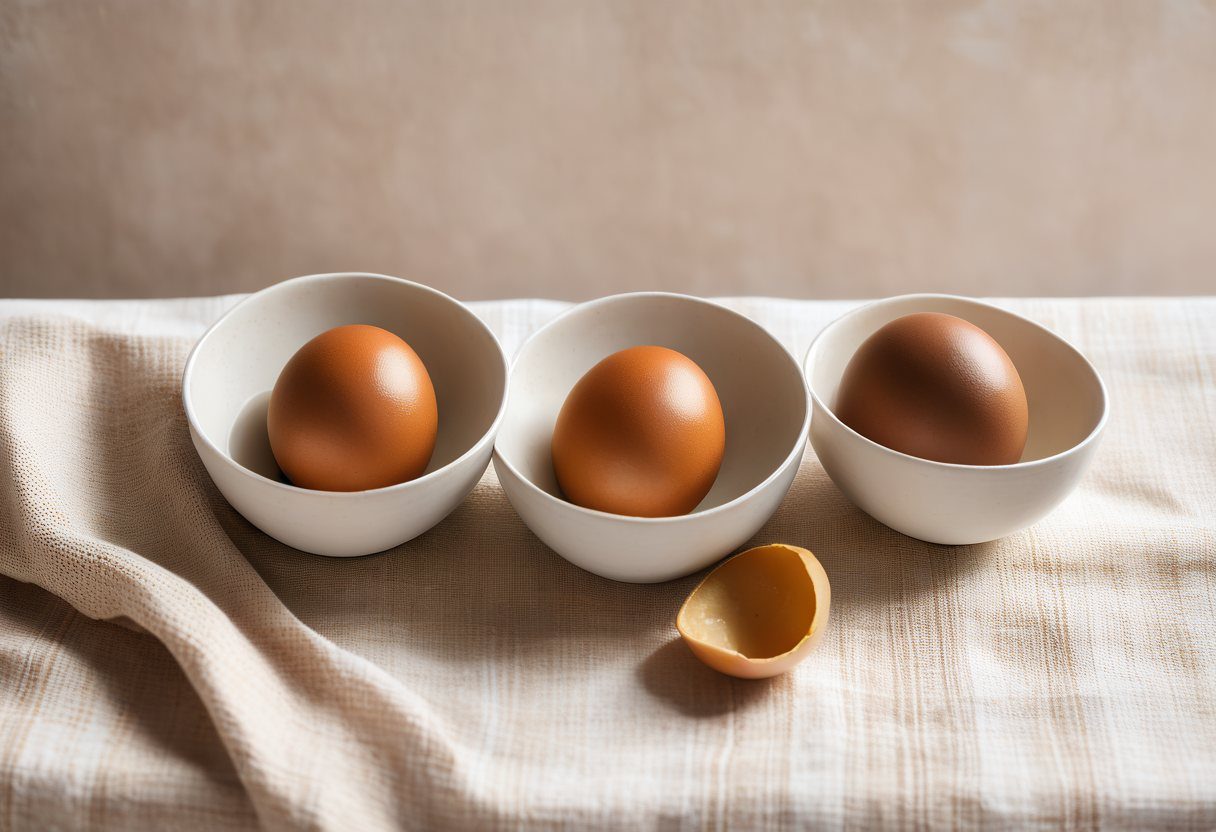
| Egg, whole, cooked | 10.0 mcg |
| Salmon, pink, canned, 3 oz | 5.0 mcg |
| Pork chop, cooked, 3 oz | 3.8 mcg |
| Hamburger patty, cooked, 3 oz | 3.8 mcg |
| Sunflower seeds, roasted, 1/4 cup | 2.6 mcg |
| Sweet potato, cooked, 1/2 cup | 2.4 mcg |
| Almonds, roasted, 1/4 cup | 1.5 mcg |
True biotin deficiency is rare. It is seen mainly in people with the inherited condition biotinidase deficiency, and in those who eat raw egg whites regularly over long periods, since a protein in raw egg white binds biotin. Its signs include thinning hair, a scaly red rash around the eyes, nose and mouth, and brittle nails.
What is in biotin supplements
We pulled every on-market product in the NIH Dietary Supplement Label Database with “biotin” in its name, 487 label records with a biotin amount, and read the biotin per serving from the Supplement Facts panel. We removed 6 records whose entries were clearly unit errors (for example, an 8 mg product recorded as 8,000,000 mcg), leaving 481.
| Biotin per serving | Products | Share | Times the 30 mcg AI |
|---|---|---|---|
| 30 mcg or less | 1 | 0.2% | 1x |
| 31 to 999 mcg | 41 | 8.5% | up to 33x |
| 1,000 to 4,999 mcg | 112 | 23.3% | 33x to 166x |
| 5,000 to 9,999 mcg | 183 | 38.0% | 167x to 333x |
| 10,000 mcg (10 mg) | 133 | 27.7% | 333x |
| More than 10,000 mcg | 11 | 2.3% | over 333x |
The most common single dose was 5,000 mcg (168 products), followed by 10,000 mcg (133) and 1,000 mcg (68). Only one product was at or below the Adequate Intake. 144 products (30%) contained 10,000 mcg or more per serving, the dose tested in the lab-interference study below.
Your body does absorb this biotin: the ODS notes that oral free biotin is absorbed at close to 100%, even at 20 mg a day. The excess is not stored in a useful way; the concern is what it does to blood tests while it is circulating.
Is high-dose biotin safe?
The Food and Nutrition Board did not set an upper limit, because there is no evidence that biotin is toxic in humans. Studies have found no adverse effects at 10 to 50 mg a day, and patients with biotinidase deficiency have taken up to 200 mg a day without toxicity symptoms.
The lab-test problem
Many common blood tests use biotin and streptavidin as part of the chemistry. Biotin from supplements can interfere, pushing results falsely high or falsely low depending on how the test is built.
- JAMA, 2017: Li and colleagues gave 6 healthy adults 10 mg of biotin a day for 7 days. Interference appeared in 9 of 23 biotin-based tests and none of 14 tests that did not use biotin. Affected results included thyroid tests and NT-proBNP, a marker used to detect heart failure.
- Thyroid, 2017: even a single 10 mg dose interfered with thyroid function tests done within 24 hours.
- FDA: the agency reported that a patient taking high levels of biotin died after a troponin test, used to diagnose heart attacks, gave a falsely low result. Case reports have also described biotin producing test results that falsely suggested Graves’ disease.
The FDA advises doctors to ask patients about biotin-containing supplements and to consider biotin interference when results do not match the patient’s condition. The practical step for you: tell your doctor and the lab if you take biotin, including in a multivitamin or hair, skin and nails product, and ask whether to stop before a blood test.
Does biotin help hair and nails?
Only when there is a problem to correct. A 2017 review in Skin Appendage Disorders by Patel and colleagues found 18 reported cases of biotin use for hair and nail changes, and in every one the patient had an underlying condition, such as biotin deficiency, uncombable hair syndrome or brittle nail syndrome. The authors found no sufficient evidence for supplementation in healthy people. The ODS reaches the same conclusion: the evidence for hair benefits comes only from case reports, and those were in children. Nail changes have many causes, most of them not nutritional, as our look at what causes ridges in your nails explains.
We do not link to any product on this page. For most people, the right biotin dose from a supplement is none.
Frequently Asked Questions
How much biotin should I take per day?
Adults need about 30 mcg a day, and most people get 35 to 70 mcg from food. There is no evidence that healthy people benefit from taking more. If a doctor has diagnosed a deficiency or a specific condition, follow the dose they prescribe.
Is 10,000 mcg of biotin too much?
It is not known to be toxic, but it is 333 times the daily need, and at that dose biotin interfered with 9 of 23 biotin-based lab tests in a JAMA study. If you take it, tell your doctor before any blood test.
Is 5,000 mcg of biotin safe?
No toxic effects have been shown at that dose, and it is the most common dose on the market. It is still about 167 times the Adequate Intake, and high-dose biotin can distort blood test results, so mention it before any lab work.
How long before a blood test should I stop biotin?
Ask your doctor or the lab, since it depends on the dose and the test. A single 10 mg dose has interfered with thyroid tests within 24 hours, so do not assume a day off is enough without checking.
Does biotin make hair grow faster?
Not in people who are not deficient. A 2017 review found 18 cases where biotin helped hair or nails, all in people with an underlying condition, and concluded the evidence does not support supplements for healthy people.
What foods are highest in biotin?
Cooked beef liver (about 31 mcg per 3 oz), eggs (10 mcg each), salmon, pork, beef, sunflower seeds, sweet potatoes and almonds.
The Bottom Line
You need about 30 mcg of biotin a day, and food almost always covers it. The typical supplement has 5,000 mcg and nearly a third have 10,000 mcg or more. That is not known to be toxic, but it can throw off blood tests, including tests for thyroid disease and heart attacks. If you take biotin, tell your doctor before any lab work.
Sources
- NIH Office of Dietary Supplements. Biotin: Fact Sheet for Health Professionals (updated 10 January 2022): AIs (19+ 30 mcg, pregnancy 30 mcg, lactation 35 mcg, 14-18 25 mcg); DV 30 mcg; food values (beef liver 30.8 mcg, egg 10.0, pink salmon 5.0, pork chop 3.8, hamburger 3.8, sunflower seeds 2.6, sweet potato 2.4, almonds 1.5); Western intakes about 35-70 mcg/day; absorption of oral free biotin 100% up to 20 mg/day; no UL set; no adverse effects at 10-50 mg/day and up to 200 mg/day in biotinidase deficiency; deficiency signs; hair evidence limited to case reports in children; lab test interference and FDA-reported troponin death. ods.od.nih.gov. Checked 27 September 2026.
- NIH Office of Dietary Supplements. Dietary Supplement Label Database (DSLD), API v9, queried 27 September 2026: 9,708 on-market records matching “biotin”; 524 with “biotin” in the product name; 487 with a biotin amount in the Supplement Facts panel; 6 excluded as unit-entry errors (per-serving values of 500,000 mcg or more); 481 analyzed. Per serving: 30 mcg or less 1; 31-999 mcg 41; 1,000-4,999 mcg 112; 5,000-9,999 mcg 183; 10,000 mcg 133; over 10,000 mcg 11; median 5,000 mcg; most common 5,000 (168), 10,000 (133), 1,000 (68). Our analysis. dsld.od.nih.gov.
- Li D, Radulescu A, Shrestha RT, et al. Association of biotin ingestion with performance of hormone and nonhormone assays in healthy adults. JAMA, 2017;318(12):1150-1160. PMID 28973622. 6 adults, 10 mg/day for 7 days; interference in 9 of 23 biotinylated assays vs 0 of 14 nonbiotinylated. Checked 27 September 2026.
- Biscolla RPM, Chiamolera MI, Kanashiro I, et al. A single 10 mg oral dose of biotin interferes with thyroid function tests. Thyroid, 2017;27(8):1099-1100. PMID 28614993. Checked 27 September 2026.
- US Food and Drug Administration. UPDATE: The FDA warns that biotin may interfere with lab tests: FDA safety communication (archived). fda.gov (archived). Checked 27 September 2026.
- Patel DP, Swink SM, Castelo-Soccio L. A review of the use of biotin for hair loss. Skin Appendage Disorders, 2017;3(3):166-169. PMID 28879195. 18 reported cases, all with underlying pathology; insufficient evidence for healthy individuals. Checked 27 September 2026.
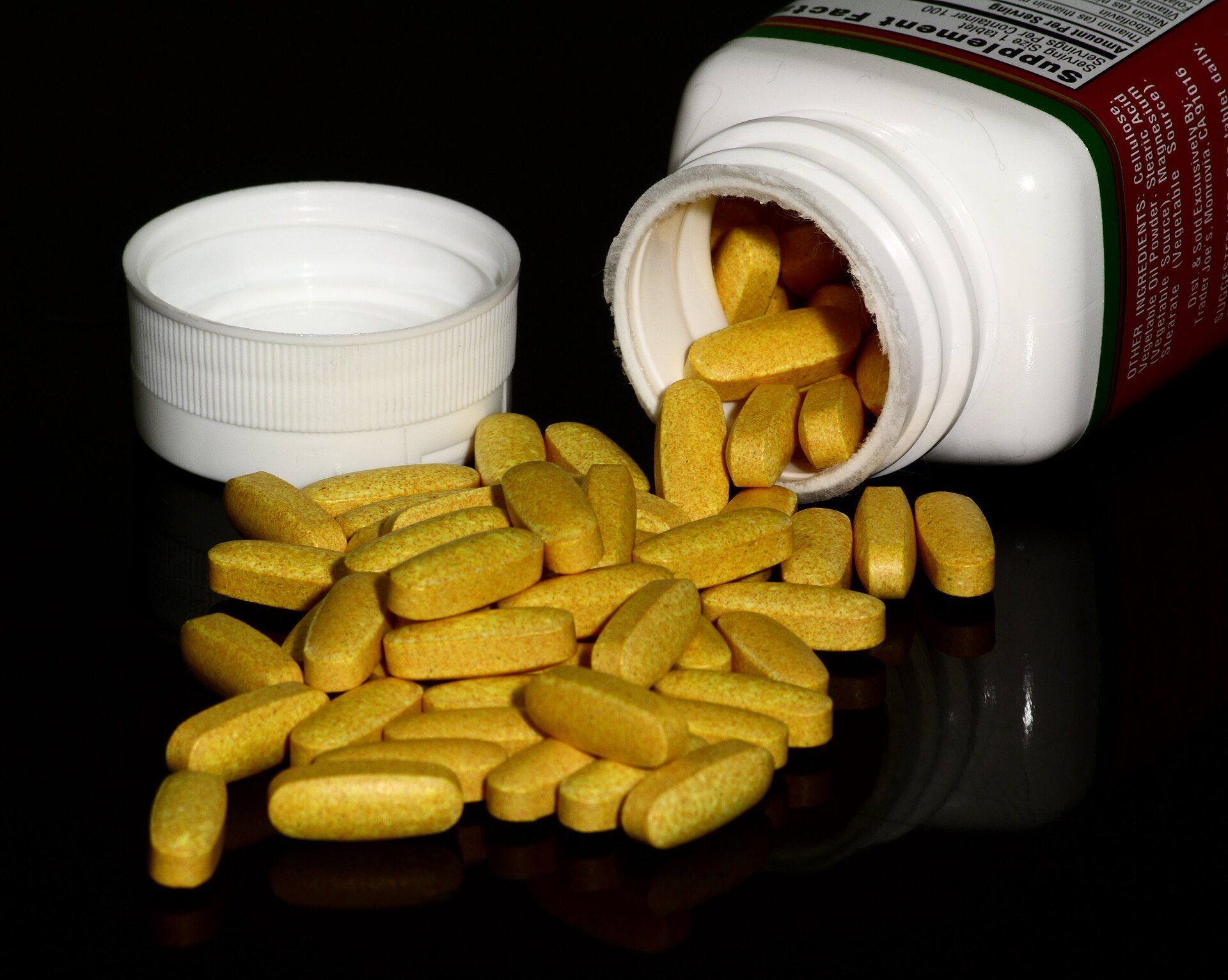
Featured photo: B vitamin supplement tablets, by Ragesoss, Wikimedia Commons, CC BY-SA 3.0.