Spermidine: The Longevity Molecule That Triggers Cellular Self-Cleaning
This article contains affiliate links. We only recommend products we have independently researched. Reviewed by the HealthyMag Editorial Team. Last updated: July 2026.
Every day, your cells accumulate damaged proteins, worn-out mitochondria, and molecular junk. Left alone, this debris piles up and drives many features of aging. Your cells have a built-in cleanup crew called autophagy, but it slows down as you get older. Spermidine, a compound named after where it was first discovered but found abundantly in ordinary foods like wheat germ and aged cheese, has become one of the most talked-about molecules in longevity science precisely because it appears to switch that cleanup crew back on. Here is what the actual research shows, and what it does not.
What Is Spermidine?
Spermidine is a polyamine, a small molecule your body makes naturally, your gut bacteria produce, and you also get from food. It plays roles in cell growth, DNA stability, and gene regulation. Levels of spermidine in human tissue tend to decline with age, which is one reason researchers became interested in whether replenishing it, through diet or supplements, might slow age-related decline.
Unlike many “longevity” compounds that exist only in a lab, spermidine has been part of the human diet forever. Populations that eat spermidine-rich diets, such as those consuming a lot of fermented foods, legumes, and whole grains, have been a natural experiment for studying its effects. That real-world dietary history is part of what makes the evidence more compelling than for many synthetic compounds. If you are interested in how spermidine compares to other longevity molecules, our breakdown of NMN and NAD+ for longevity: hype vs. what the human evidence shows covers a molecule that works through a completely different pathway.
Autophagy: The “Cellular Self-Cleaning” Mechanism
The word autophagy comes from Greek for “self-eating.” It is the process by which cells break down and recycle their own damaged components: misfolded proteins, defective mitochondria, and other cellular waste. Think of it as the cell’s recycling and demolition service rolled into one. When autophagy works well, cells stay clean and functional. When it falters, junk accumulates, which is linked to neurodegeneration, heart disease, and the broader process of aging.
The 2016 Nobel Prize in Physiology or Medicine went to Yoshinori Ohsumi for uncovering the mechanisms of autophagy, which cemented its importance. Fasting and exercise are the best-known triggers of autophagy. Spermidine is notable because it appears to trigger the same process without requiring you to skip meals. In laboratory studies, spermidine induces autophagy across yeast, worms, flies, and mammalian cells, and critically, when researchers genetically block autophagy, spermidine’s benefits largely disappear. That last detail matters: it means autophagy is not just a side effect but appears to be the mechanism through which spermidine works.
The Human Evidence: Mortality Data and Cognition Trials
This is where honesty matters most. The strongest human evidence for spermidine is observational, not from randomized trials.
The centerpiece is the Bruneck Study, published by Kiechl and colleagues in the American Journal of Clinical Nutrition in 2018. Researchers followed 829 adults aged 45 to 84 in northern Italy for roughly 20 years, repeatedly measuring their dietary spermidine intake through food questionnaires. The results were striking: all-cause mortality dropped steadily across thirds of increasing spermidine intake, from 40.5 deaths per 1,000 person-years in the lowest-intake group to 15.1 in the highest. After adjusting for age, sex, calorie intake, lifestyle, and other diet factors, each standard-deviation increase in spermidine intake was associated with a 24% lower risk of death (hazard ratio 0.76). The authors calculated that the mortality difference between the highest and lowest intake groups was comparable to being 5.7 years younger.
That is a large effect, but it is an association. People who eat more spermidine-rich foods tend to eat more vegetables, legumes, and whole grains overall, and observational studies cannot fully separate spermidine from a generally healthier diet.
On the mouse side, Eisenberg and colleagues published a landmark paper in Nature Medicine in 2016 titled “Cardioprotection and lifespan extension by the natural polyamine spermidine.” Oral spermidine extended the lifespan of mice, reduced cardiac hypertrophy, and preserved heart function in old animals by enhancing autophagy and mitochondrial function. Importantly, when the researchers used mice engineered to lack the autophagy gene Atg5 in heart cells, the cardioprotection vanished, confirming the mechanism.
For human cognition, the picture is more sobering. An early pilot trial by Wirth and colleagues, published in Cortex in 2018, gave 30 older adults with subjective cognitive decline a spermidine-rich supplement for three months and found modestly improved memory (specifically mnemonic discrimination) with a medium effect size. That result generated excitement. But the larger, better-designed follow-up, the SmartAge trial by Schwarz and colleagues published in JAMA Network Open in 2022, gave 100 older adults at risk for dementia a wheat-germ-derived spermidine supplement (about 0.9 mg per day) or placebo for a full 12 months. The result: no significant benefit on memory or cognitive biomarkers compared with placebo. This is the most rigorous spermidine cognition trial to date, and it was negative. The likely explanation, discussed by the authors, is that the supplement dose may have been too low to meaningfully raise tissue spermidine levels.
The takeaway: the epidemiology and animal data are genuinely promising, but the best human randomized trial so far did not confirm a cognitive benefit. Longevity in humans has not been proven.
Heart and Brain Benefits
Beyond mortality, spermidine’s most researched targets are the heart and brain. In the Bruneck data, higher dietary spermidine correlated with lower blood pressure and a reduced incidence of cardiovascular disease. In mice, the cardioprotective effect was clear and mechanistically tied to autophagy, as described above. Spermidine has also been associated with reduced systemic inflammation, a driver of both heart disease and cognitive decline.
For the brain, the rationale is that autophagy clears the misfolded proteins implicated in neurodegeneration, and spermidine crosses into brain tissue. The animal and observational signals are encouraging, but as the SmartAge trial showed, we cannot yet claim a proven cognitive benefit in humans. It is worth noting that many longevity molecules share this pattern of strong preclinical data and thinner human evidence; our review of taurine and aging: what the research actually shows walks through a similar gap between mouse lifespan extension and human proof.
Spermidine Food Sources
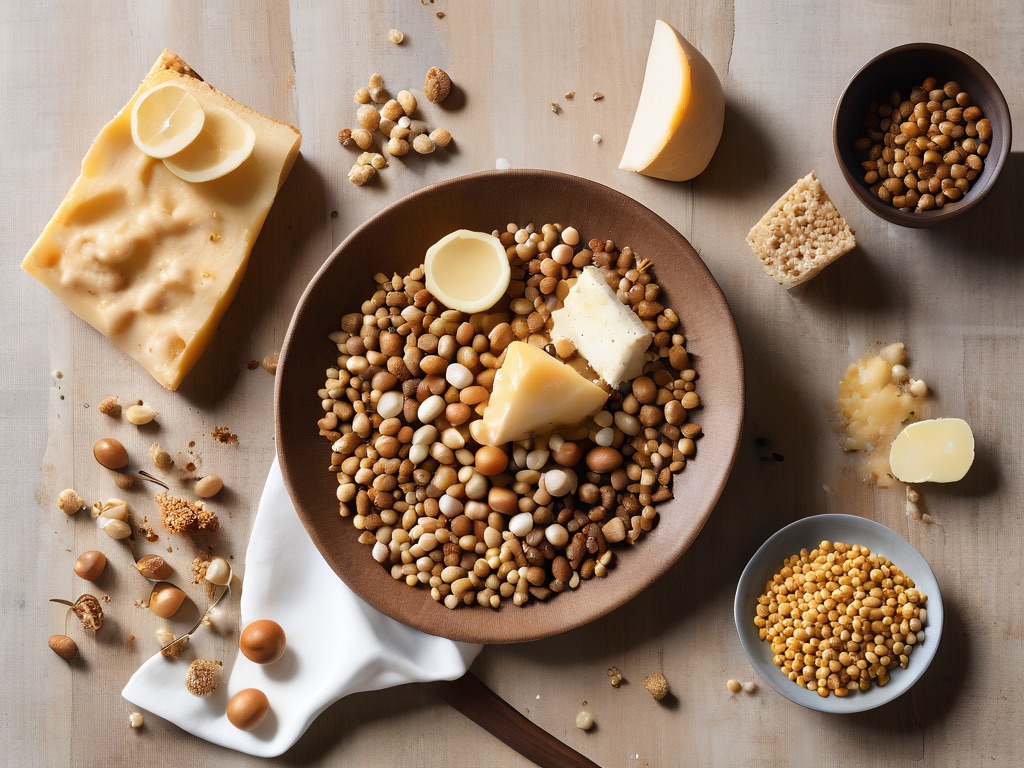
You do not need a supplement to get spermidine; it is abundant in ordinary foods. Wheat germ is by far the richest common source. Fermented and aged foods tend to be high because bacteria produce polyamines. Building a diet around these foods is the most evidence-aligned approach, since the mortality data comes from dietary intake, not pills.
| Food | Approximate Spermidine (mg per 100g) |
|---|---|
| Wheat germ | 24–35 |
| Aged cheese (e.g. aged cheddar) | up to 20 |
| Natto (fermented soybeans) | 11–20 |
| Mushrooms (shiitake, king trumpet) | up to 16 |
| Legumes (soybeans, chickpeas, lentils) | 5–12 |
| Whole grains and cereals | 2–6 |
A typical Western diet delivers somewhere in the range of a few milligrams of spermidine per day. The highest-intake group in the Bruneck study consumed noticeably more, largely by eating more whole grains, legumes, and fermented foods. A daily habit of a spoonful of wheat germ, some legumes, aged cheese, and mushrooms can meaningfully raise your intake through food alone. Eating spermidine-rich foods as part of a broader heart-healthy pattern is the most defensible strategy; our summary of the Planetary Health Diet and your heart shows how well these plant-forward foods fit into a proven dietary pattern.
Spermidine Supplements: Dosage and What to Look For
If you want a supplement in addition to food, a few evidence-based points matter. First, most quality spermidine supplements are derived from wheat germ extract, the same source used in human trials, rather than synthetic spermidine. Second, typical supplement doses range from about 1 mg to 6 mg of spermidine per day. Note that the SmartAge trial used only about 0.9 mg per day, which may have been too low; many current products aim higher, though the “optimal” human dose is genuinely unknown.
When choosing a product, look for third-party testing (an independent lab certificate confirming the actual spermidine content, since polyamine levels are hard to measure and easy to overstate on a label), a clearly stated spermidine amount in milligrams rather than a vague “wheat germ extract” weight, and a reputable brand with transparent sourcing. Be skeptical of products making explicit anti-aging or lifespan claims, because as the human evidence shows, those claims are not proven. A supplement is best viewed as a modest, convenient top-up to a spermidine-rich diet, not a replacement for one.
Safety and Who Should Be Cautious
Spermidine is naturally present in the food supply and in the human body, and dietary and supplemental intake at studied doses has a good safety record with no serious adverse effects reported in the human trials to date, including the 12-month SmartAge study. That said, several groups should be cautious. Because most supplements are wheat-germ-derived, anyone with a wheat allergy or celiac disease should avoid them or seek a gluten-free-verified source. Pregnant or breastfeeding women should not use spermidine supplements because there is no safety data in these groups. Anyone with cancer or a history of cancer should talk to their oncologist first, since polyamines are involved in cell proliferation and the relationship with cancer is complex and not fully understood. As always, check with your doctor before adding a supplement if you take medications or have a chronic condition.
Realistic Expectations
Spermidine is one of the more scientifically grounded longevity compounds, with a plausible mechanism (autophagy), strong animal data, and a compelling 20-year human mortality association. But “associated with living longer” is not the same as “proven to make you live longer,” and the best randomized human trial for cognition was negative. Treat spermidine as a promising, low-risk addition to an already healthy lifestyle, not a miracle pill. The most defensible move today is dietary: eat more wheat germ, legumes, fermented foods, aged cheese, and mushrooms, which benefits your health regardless of whether spermidine turns out to be the active ingredient.
Frequently Asked Questions
What does spermidine do?
Spermidine is a natural polyamine that triggers autophagy, your cells’ “self-cleaning” process that breaks down and recycles damaged proteins and worn-out mitochondria. In animals it extends lifespan and protects the heart, and in humans higher dietary intake is associated with lower mortality, though this remains an association rather than proof.
What foods are highest in spermidine?
Wheat germ is the richest common source at roughly 24–35 mg per 100g. Other high sources include aged cheese (up to 20 mg), natto and other fermented soy (11–20 mg), certain mushrooms like shiitake (up to 16 mg), and legumes such as soybeans, chickpeas, and lentils. Fermented and aged foods tend to be especially rich because bacteria produce polyamines.
Does spermidine really extend lifespan?
In mice, yes: Eisenberg and colleagues showed in Nature Medicine (2016) that oral spermidine extended lifespan and protected the heart. In humans, the 20-year Bruneck Study found the highest-intake group had a mortality difference comparable to being 5.7 years younger, but this is observational. No randomized trial has proven spermidine extends human lifespan.
How much spermidine should I take?
There is no established optimal human dose. Most supplements provide 1–6 mg per day of wheat-germ-derived spermidine. Notably, the 12-month SmartAge trial used only about 0.9 mg per day and found no cognitive benefit, which may reflect too low a dose. Getting spermidine through food, especially wheat germ and legumes, is the most evidence-aligned approach.
Is spermidine safe?
Spermidine occurs naturally in food and the body, and human trials up to 12 months reported no serious adverse effects. However, people with wheat allergy or celiac disease should avoid wheat-germ-derived supplements, pregnant or breastfeeding women should not use them due to lack of data, and anyone with a cancer history should consult their doctor first.
Does spermidine improve memory?
The evidence is mixed and leans negative for supplements. A small 3-month pilot trial (Wirth et al., Cortex 2018, 30 people) found modest memory improvement, but the larger, more rigorous 12-month SmartAge trial (Schwarz et al., JAMA Network Open 2022, 100 people) found no significant memory benefit versus placebo. So a proven cognitive benefit in humans has not been demonstrated.
How does spermidine trigger autophagy?
Spermidine inhibits enzymes called acetyltransferases and influences signaling pathways that regulate autophagy, effectively removing the brakes on the cell’s cleanup process. Studies confirm this is the key mechanism: when researchers genetically block autophagy, spermidine’s protective effects largely disappear, showing autophagy is essential to how it works.
Can I get enough spermidine from diet alone?
Yes. The mortality benefits in the Bruneck Study came entirely from dietary spermidine, not supplements. A daily habit of wheat germ, legumes, aged cheese, fermented foods, and mushrooms can meaningfully raise your intake. A supplement is best seen as a convenient top-up, not a substitute for a spermidine-rich diet.
If you prefer a convenient all-in-one option, spermidine is also included alongside ergothioneine and quercetin in some longevity greens drinks — we take an honest look at one in our Pep Tonic review.
The Bottom Line
Spermidine is among the most credible molecules in longevity research: it has a clear mechanism in autophagy, robust animal data showing lifespan extension and heart protection, and a striking 20-year human study linking higher intake to lower mortality. But the honest picture is that the human evidence is still early. The most rigorous randomized trial to date found no cognitive benefit, and no trial has proven spermidine extends human lifespan. The smart, low-risk move is dietary: build meals around wheat germ, legumes, fermented foods, aged cheese, and mushrooms. If you choose a supplement, pick a wheat-germ-derived, third-party-tested product, keep your expectations realistic, and treat it as one small piece of a healthy lifestyle rather than a shortcut to a longer life.
Sources
- Kiechl S, Pechlaner R, Willeit P, et al. Higher spermidine intake is linked to lower mortality: a prospective population-based study. American Journal of Clinical Nutrition. 2018;108(2):371–380. PMID: 29955838. https://pubmed.ncbi.nlm.nih.gov/29955838/
- Eisenberg T, Abdellatif M, Schroeder S, et al. Cardioprotection and lifespan extension by the natural polyamine spermidine. Nature Medicine. 2016;22(12):1428–1438. https://pmc.ncbi.nlm.nih.gov/articles/PMC5806691/
- Wirth M, Benson G, Schwarz C, et al. The effect of spermidine on memory performance in older adults at risk for dementia: A randomized controlled trial. Cortex. 2018;109:181–188. PMID: 30388439. https://pubmed.ncbi.nlm.nih.gov/30388439/
- Schwarz C, Benson GS, Horn N, et al. Effects of Spermidine Supplementation on Cognition and Biomarkers in Older Adults With Subjective Cognitive Decline (SmartAge): A Randomized Clinical Trial. JAMA Network Open. 2022;5(5):e2213875. PMID: 35616942. https://pmc.ncbi.nlm.nih.gov/articles/PMC9136623/
- Madeo F, Eisenberg T, Pietrocola F, Kroemer G. Spermidine in health and disease. Science. 2018;359(6374):eaan2788. https://pubmed.ncbi.nlm.nih.gov/29371440/