High-Protein, High-Fiber Foods: 4 Foods Do Both, 11 Have 0 g Fiber
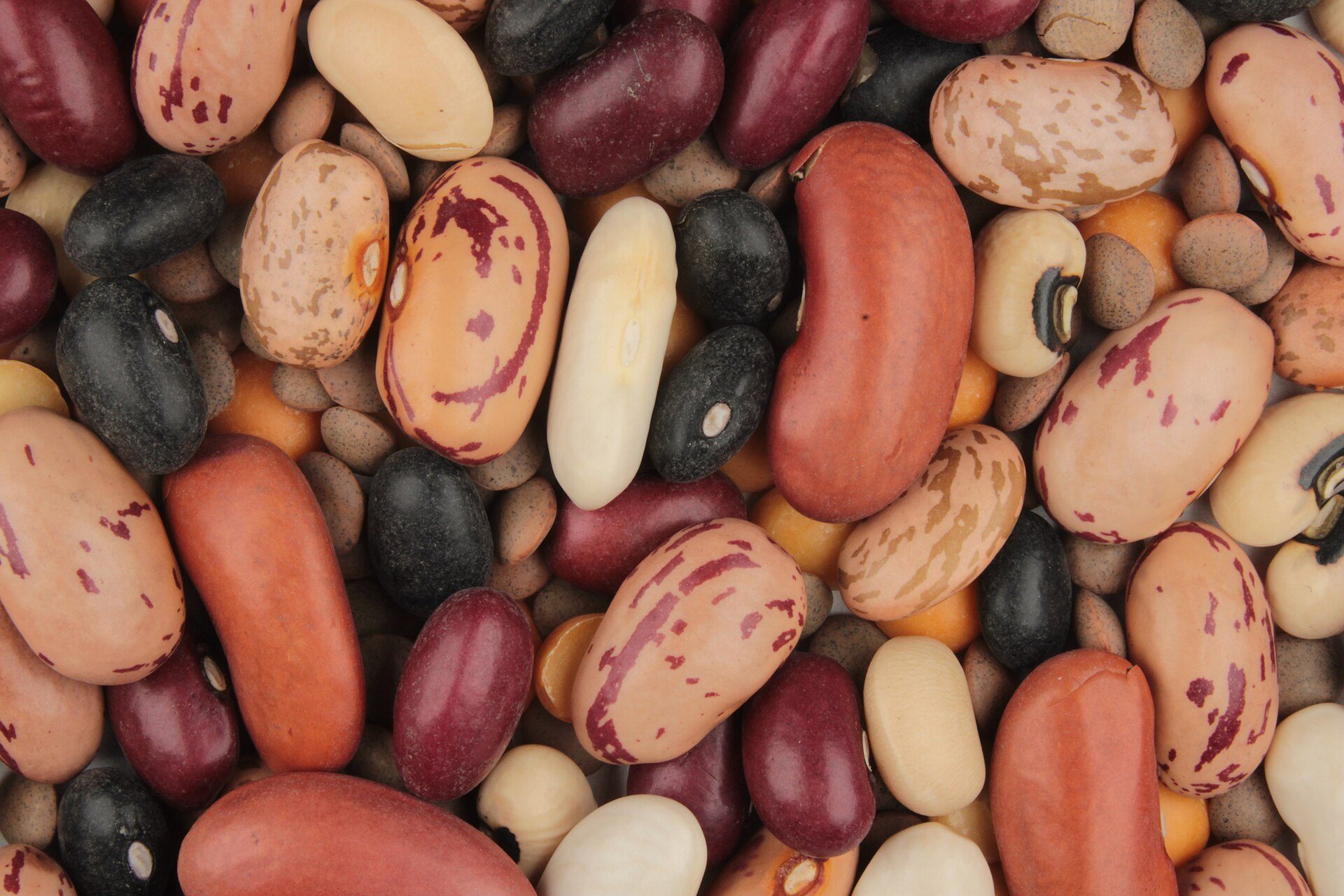
Reviewed by the HealthyMag Editorial Team. Last updated: September 2026. Nutrient values were computed by us from the USDA SR Legacy dataset on 2 September 2026; every source below carries the date it was checked.
Search for “high-protein foods” and the lists agree: chicken, eggs, Greek yogurt, tuna, whey. Search for “high-fiber foods” and a different list appears: beans, oats, chia, whole grains. Almost nothing sits on both lists, and that gap is not an accident of how the lists are written. It is in the food. Animal protein carries no dietary fiber at all, and the foods that carry both nutrients in meaningful amounts belong to one botanical family. We wanted to see how large the gap really is, so rather than quoting other lists we downloaded the database they are all quoting.
How we checked
The USDA’s FoodData Central publishes its SR Legacy tables as downloadable CSV files. We took the April 2018 SR Legacy release, pulled the protein (nutrient 1003) and total dietary fiber (nutrient 1079) values per 100 g for 33 foods that appear routinely on protein or fiber lists, and multiplied by the USDA’s own portion weights: 85 g for a 3 oz portion of meat or fish, 198 g for a cup of cooked lentils, 32 g for a one-third-cup scoop of whey powder, and so on. Every FDC ID is listed in the sources so the values can be re-checked. Two foods, cooked shrimp and tempeh, have no fiber value in the dataset; we report them as “not reported” rather than guessing zero.
Two limits are worth stating up front. SR Legacy is a generic reference: a branded whey isolate or a specific brand of Greek yogurt can differ from the entry we used, and the label on your tub wins. And a one-cup serving of cooked beans is a large portion for many older adults; halve every legume number if you eat half a cup.
The result: fiber is zero on the animal side of the table
Here is the animal-derived half of the table, ranked by protein per typical serving. The fiber column does not need much reading.
| Food (USDA description, shortened) | Serving | Protein | Fiber |
|---|---|---|---|
| Chicken breast, roasted | 3 oz (85 g) | 26.4 g | 0.0 g |
| Whey protein powder | 1 scoop (32 g) | 25.0 g | 1.0 g |
| Turkey breast, roasted | 3 oz (85 g) | 24.4 g | 0.0 g |
| Cottage cheese, 2% | 1 cup (226 g) | 23.6 g | 0.0 g |
| Pork tenderloin, roasted | 3 oz (85 g) | 22.2 g | 0.0 g |
| Ground beef, 90% lean patty | 3 oz (85 g) | 21.4 g | 0.0 g |
| Shrimp, cooked | 3 oz (85 g) | 20.4 g | not reported |
| Salmon, Atlantic, cooked | 3 oz (85 g) | 18.8 g | 0.0 g |
| Greek yogurt, plain, nonfat | 1 container (170 g) | 17.3 g | 0.0 g |
| Tuna, light, canned in water | 3 oz (85 g) | 16.5 g | 0.0 g |
| Milk, 2% | 1 cup (244 g) | 8.1 g | 0.0 g |
| Cheddar cheese | 1 oz (28 g) | 6.5 g | 0.0 g |
| Egg, hard-boiled | 1 large (50 g) | 6.3 g | 0.0 g |
Eleven zeros out of twelve reported values. This is not a flaw in these foods. Dietary fiber is, by definition, the non-digestible carbohydrate of plants, so meat, fish, eggs and dairy cannot contain it. The point is practical rather than nutritional: a person who builds a “protein-first” day out of this table can hit an ambitious protein target while eating almost no fiber at all, and will not notice until the digestive consequences arrive.
The four foods that do both
Now the plant side, same method. We set a simple bar: at least 15 g of protein and at least 10 g of fiber in one serving, roughly the protein of a small chicken portion plus a third to a half of the daily fiber target.
| Food (USDA description, shortened) | Serving | Protein | Fiber |
|---|---|---|---|
| Lentils, cooked | 1 cup (198 g) | 17.9 g | 15.6 g |
| Split peas, cooked | 1 cup (196 g) | 16.3 g | 16.3 g |
| Kidney beans, cooked | 1 cup (177 g) | 15.3 g | 11.3 g |
| Black beans, cooked | 1 cup (172 g) | 15.2 g | 15.0 g |
| Chickpeas, cooked | 1 cup (164 g) | 14.5 g | 12.5 g |
| Edamame, prepared | 1 cup (155 g) | 18.5 g | 8.1 g |
| Soy protein powder | 1 scoop (45 g) | 25.0 g | 3.0 g |
| Tempeh | 1/2 cup (83 g) | 16.8 g | not reported |
| Tofu, firm | 1/2 cup (126 g) | 11.4 g | 1.1 g |
| Hemp seeds, hulled | 3 tbsp (30 g) | 9.5 g | 1.2 g |
| Pumpkin seed kernels | 1 oz (28 g) | 8.6 g | 1.7 g |
| Quinoa, cooked | 1 cup (185 g) | 8.1 g | 5.2 g |
| Soymilk, unfortified | 1 cup (243 g) | 7.9 g | 1.5 g |
| Peanut butter, smooth | 2 tbsp (32 g) | 7.1 g | 1.6 g |
| Almonds | 1 oz (28 g) | 6.0 g | 3.5 g |
| Pistachios, dry roasted | 1 oz (28 g) | 6.0 g | 2.9 g |
| Oats, dry | 1/2 cup (40 g) | 5.3 g | 4.1 g |
| Chia seeds | 1 oz (28 g) | 4.7 g | 9.8 g |
| Green peas, cooked | 1/2 cup (80 g) | 4.1 g | 3.6 g |
| Whole-wheat bread | 1 slice (32 g) | 4.0 g | 1.9 g |
Four foods clear the bar: lentils, split peas, kidney beans and black beans. Chickpeas miss the protein line by half a gram and edamame misses the fiber line by about two grams, so treat both as honorary members. Everything else that is genuinely high in protein on the plant side (soy powder, tofu, hemp, pumpkin seeds) is low in fiber, and everything that is genuinely high in fiber (chia, oats) is modest in protein. The overlap is legumes, and it is only legumes.
Two entries deserve a second look. Chia seeds are the strongest fiber source per gram in the whole table, 9.8 g in a single ounce, but their 4.7 g of protein means they are a fiber supplement to a protein plan, not a protein source. And soy protein powder, at 3 g of fiber per scoop, carries three times the fiber of whey but still only a tenth of what a cup of lentils does. A powder is a protein tool, not a fiber tool, whichever plant or animal it came from.
Two days, same protein, 25 grams of fiber apart
To see what the table means in a kitchen, we assembled two protein-focused days from the same rows. Both are partial days, just the protein-carrying foods, and both land at a target many older adults are aiming for.
Day A, animal-only: one scoop of whey (25.0 g protein), 3 oz of roasted chicken breast (26.4 g), one container of nonfat Greek yogurt (17.3 g) and one hard-boiled egg (6.3 g). Total: 75.0 g of protein and 1.0 g of fiber, all of it from the whey.
Day B, one swap: the same chicken (26.4 g protein) and Greek yogurt (17.3 g), but the whey and egg are replaced by one cup of cooked lentils (17.9 g protein, 15.6 g fiber) and one ounce of chia seeds (4.7 g, 9.8 g). Total: 66.3 g of protein and 25.4 g of fiber.
Day B gives up about 9 g of protein and gains about 24 g of fiber. For a woman over 50 with a fiber target of 21 g, Day B clears the target before vegetables, fruit or grains are counted; Day A leaves her 20 g short with the protein foods already eaten. This is the mechanism behind a complaint we hear often from readers who took our protein advice seriously: they hit the number and became constipated. They did not eat too much protein. They built the number from a column of zeros.
Why this matters more after 50
The protein side of this is well established, and we have covered the trial evidence in detail in our guide to how much protein adults need after 60. The short version: the PROT-AGE Study Group, convened by the European Union Geriatric Medicine Society, recommends that people over 65 take in “at least in the range of 1.0 to 1.2 g protein per kilogram of body weight per day”, with 1.2 g/kg or more for those who are exercising and 1.2 to 1.5 g/kg for most older adults with acute or chronic disease. The group names one exception: people with severe kidney disease (an estimated GFR below 30) who are not on dialysis “may need to limit protein intake”. For a 70 kg person the baseline range works out to 70 to 84 g a day, which is roughly what both of our example days deliver.
The fiber side gets less attention, and the numbers move in the opposite direction with age. The National Academies’ Dietary Reference Intakes set the Adequate Intake for total fiber at 38 g for men and 25 g for women aged 19 to 50, then lower it to 30 g for men and 21 g for women from age 51, because the fiber target is tied to energy intake (about 14 g per 1,000 kcal) and energy needs fall. So the older adult is asked to eat more protein and slightly less fiber than a younger one, and the temptation is to let fiber slide entirely. The national data suggest that is what happens: a 2016 summary from a Food and Fiber Summit reported that “only about 5% of the population meets recommendations” for fiber, while “most people believe they consume enough fiber”. That gap between belief and intake is exactly what a table of zeros predicts.
What fiber does and does not fix
The honest evidence on fiber and constipation is narrower than the marketing. A 2012 meta-analysis in the World Journal of Gastroenterology searched 1,322 articles and found only five randomized controlled trials of adequate quality. Pooled, dietary fiber increased stool frequency compared with placebo (odds ratio 1.19, 95% confidence interval 0.58 to 1.80, P below 0.05) with no heterogeneity between studies. But the authors’ own conclusion is the sentence worth remembering: fiber “does not obviously improve stool consistency, treatment success, laxative use and painful defecation”. Fiber makes people go more often; it does not reliably make going easier, and it did not reduce laxative use in the pooled trials.
Read against our table, that means the goal is not to chase a heroic fiber number. It is to stop running a protein plan at 1 g of fiber a day. Moving from Day A to Day B, or simply adding a cup of legumes to an animal-protein day, takes an older adult from far below the Adequate Intake to at or above it, which is where the trial evidence for stool frequency applies. Anyone with new or worsening constipation, blood in the stool, or unintended weight loss should see a clinician rather than a shopping list; those are not fiber problems.
What to buy, if the conclusion applies to you
The table points at two things, and neither is a protein powder. If your protein comes mostly from the animal column, the cheapest correction in our data is a cup of cooked legumes, and the densest fiber add-on per spoon is chia.
- Dry green or brown lentils, plain, unseasoned. Cooked, one cup carried 17.9 g protein and 15.6 g fiber in the USDA data; a half cup is a realistic first portion. Green lentils, 4 lb bulk bag (Amazon)
- Whole chia seeds. One ounce, about two tablespoons, carried 9.8 g of fiber and 4.7 g of protein; stir into the Greek yogurt that is already on your list. Relative Foods Organic Black Chia Seeds, Gluten-Free, 2 lb (Amazon)
Disclosure: these are Amazon affiliate links and HealthyMag earns a small commission on qualifying purchases at no extra cost to you. We are pointing at foods rather than a fiber supplement because the trial evidence above is for dietary fiber and the USDA table shows exactly where it is. If you already eat a cup of beans a day, you do not need to buy anything.
What we are not recommending is a “high-protein, high-fiber” shake or bar on the strength of its front label. The generic whey entry in the USDA data has 1 g of fiber per scoop and the soy entry 3 g; a product claiming more is adding an isolated fiber, which the constipation trials above did not specifically test. Check the Nutrition Facts panel, not the packaging. For the broader question of whether protein powder is worth using at all, see our comparison of whey and plant protein powders, and for the common fear that protein itself causes weight gain, the evidence says otherwise.
Frequently Asked Questions
What foods are high in both protein and fiber?
In USDA SR Legacy data, four foods carry at least 15 g of protein and 10 g of fiber in one cooked cup: lentils (17.9 g protein, 15.6 g fiber), split peas (16.3 g, 16.3 g), kidney beans (15.3 g, 11.3 g) and black beans (15.2 g, 15.0 g). Chickpeas (14.5 g, 12.5 g) and edamame (18.5 g, 8.1 g) come close. All are legumes.
Does protein powder have fiber?
Very little. The USDA’s generic whey-based protein powder entry has about 1 g of fiber per 32 g scoop alongside 25 g of protein, and the soy-based entry about 3 g per 45 g scoop. Products advertising more fiber add an isolated fiber ingredient; check the Nutrition Facts panel rather than the front label.
Is chicken high in fiber?
No. Chicken, turkey, beef, pork, fish, eggs and dairy contain 0 g of dietary fiber, because fiber is the non-digestible carbohydrate of plants. Of the 12 animal-derived foods with a fiber value in our USDA pull, 11 were 0.0 g.
How much fiber do you need after 50?
The National Academies’ Adequate Intake for total fiber is 30 g a day for men and 21 g a day for women from age 51, down from 38 g and 25 g for adults aged 19 to 50, because the target follows energy intake at roughly 14 g per 1,000 kcal.
How much protein do older adults need?
The PROT-AGE Study Group recommends at least 1.0 to 1.2 g of protein per kilogram of body weight per day for people over 65, 1.2 g/kg or more for those who exercise, and 1.2 to 1.5 g/kg for most older adults with acute or chronic illness. People with severe kidney disease not on dialysis may need to limit protein and should follow their clinician’s advice.
Does eating more fiber cure constipation?
Partly. A 2012 meta-analysis of five randomized trials found dietary fiber increased stool frequency versus placebo (odds ratio 1.19) but did not significantly improve stool consistency, treatment success, laxative use or painful defecation. Fiber helps frequency; it is not a complete treatment, and new or severe constipation should be assessed by a clinician.
Sources
- U.S. Department of Agriculture, Agricultural Research Service. FoodData Central, SR Legacy release (April 2018), downloaded as CSV and computed by HealthyMag on 2 September 2026. Nutrient 1003 (protein) and 1079 (total dietary fiber) per 100 g, multiplied by USDA portion weights. Entries used, by FDC ID: lentils 172421 (1 cup, 198 g: 17.9 g protein, 15.6 g fiber); split peas 172429 (196 g: 16.3 g, 16.3 g); black beans 173735 (172 g: 15.2 g, 15.0 g); kidney beans 173740 (177 g: 15.3 g, 11.3 g); chickpeas 173757 (164 g: 14.5 g, 12.5 g); edamame 168411 (155 g: 18.5 g, 8.1 g); whey protein powder 173180 (32 g scoop: 25.0 g, 1.0 g); soy protein powder 173181 (45 g: 25.0 g, 3.0 g); chicken breast 171477 (85 g: 26.4 g, 0.0 g); turkey breast 171492 (85 g: 24.4 g, 0.0 g); cottage cheese 172182 (226 g: 23.6 g, 0.0 g); pork tenderloin 168250 (85 g: 22.2 g, 0.0 g); ground beef 171793 (85 g: 21.4 g, 0.0 g); shrimp 175180 (85 g: 20.4 g, fiber not reported); salmon 175168 (85 g: 18.8 g, 0.0 g); Greek yogurt 170894 (170 g: 17.3 g, 0.0 g); tuna 173709 (85 g: 16.5 g, 0.0 g); milk 171267 (244 g: 8.1 g, 0.0 g); cheddar 173414 (28 g: 6.5 g, 0.0 g); egg 173424 (50 g: 6.3 g, 0.0 g); tempeh 174272 (83 g: 16.8 g, not reported); tofu 172448 (126 g: 11.4 g, 1.1 g); hemp seeds 170148 (30 g: 9.5 g, 1.2 g); pumpkin seeds 170556 (28 g: 8.6 g, 1.7 g); quinoa 168917 (185 g: 8.1 g, 5.2 g); soymilk 172446 (243 g: 7.9 g, 1.5 g); peanut butter 172470 (32 g: 7.1 g, 1.6 g); almonds 170567 (28 g: 6.0 g, 3.5 g); pistachios 170185 (28 g: 6.0 g, 2.9 g); oats 173904 (40 g: 5.3 g, 4.1 g); chia seeds 170554 (28 g: 4.7 g, 9.8 g); green peas 170017 (80 g: 4.1 g, 3.6 g); whole-wheat bread 172688 (32 g: 4.0 g, 1.9 g). Day A totals 75.0 g protein and 1.0 g fiber; Day B totals 66.3 g protein and 25.4 g fiber; 33 foods checked, 11 of 12 animal-derived foods at 0.0 g fiber, 4 foods over 15 g protein and 10 g fiber. Dataset: https://fdc.nal.usda.gov/download-datasets; example entry: https://fdc.nal.usda.gov/food-details/172421/nutrients. Checked 2 September 2026.
- Bauer J, Biolo G, Cederholm T, et al. Evidence-based recommendations for optimal dietary protein intake in older people: a position paper from the PROT-AGE Study Group. J Am Med Dir Assoc. 2013;14(8):542-559. PMID 23867520. For people over 65 the group “recommends average daily intake at least in the range of 1.0 to 1.2 g protein per kilogram of body weight per day”; “higher protein intake (ie, ≥ 1.2 g/kg body weight/d) is advised for those who are exercising”; “most older adults who have acute or chronic diseases need even more dietary protein (ie, 1.2-1.5 g/kg body weight/d)”; those with severe kidney disease (estimated GFR <30 mL/min/1.73 m²) not on dialysis “may need to limit protein intake”. For a 70 kg person, 1.0 to 1.2 g/kg is 70 to 84 g. https://pubmed.ncbi.nlm.nih.gov/23867520/. Checked 2 September 2026.
- Institute of Medicine (National Academies). Dietary Reference Intakes: Recommended Dietary Allowances and Adequate Intakes, Total Water and Macronutrients (summary table). Total fiber Adequate Intake: males 19-50 y 38 g/d, 51-70 y and over 70 y 30 g/d; females 19-50 y 25 g/d, 51-70 y and over 70 y 21 g/d. The AI is derived at about 14 g per 1,000 kcal. Reproduced at NCBI Bookshelf, NBK56068 Table 4. https://www.ncbi.nlm.nih.gov/books/NBK56068/table/summarytables.t4/. Checked 2 September 2026.
- Quagliani D, Felt-Gunderson P. Closing America’s Fiber Intake Gap: Communication Strategies From a Food and Fiber Summit. Am J Lifestyle Med. 2016;11(1):80-85. PMID 30202317. “Most people believe they consume enough fiber. However, national consumption surveys indicate that only about 5% of the population meets recommendations.” Note: the second author is affiliated with the Kellogg Company, a cereal manufacturer. https://pubmed.ncbi.nlm.nih.gov/30202317/. Checked 2 September 2026.
- Yang J, Wang HP, Zhou L, Xu CF. Effect of dietary fiber on constipation: a meta analysis. World J Gastroenterol. 2012;18(48):7378-7383. PMID 23326148. Searched 1,322 articles; five randomized controlled trials included. “Dietary fiber showed significant advantage over placebo in stool frequency (OR = 1.19; 95%CI: 0.58-1.80, P < 0.05)”, with no heterogeneity (I² = 0). Conclusion: “Dietary fiber intake can obviously increase stool frequency in patients with constipation. It does not obviously improve stool consistency, treatment success, laxative use and painful defecation.” https://pubmed.ncbi.nlm.nih.gov/23326148/. Checked 2 September 2026.
This article reports published nutrient data and trial results. It is not a diagnosis or an individual dietary prescription; people with kidney disease, diabetes, or a digestive condition should discuss protein and fiber targets with their clinician.
Photo: mixed dried beans, peas and lentils, by “Bean appreciator” via Wikimedia Commons, CC0.