How Much Vitamin D Per Day? 600 IU, and Food Gives Men 184

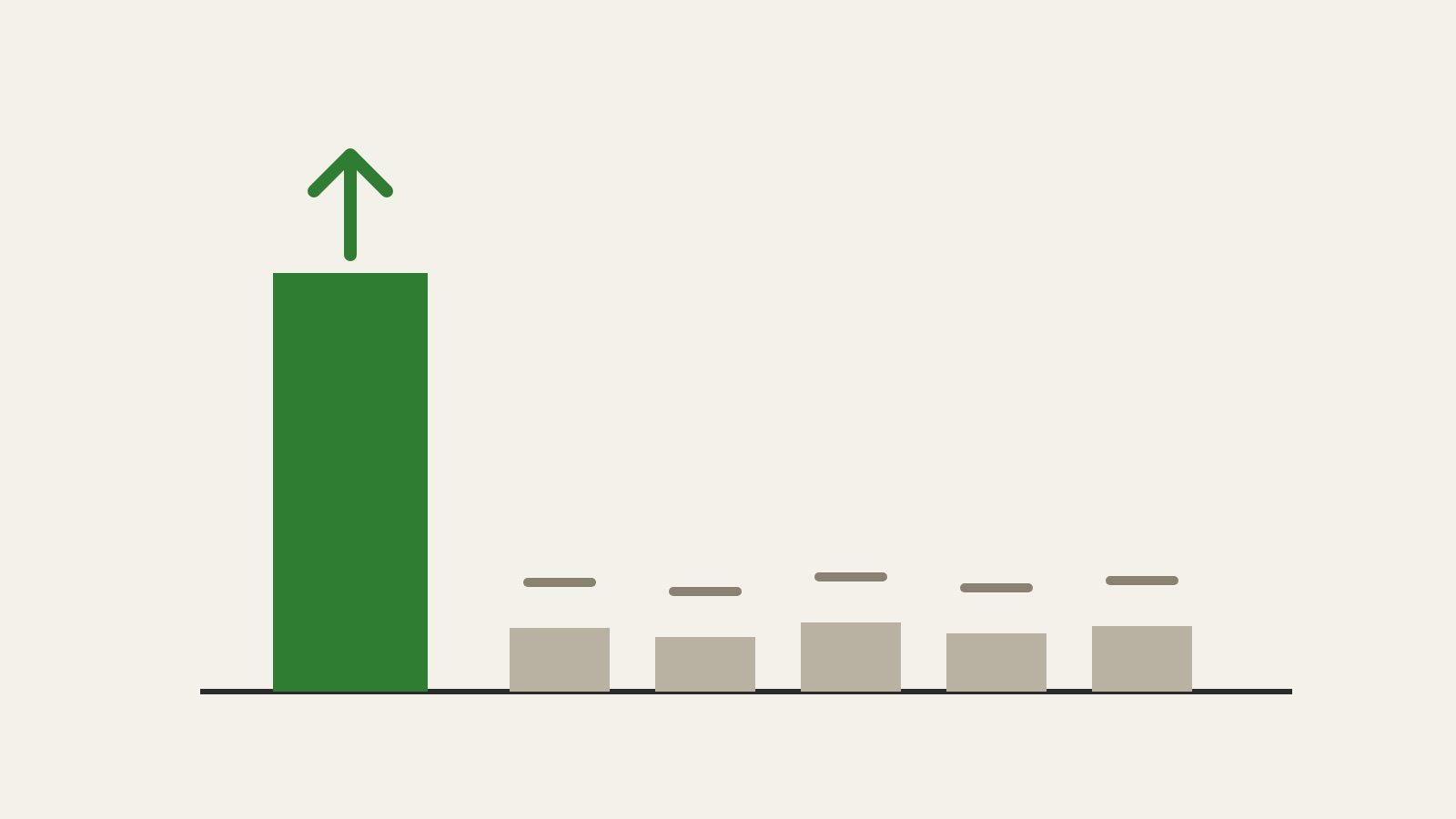
Quick Answer: The RDA for vitamin D is 600 IU (15 mcg) a day for men and women aged 19 to 70, and 800 IU (20 mcg) after 70; the upper limit for adults is 4,000 IU. Food alone rarely gets there. In the national food survey for 2013 to 2016, the median man ate 4.6 mcg (184 IU) a day and the median woman 3.7 mcg (148 IU), and 92% of men and more than 97% of women fell below the average requirement from food. Yet blood tests from the same survey years tell a different story: only 5% of Americans were at risk of vitamin D deficiency and 18% at risk of inadequacy, because sunlight and supplements fill most of the gap. So a small daily supplement, 600 to 1,000 IU, makes sense if you get little sun or have risk factors, and more is not better: 2,000 IU a day in the VITAL trial did not reduce fractures, cancer or heart disease in healthy adults.
Vitamin D is the one nutrient where “how much you eat” and “how much you have” are two different questions. The first answer looks alarming. The second is mostly reassuring. The right daily amount depends on which one applies to you.
How much vitamin D you need
The Food and Nutrition Board’s RDAs, published by NIH’s Office of Dietary Supplements:
| Age | Men | Women | Upper limit |
|---|---|---|---|
| 14 to 70 | 600 IU (15 mcg) | 600 IU (15 mcg) | 4,000 IU (100 mcg) |
| Over 70 | 800 IU (20 mcg) | 800 IU (20 mcg) | 4,000 IU (100 mcg) |
Men and women have the same targets; pregnancy and breastfeeding do not change them. One microgram equals 40 IU. NIH notes that these RDAs were set assuming minimal sun exposure, which is why they can look high next to what food provides.
What food actually supplies
The USDA’s usual-intake tables from NHANES 2013 to 2016, food and drink only:
| Group | Median from food | Below the average requirement (400 IU) |
|---|---|---|
| Men 19 to 50 | 4.3 mcg (172 IU) | 93% |
| Men 51 to 70 | 4.6 mcg (184 IU) | 92% |
| Men 71 and older | 5.6 mcg (224 IU) | 85% |
| Women 19 to 50 | 3.5 mcg (140 IU) | over 97% |
| Women 51 to 70 | 3.8 mcg (152 IU) | over 97% |
| Women 71 and older | 4.0 mcg (160 IU) | 97% |
The IU figures are our conversion at 40 IU per microgram. Even the top 5% of adult men by food intake reached only 11.4 mcg (456 IU), below the RDA. By food alone, almost nobody meets it.
What blood tests show
Here is the twist. A 2019 analysis in the American Journal of Clinical Nutrition by Herrick and colleagues looked at actual blood levels of 25-hydroxyvitamin D in NHANES 2011 to 2014. Using the Food and Nutrition Board’s cut-offs:
- 5.0% of Americans aged 1 and over were at risk of deficiency (below 30 nmol/L, or 12 ng/mL).
- 18.3% were at risk of inadequacy (30 to 49 nmol/L).
- The rest had levels the Board considers sufficient for most people (50 nmol/L, 20 ng/mL, or more).
Risk was not spread evenly. Deficiency peaked at 7.6% in adults aged 20 to 39 and was 2.9% in people 60 and over. It was 17.5% in non-Hispanic Black Americans against 2.1% in non-Hispanic white Americans, and lower in people who used supplements or ate more vitamin D. The difference between the food table and the blood table is mostly sunlight, plus supplements and fortified foods.
So how much should you take?
- If you get regular sun and have no risk factors, the blood data suggest you are probably fine without a supplement.
- If you get little sun, are older, have darker skin, have obesity or have had gastric bypass, or have a condition that affects fat absorption (the groups NIH lists as at higher risk), a daily supplement of 600 to 1,000 IU covers the RDA with food included.
- If you want certainty, a 25-hydroxyvitamin D blood test answers the question directly.
- Stay under 4,000 IU a day from all sources unless a doctor is treating a measured deficiency.
More is not better
The large trials in healthy adults have not found benefits from higher doses. In the VITAL trial, 25,871 men over 50 and women over 55 took 2,000 IU a day or a placebo for a median of 5.3 years. Vitamin D did not reduce total fractures (hazard ratio 0.98), non-vertebral fractures or hip fractures, and the result did not change with starting blood levels. Our guide to whether you should take vitamin D covers VITAL’s cancer and heart results, and vitamins for muscle weakness shows the threshold where vitamin D does help: people who start out deficient.
If you need a supplement, keep it small: a plain vitamin D3 at 1,000 IU (25 mcg) covers the RDA at any adult age, with food on top, and stays far below the 4,000 IU limit. Compare vitamin D3 1,000 IU on Amazon.
Affiliate link: as an Amazon Associate we earn from qualifying purchases, at no extra cost to you. Add up vitamin D from multivitamins and calcium-plus-D products so the total stays under 4,000 IU a day.
Frequently Asked Questions
How much vitamin D should a man take per day?
The RDA is 600 IU (15 mcg) a day from age 19 to 70 and 800 IU (20 mcg) after 70, the same as for women. Men get a median of about 170 to 225 IU a day from food, depending on age, so a 600 to 1,000 IU supplement covers the gap for men who get little sun. The upper limit is 4,000 IU.
How much vitamin D should a woman take per day?
600 IU (15 mcg) a day from 19 to 70 and 800 IU (20 mcg) after 70, including during pregnancy and breastfeeding. Women get a median of about 140 to 160 IU from food, and more than 97% fall below the average requirement from food alone.
How much vitamin D per day for a woman over 50?
600 IU until 70 and 800 IU after. In VITAL, which included women 55 and older, 2,000 IU a day did not reduce fractures, so higher doses are not needed for bone health in women who are not deficient.
If most people eat too little vitamin D, why aren’t most people deficient?
Because the skin makes vitamin D from sunlight, and many people take supplements or eat fortified foods. The RDAs assume minimal sun exposure. In NHANES 2011 to 2014, only 5% of Americans had blood levels in the deficiency range.
Who is most likely to be low in vitamin D?
In NHANES 2011 to 2014, the risk of deficiency was highest in adults aged 20 to 39 (7.6%) and in non-Hispanic Black Americans (17.5%), and lower in people who took supplements. People with little sun exposure or conditions affecting fat absorption are also at higher risk.
Is 1,000 IU of vitamin D a day enough?
For most adults it is more than the RDA of 600 to 800 IU, and with food on top it covers the requirement at any age. It is a sensible daily amount for people who get little sun, well below the 4,000 IU upper limit.
The Bottom Line
Adults need 600 IU of vitamin D a day, 800 IU after 70. Food supplies only about a quarter to a third of that, yet only about one in twenty Americans is actually deficient, because sunlight does most of the work. If you get little sun or are in a higher-risk group, 600 to 1,000 IU a day is enough; a blood test settles any doubt. Higher doses did not prevent fractures in healthy older adults.
Sources
- NIH Office of Dietary Supplements. Vitamin D Fact Sheet for Health Professionals (updated 27 June 2025): RDA 15 mcg (600 IU) for ages 1-70, 20 mcg (800 IU) over 70; UL 100 mcg (4,000 IU); 1 mcg = 40 IU; RDAs assume minimal sun exposure; FNB cut-offs: risk of deficiency below 30 nmol/L (12 ng/mL), 50 nmol/L (20 ng/mL) sufficient for most people; groups at risk of inadequacy include breastfed infants, older adults, people with limited sun exposure, people with dark skin, people with fat malabsorption, and people with obesity or gastric bypass. ods.od.nih.gov. Checked 25 September 2026.
- USDA Agricultural Research Service. Usual Nutrient Intake from Food and Beverages, by Gender and Age, What We Eat in America, NHANES 2013-2016 (2019), Table A 31, Vitamin D. EAR 10 mcg. Medians: men 19-50 4.3 mcg, 51-70 4.6, 71+ 5.6; women 19-50 3.5, 51-70 3.8, 71+ 4.0. Below EAR: men 19-50 93%, 51-70 92%, 71+ 85%, 19+ 92%; women 19-70 over 97%, 71+ 97%. Men 19+ 95th percentile 11.4 mcg. ars.usda.gov (PDF). Checked 25 September 2026.
- Herrick KA, Storandt RJ, Afful J, et al. Vitamin D status in the United States, 2011-2014. American Journal of Clinical Nutrition, 2019;110(1):150-157. PMID 31076739. At risk of deficiency 5.0%, inadequacy 18.3%; deficiency 7.6% at ages 20-39, 2.9% at 60+; 17.5% non-Hispanic Black, 2.1% non-Hispanic white; lower with supplement use. Checked 25 September 2026.
- LeBoff MS, Chou SH, Ratliff KA, et al. Supplemental vitamin D and incident fractures in midlife and older adults. New England Journal of Medicine, 2022;387(4):299-309. PMID 35939577. 25,871 participants, 2,000 IU/day, median 5.3 years; total fractures HR 0.98, nonvertebral 0.97, hip 1.01; no modification by baseline 25(OH)D. Checked 25 September 2026.