What Is Sarcopenia? The 3 Tests That Diagnose It, With Cut-Offs
Quick Answer: Sarcopenia is a progressive loss of muscle strength and mass, linked with a higher likelihood of falls, fractures, physical disability and death. Since 2016 it has had its own diagnosis code, ICD-10-CM M62.84. The definition changed in 2018: Europe’s expert group now uses low strength, not low muscle size, as the first test, because strength is “the most reliable measure of muscle function.” Sarcopenia is probable when grip strength is under 27 kg in men or 16 kg in women, or when standing up from a chair five times takes more than 15 seconds. It is confirmed when a scan also shows low muscle mass, and severe when walking speed is 0.8 m/s or slower. Depending on the definition used, it affects 10% to 27% of people over 60. The one treatment international guidelines strongly recommend is resistance training. Our product pick for this topic, Advanced Muscle Plus, is in the box near the end of this page.
For most of its history, sarcopenia was defined by one thing: too little muscle mass. If you are reading this because a doctor used the word, or because you have noticed your legs getting weaker, the most useful thing to know is that the medical definition has moved on. This page explains the current definition, the three tests behind it with their cut-off numbers, how common it is, and what the treatment guidelines actually recommend. If the weakness came on suddenly, read our guide on sudden loss of leg strength in older adults first, because a sudden change has other causes.
Sarcopenia definition: strength first, size second
The European Working Group on Sarcopenia in Older People (EWGSOP) published its revised consensus, known as EWGSOP2, in 2019. Its key change was the order of the tests:
“In its 2018 definition, EWGSOP2 uses low muscle strength as the primary parameter of sarcopenia; muscle strength is presently the most reliable measure of muscle function.”
The group explained why size alone was dropped as the starting point: because of technological limits, “muscle quantity and muscle quality remain problematic as primary parameters to define sarcopenia.” A scan can show less muscle in someone whose strength is fine, and normal-looking muscle in someone who cannot get out of a chair.
EWGSOP2 sets out three steps:
- Probable sarcopenia: low muscle strength.
- Confirmed sarcopenia: low strength plus low muscle quantity or quality.
- Severe sarcopenia: all of the above plus low physical performance.
It also separates primary sarcopenia, which is “largely attributable to ageing,” from secondary sarcopenia, where another cause such as illness, inactivity or poor nutrition can be identified. And it splits acute sarcopenia, lasting under six months and usually tied to an illness or injury, from chronic sarcopenia lasting six months or more.
The 3 tests, with the cut-off numbers
| What is measured | Test | Men | Women |
|---|---|---|---|
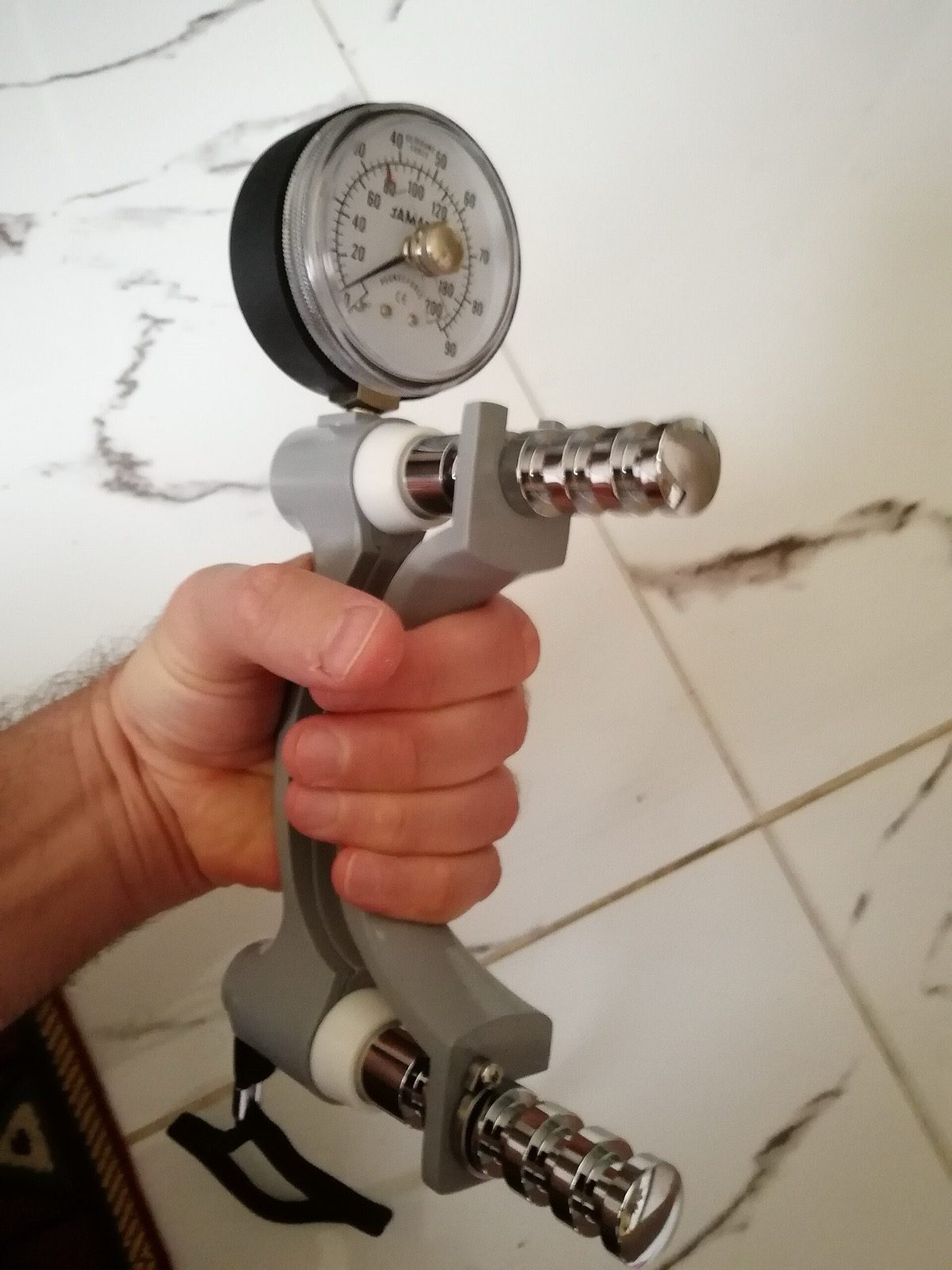
| 1. Strength (probable) | Grip strength, hand dynamometer | Under 27 kg | Under 16 kg |
| Chair stand, five rises | More than 15 seconds | ||
| 2. Muscle quantity (confirmed) | Appendicular skeletal muscle mass (arms and legs, by DXA scan) | Under 20 kg | Under 15 kg |
| Same, divided by height squared | Under 7.0 kg/m² | Under 5.5 kg/m² | |
| 3. Performance (severe) | Usual walking speed over 4 metres | 0.8 m/s or slower | |
The chair-stand test is one you can do at home: time how long it takes to rise five times from a seated position without using your arms. Over 15 seconds is the EWGSOP2 threshold for low strength. Grip strength needs a dynamometer, which most clinics have.
The 5-question screen: SARC-F
Before any measurement, EWGSOP2 recommends a short questionnaire called the SARC-F to find people who may have sarcopenia. It asks about five things: strength (lifting and carrying), assistance needed in walking, rising from a chair, climbing stairs and falls. EWGSOP2 notes that the SARC-F has “low-to-moderate sensitivity and a very high specificity,” so it “will mostly detect severe cases.” A low score does not rule sarcopenia out; a high one is a strong reason to test.
How common is sarcopenia?
The answer depends heavily on which definition is used. A 2022 meta-analysis pooled 151 studies covering 692,056 people with a mean age of 68.5:
- Prevalence ranged from 10% to 27% in people aged 60 and over, depending on the classification and cut-offs.
- Severe sarcopenia ranged from 2% to 9%.
- Under the EWGSOP2 definition, more men than women had sarcopenia (11% vs 2%); under the International Working Group definition the pattern reversed (17% in women vs 12% in men).
That last point is a reminder that sarcopenia is a definition applied to a measurement, and different definitions catch different people.
Sarcopenia symptoms
The symptoms are the things the tests measure: weaker grip (struggling with jars and bags), needing your arms to get out of a chair, slower walking, difficulty with stairs, and falls. These are also the five areas the SARC-F asks about. Because sarcopenia develops slowly, the first sign is often a task that used to be easy, such as carrying shopping up a flight of stairs, becoming a problem.
Sarcopenia treatment: what the guidelines recommend
The International Conference on Frailty and Sarcopenia Research (ICFSR) published clinical practice guidelines in 2018, grading each treatment by the strength of the evidence:
| Treatment | ICFSR recommendation |
|---|---|
| Resistance-based physical activity | Strong: “may be effective to improve lean mass, strength and physical function” |
| Protein supplementation or a protein-rich diet | Conditional |
| Vitamin D supplementation | No recommendation; use judgement if blood level is under 20 ng/mL |
| Anabolic hormones | No recommendation |
The guideline is blunt about the rest: “There is a lack of robust evidence to assess the strength of other treatment options.” It also recommends screening adults aged 65 and over every year, or after a major health event such as a fall that leads to hospital admission.
For the training itself, our guide to building muscle after 60 covers how often and how hard. For protein targets, see how much protein older adults need. For the supplements marketed for sarcopenia and how each one has fared in trials, see our sarcopenia supplements review.
If you are looking for a supplement here, Advanced Muscle Plus combines calcium HMB, dileucine and vitamin D3 (affiliate link; details in our pick below).
Can sarcopenia be reversed?
Resistance training is the only treatment the international guidelines strongly recommend, and the reason is that it improves the very things the diagnosis measures: strength, muscle mass and physical function. Whether someone moves back above the cut-offs depends on how far below them they started and on the cause; secondary sarcopenia from an illness or a period of bed rest may respond differently from slow, age-related loss.
Frequently Asked Questions
What is sarcopenia in simple terms?
Age-related loss of muscle strength and muscle mass that is large enough to raise the risk of falls and disability. The current European definition starts with strength: grip under 27 kg for men or 16 kg for women, or more than 15 seconds for five chair stands.
What is the ICD-10 code for sarcopenia?
M62.84. It was added to ICD-10-CM in 2016, which formally recognised sarcopenia as a disease.
What are the 4 symptoms of sarcopenia?
Weak grip, difficulty rising from a chair, slow walking and trouble climbing stairs are the core signs; falls are the fifth item on the SARC-F screening questionnaire.
What age does sarcopenia start?
It is mostly a condition of older age; the 2022 prevalence meta-analysis reported 10% to 27% in people aged 60 and over. EWGSOP2 frames prevention across the whole life course: maximise muscle in youth and young adulthood, maintain it in middle age and minimise loss in older age.
What is the best treatment for sarcopenia?
Resistance-based exercise, which the ICFSR guidelines strongly recommend. Protein supplementation or a protein-rich diet is conditionally recommended. No drug is recommended.
How is sarcopenia diagnosed?
By measuring strength first (grip or chair stand), then muscle quantity (usually a DXA scan), then physical performance (walking speed). Low strength makes it probable, low muscle confirms it, and slow walking makes it severe.
The Bottom Line
Sarcopenia is a diagnosis of weak muscles first and small muscles second. If you are under 27 kg (men) or 16 kg (women) on a grip test, or need more than 15 seconds for five chair stands, sarcopenia is probable and worth confirming. It affects between one in ten and one in four people over 60, depending on the definition. The treatment with the strongest backing is resistance training, with protein as a conditional add-on.
🔎 Our researched pick: Advanced Muscle Plus combines calcium HMB, dileucine and vitamin D3 in one daily regimen, for older adults who want a supplement alongside resistance training and protein. Our Advanced Muscle Plus review goes through the label ingredient by ingredient.
Affiliate link — if you buy through it we may earn a commission at no extra cost to you.
Sources
- Cruz-Jentoft AJ, Bahat G, Bauer J, et al. Sarcopenia: revised European consensus on definition and diagnosis. Age Ageing, 2019;48(1):16-31. PMID 30312372. Low muscle strength as primary parameter; probable, confirmed and severe sarcopenia; Table 3 cut-offs: grip <27 kg men, <16 kg women; chair stand >15 s for five rises; ASM <20 kg men, <15 kg women; ASM/height² <7.0 and <5.5 kg/m²; gait speed ≤0.8 m/s for severe sarcopenia; chair stand “rise five times from a seated position without using his or her arms”; “associated with increased likelihood of adverse outcomes including falls, fractures, physical disability and mortality”; SARC-F 5 items, “low-to-moderate sensitivity and a very high specificity”; primary/secondary and acute (<6 months)/chronic categories; life-course prevention. Checked 5 October 2026.
- Dent E, Morley JE, Cruz-Jentoft AJ, et al. International Clinical Practice Guidelines for Sarcopenia (ICFSR): Screening, Diagnosis and Management. J Nutr Health Aging, 2018;22(10):1148-1161. PMID 30498820. Strong recommendation for resistance-based physical activity; conditional for protein; no recommendation for vitamin D or anabolic hormones; vitamin D judgement if <20 ng/mL; annual screening from 65. Checked 5 October 2026.
- Petermann-Rocha F, Balntzi V, Gray SR, et al. Global prevalence of sarcopenia and severe sarcopenia: a systematic review and meta-analysis. J Cachexia Sarcopenia Muscle, 2022;13(1):86-99. PMID 34816624. 151 studies in meta-analysis, n=692,056, mean age 68.5; prevalence 10%-27% in ≥60 years; severe 2%-9%; EWGSOP2 men 11% vs women 2%; IWGS women 17% vs men 12%. Checked 5 October 2026.
- Anker SD, Morley JE, von Haehling S. Welcome to the ICD-10 code for sarcopenia. J Cachexia Sarcopenia Muscle, 2016;7(5):512-514. PMID 27891296. ICD-10-CM M62.84, awarded September 2016. Checked 5 October 2026.
- Malmstrom TK, Morley JE. SARC-F: a simple questionnaire to rapidly diagnose sarcopenia. J Am Med Dir Assoc, 2013. PMID 23810110. Checked 5 October 2026.
Featured photo: hand dynamometer, by Ashashyou, Wikimedia Commons, CC0.