Ergothioneine: The ‘Longevity Vitamin’ Your Body Can’t Make
This article contains affiliate links. We only recommend products we have independently researched. Reviewed by the HealthyMag Editorial Team. Last updated: July 2026.
Most nutrients get their moment of fame and then fade. Ergothioneine has done the opposite. For decades it was a biochemical curiosity, a strange sulfur-containing molecule found in mushrooms that nobody could explain. Then researchers discovered your body builds a special protein whose main job is to grab this compound from your food and stash it inside your cells, including your brain, liver, and red blood cells. Evolution rarely builds dedicated machinery for something useless. That single fact turned ergothioneine into one of the most intriguing candidates in modern longevity science, and earned it a provocative nickname: the “longevity vitamin.”
This article separates what the research actually shows from what supplement marketing implies. The short version: the biology is genuinely fascinating and the observational data are consistent and encouraging, but the definitive proof most people want does not exist yet.
What is ergothioneine, and why is it unusual?
Ergothioneine (pronounced er-go-thigh-oh-neen) is a naturally occurring amino acid derivative with a powerful antioxidant and cytoprotective profile. Chemically it is a thiourea derivative of the amino acid histidine, and it is remarkably stable, which is unusual for an antioxidant. Humans, and vertebrates in general, cannot synthesize it. It is made almost exclusively by fungi and certain soil bacteria and cyanobacteria, then works its way up the food chain into the plants and animals we eat. In other words, every molecule of ergothioneine in your body originally came from something you swallowed.
Here is what makes it genuinely different from most dietary antioxidants like vitamin C or the polyphenols in tea. Your body has a dedicated transporter for it. In 2005, Dirk Gründemann and colleagues published a landmark paper in the Proceedings of the National Academy of Sciences showing that a protein previously called OCTN1 (gene name SLC22A4) is, in fact, a highly specific ergothioneine transporter. This carrier concentrates ergothioneine inside cells, sometimes to levels far higher than in the surrounding blood, and it is especially active in tissues that face high oxidative stress: the liver, kidneys, bone marrow, eyes, and brain.
Think about what that implies. Most antioxidants you eat are absorbed passively, used briefly, and excreted. Ergothioneine gets a first-class ticket and a reserved seat. The existence of an evolutionarily conserved transporter strongly suggests the body treats this molecule as worth keeping, which is exactly the argument that pushed it from obscurity into serious research.
Why is it called the “longevity vitamin”?
The nickname is not marketing hype invented by supplement brands. It comes from Bruce Ames, a celebrated biochemist and one of the most cited scientists in his field. In a 2018 paper in PNAS titled “Prolonging healthy aging: Longevity vitamins and proteins,” Ames proposed a category he calls “longevity vitamins”: compounds that are not strictly required to prevent short-term deficiency disease, but which may be needed for long-term health and a longer healthspan.
His reasoning builds on his earlier “triage theory.” When a nutrient is in short supply, the body prioritizes functions needed for immediate survival and reproduction over functions that protect against slow, long-term damage like the kind that accumulates with aging. Under this framework, you might have “enough” ergothioneine to feel fine today while still falling short of the amount that would best protect you over decades. Ames listed ergothioneine among a handful of putative longevity vitamins, alongside compounds like the carotenoids and the bacterial metabolite PQQ.
An important honesty check: “longevity vitamin” is a hypothesis, not an official designation. Ergothioneine is not classified as a vitamin by any regulatory or nutritional authority. There is no recommended daily allowance, no defined deficiency disease, and no consensus that you must consume it. Ames himself framed it as a proposal deserving of more research, not a settled conclusion. Keep that distinction in mind every time you see the phrase used in a product ad.
The human evidence: what the observational data show
The most compelling human data come from large population studies that measured ergothioneine in people’s blood and then tracked their health for years. The standout is a 2020 study by Einar Smith and colleagues, published in the cardiology journal Heart, using the population-based Malmö Diet and Cancer study from Sweden.
The researchers measured 112 blood metabolites in 3,236 adults who were free of cardiovascular disease and diabetes at baseline, then followed them for a median of 21.4 years. During that time 603 people developed cardiovascular disease and 843 died. Two findings stood out. First, of all 112 metabolites measured, ergothioneine was the one most strongly associated with a “healthy” dietary pattern rich in vegetables, fruit, fish, and whole grains. Second, higher blood ergothioneine independently predicted better outcomes. Per one standard deviation increase in ergothioneine, the risk of coronary artery disease was about 15% lower (hazard ratio 0.85), cardiovascular mortality about 21% lower (hazard ratio 0.79), and overall mortality about 14% lower (hazard ratio 0.86). These associations held after adjusting for traditional risk factors.
That is a striking signal, and it is consistent with a growing body of work linking low ergothioneine to age-related disease. But there is a crucial caveat that YMYL honesty demands we make loudly: this is an observational association, not proof of cause. People with high ergothioneine also tend to eat more mushrooms, vegetables, and whole foods, exercise more, and generally live healthier lives. Ergothioneine may be a marker of a good diet rather than the active ingredient driving the benefit, or it may be both. Only a randomized controlled trial can untangle that, and no large, long-term RCT of ergothioneine supplementation and hard outcomes like heart attacks or death has been completed. If you want a broader look at how observational hype meets trial reality in the longevity space, our coverage of NMN and NAD for longevity walks through the same tension.
Mushrooms and food sources
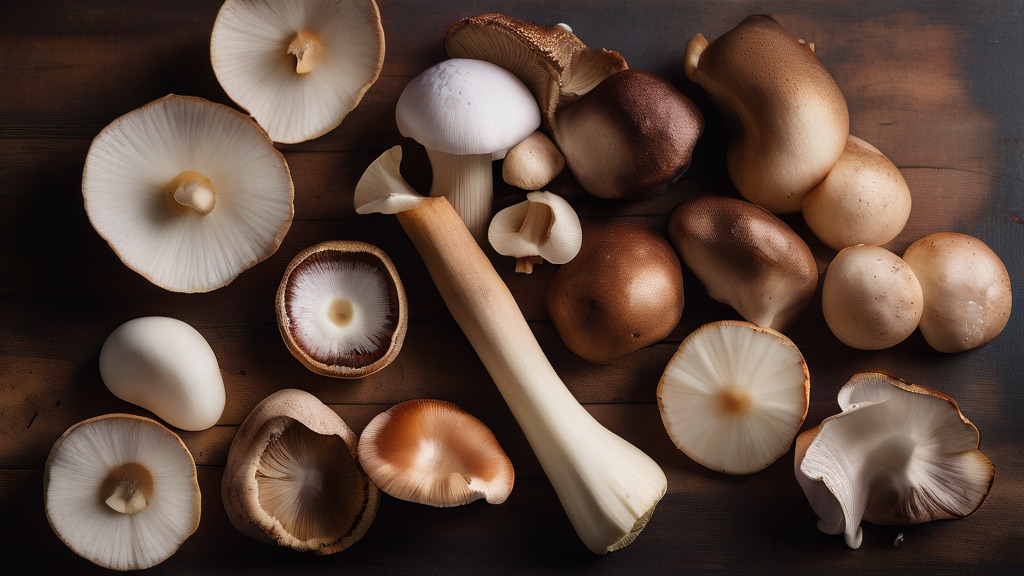
If you want more ergothioneine, the answer is refreshingly simple and delicious: eat mushrooms. They are the richest dietary source by a wide margin. A widely cited 2017 study by Michael Kalaras, Robert Beelman, and colleagues in Food Chemistry analyzed 13 mushroom species and found ergothioneine content ranged enormously, from about 0.15 to 7.27 milligrams per gram of dry weight, with specialty and wild varieties like porcini at the top and common white button mushrooms lower but still meaningfully present.
The team also noted that ergothioneine concentrates in the cap more than the stem, and that it survives cooking well thanks to its chemical stability, so a stir-fry or sautéed mushroom dish retains most of it. A few non-mushroom foods, notably tempeh, certain beans, and organ meats like liver, contain small amounts, largely because ergothioneine passes up the food chain from soil microbes.
| Food source | Approximate ergothioneine (per 100 g) | Notes |
|---|---|---|
| Porcini (Boletus edulis) | Very high (roughly 50 mg or more) | Wild variety; the richest tested source |
| Oyster mushroom | High (roughly 10–13 mg) | Easy to find; also high in shiitake range |
| Shiitake | High (roughly 10–12 mg) | Content rises when dried |
| King oyster / maitake | Moderate to high | Good everyday specialty options |
| White button / cremini / portobello | Moderate (roughly 2–5 mg) | Same species; cheapest, still worthwhile |
| Tempeh, black & red beans | Low (well under 1 mg) | Modest amounts from soil microbes |
| Chicken liver, oat bran | Low (well under 1 mg) | Minor contributors |
Values are approximate and vary widely by species, growing conditions, and whether the mushroom is fresh or dried. The takeaway is the ranking, not the exact number: mushrooms dwarf every other common food. A practical goal that appears repeatedly in the literature is a serving of mushrooms most days of the week.
Ergothioneine declines with age and disease
One reason researchers suspect ergothioneine matters for aging is that blood levels tend to fall as we get older, and fall further in people with certain diseases. In a 2016 study in Biochemical and Biophysical Research Communications, Irwin Cheah, Barry Halliwell, and colleagues at the National University of Singapore reported that ergothioneine levels in an elderly population decreased with age, and were lower in people showing signs of cognitive decline. They raised the question, directly in their title, of whether low ergothioneine is a risk factor for neurodegeneration.
Follow-up work has reinforced the pattern. A later study of older adults attending memory clinics found that low plasma ergothioneine predicted subsequent cognitive and functional decline, and separate research has tied low levels to frailty. Again, honesty is essential here: declining levels could be a cause of age-related damage, a consequence of poorer diets and worse gut absorption in older or sicker people, or simply a bystander marker. The correlation is real and reproducible; the direction of cause remains unproven. This mirrors the pattern seen with other diet-derived longevity candidates such as taurine and aging, where blood levels drop over time but supplementation trials in humans are still catching up.
Supplements: what to look for
If your diet is already mushroom-heavy, you may not need a supplement at all. But because ergothioneine is stable, well absorbed, and appears to be very well tolerated, supplements have become a reasonable option for people who rarely eat mushrooms or who want a consistent daily dose.
The key thing to look for is the correct form. Naturally occurring ergothioneine is the L-isomer, written as L-ergothioneine. A commonly used, patented, pharmaceutical-grade form is branded MitoPrime, which is L-ergothioneine produced by fermentation rather than extracted from mushrooms. When a product lists MitoPrime or specifies L-ergothioneine, you know you are getting the biologically relevant molecule at a defined dose.
Typical supplement doses in studies and products fall in the range of roughly 5 to 25 mg per day, which is modest and broadly in line with what a mushroom-rich diet might supply. Higher does not automatically mean better; the body’s transporter tightly regulates uptake and retention. Because supplements are loosely regulated, favor brands that are third-party tested (look for NSF, USP, or a published certificate of analysis) so that what is on the label matches what is in the capsule.
Is ergothioneine safe?
By the standards of dietary supplements, ergothioneine has a reassuring safety profile. It has been consumed by humans for as long as people have eaten mushrooms, it is naturally present throughout the body, and toxicology studies supported its regulatory acceptance as a novel food ingredient in the European Union and its “generally recognized as safe” status in the United States for use in certain foods at defined levels. Human studies at supplemental doses have not reported significant adverse effects, consistent with how tightly the body controls its uptake.
That said, “well tolerated in studies” is not the same as “proven safe for everyone in every situation.” The long-term effects of daily high-dose supplementation over many years have not been rigorously studied, simply because those trials have not been done. If you are pregnant or breastfeeding, have a medical condition, or take prescription medication, talk with your clinician before starting any supplement.
What is proven versus what is still emerging
Ergothioneine sits in an unusual spot: the mechanistic biology is strong, the observational human data are consistent, but the confirmatory trials are missing. Here is an honest scorecard.
| Reasonably established | Emerging or unproven |
|---|---|
| Body cannot make it; it is diet-derived | That supplements extend human lifespan |
| A dedicated transporter (OCTN1/SLC22A4) concentrates it in cells | That it prevents dementia or heart disease (no RCT) |
| Mushrooms are the richest food source | Optimal dose for long-term health |
| Higher blood levels track with lower CVD and mortality risk | Whether it is the cause or just a marker of good diet |
| Blood levels decline with age and in cognitive decline | Direction of cause for that decline |
| Good safety and tolerability at studied doses | Very long-term high-dose safety |
The bottom-line pattern is one of promise held back by a lack of definitive trials. For a similar compound where the mechanism excites researchers but human proof lags, see our look at spermidine and longevity.
Frequently Asked Questions
What is ergothioneine?
Ergothioneine is a naturally occurring sulfur-containing antioxidant made by fungi and certain soil bacteria. Humans cannot synthesize it, so it must come from the diet, primarily mushrooms. The body uses a dedicated transporter (OCTN1/SLC22A4) to absorb it and concentrate it inside cells, especially in tissues exposed to oxidative stress like the liver, brain, and eyes.
What foods are highest in ergothioneine?
Mushrooms are by far the richest source. Wild varieties like porcini top the list, followed by oyster, shiitake, king oyster, and maitake, while common white button, cremini, and portobello mushrooms contain smaller but still meaningful amounts. Outside of mushrooms, only modest quantities appear in foods like tempeh, beans, and organ meats. Cooking does not destroy it, because the molecule is unusually stable.
Does ergothioneine actually work?
It depends on what “work” means. The evidence that higher blood levels are associated with lower rates of cardiovascular disease, mortality, and cognitive decline is real and consistent, but it is observational. No large randomized controlled trial has proven that taking an ergothioneine supplement prevents disease or extends lifespan. So the honest answer is: promising biology and encouraging correlations, but not yet proven cause and effect.
Is ergothioneine a vitamin?
Not officially. Biochemist Bruce Ames proposed it as a putative “longevity vitamin” in 2018, meaning a compound that may support long-term health even though it is not required to prevent a classic deficiency disease. But no regulatory or nutritional authority classifies it as a vitamin, and there is no recommended daily allowance. “Longevity vitamin” is a hypothesis, not an official status.
How much ergothioneine should I take?
Most supplements and studies use roughly 5 to 25 mg per day, which is in the range a mushroom-rich diet might supply. There is no established optimal dose, and because the body’s transporter regulates uptake, more is not necessarily better. If you eat mushrooms most days, you may not need a supplement at all.
Is ergothioneine safe?
It has a good safety record. It is naturally present in the body and diet, holds “generally recognized as safe” status for certain food uses in the US and novel-food approval in the EU, and human studies at supplemental doses have not reported significant side effects. However, very long-term, high-dose safety has not been rigorously tested. Pregnant or breastfeeding people and those with medical conditions or on medication should check with a clinician first.
What is MitoPrime?
MitoPrime is a branded, pharmaceutical-grade form of pure L-ergothioneine, the natural isomer, produced by fermentation rather than mushroom extraction. Because it delivers a defined, consistent dose of the biologically relevant form, seeing MitoPrime or “L-ergothioneine” on a label is a useful sign of quality.
Can I just eat mushrooms instead of supplementing?
Yes, and for most people that is the simplest approach. A serving of mushrooms several times a week provides a meaningful amount of ergothioneine along with fiber, B vitamins, and other nutrients you will not get from a capsule. Supplements are mainly useful for people who dislike or rarely eat mushrooms and want a guaranteed daily dose.
The Bottom Line
Ergothioneine is one of the more scientifically legitimate members of the longevity supplement crowd. Your body cannot make it, yet it built a dedicated transporter to hoard it, which is a strong hint that the molecule matters. Large observational studies consistently link higher blood levels to lower rates of heart disease, death, and cognitive decline, and blood levels fall as we age and get sick. Mushrooms, the richest food source, are cheap, tasty, and something most nutrition experts already recommend eating more of.
The honest limitation is the one supplement ads gloss over: correlation is not causation, and no large human trial has shown that taking ergothioneine actually extends life or prevents disease. Until those trials arrive, the smartest, lowest-risk move is the least glamorous one, eat more mushrooms. If you rarely do, a modest 5 to 25 mg dose of third-party-tested L-ergothioneine (such as MitoPrime) is a reasonable, well-tolerated option, best viewed as an insurance policy rather than a proven fountain of youth.
Sources
- Gründemann D, Harlfinger S, Golz S, et al. “Discovery of the ergothioneine transporter,” Proceedings of the National Academy of Sciences USA, 2005;102(14):5256–5261. https://pmc.ncbi.nlm.nih.gov/articles/PMC555966/
- Ames BN. “Prolonging healthy aging: Longevity vitamins and proteins,” Proceedings of the National Academy of Sciences USA, 2018;115(43):10836–10844. https://www.pnas.org/doi/10.1073/pnas.1809045115
- Smith E, Ottosson F, Hellstrand S, et al. “Ergothioneine is associated with reduced mortality and decreased risk of cardiovascular disease,” Heart, 2020;106(9):691–697. https://pmc.ncbi.nlm.nih.gov/articles/PMC7229907/
- Kalaras MD, Richie JP, Calcagnotto A, Beelman RB. “Mushrooms: A rich source of the antioxidants ergothioneine and glutathione,” Food Chemistry, 2017;233:429–433. https://pubmed.ncbi.nlm.nih.gov/28530594/
- Cheah IK, Feng L, Tang RMY, Lim KHC, Halliwell B. “Ergothioneine levels in an elderly population decrease with age and incidence of cognitive decline; a risk factor for neurodegeneration?” Biochemical and Biophysical Research Communications, 2016;478(1):162–167. https://www.sciencedirect.com/science/article/abs/pii/S0006291X16311962
- Wu LY, Kan CN, Cheah IK, et al. “Low Plasma Ergothioneine Predicts Cognitive and Functional Decline in an Elderly Cohort Attending Memory Clinics,” Antioxidants, 2022;11(9):1717. https://pmc.ncbi.nlm.nih.gov/articles/PMC9495818/
- Beelman RB, Kalaras MD, Phillips AT, Richie JP. “Health consequences of improving the content of ergothioneine in the food supply,” FEBS Letters, 2022;596(10):1231–1240. https://febs.onlinelibrary.wiley.com/doi/10.1002/1873-3468.14268