Lion’s Mane Capsules vs Powder vs Tincture: What 117 Labels Show
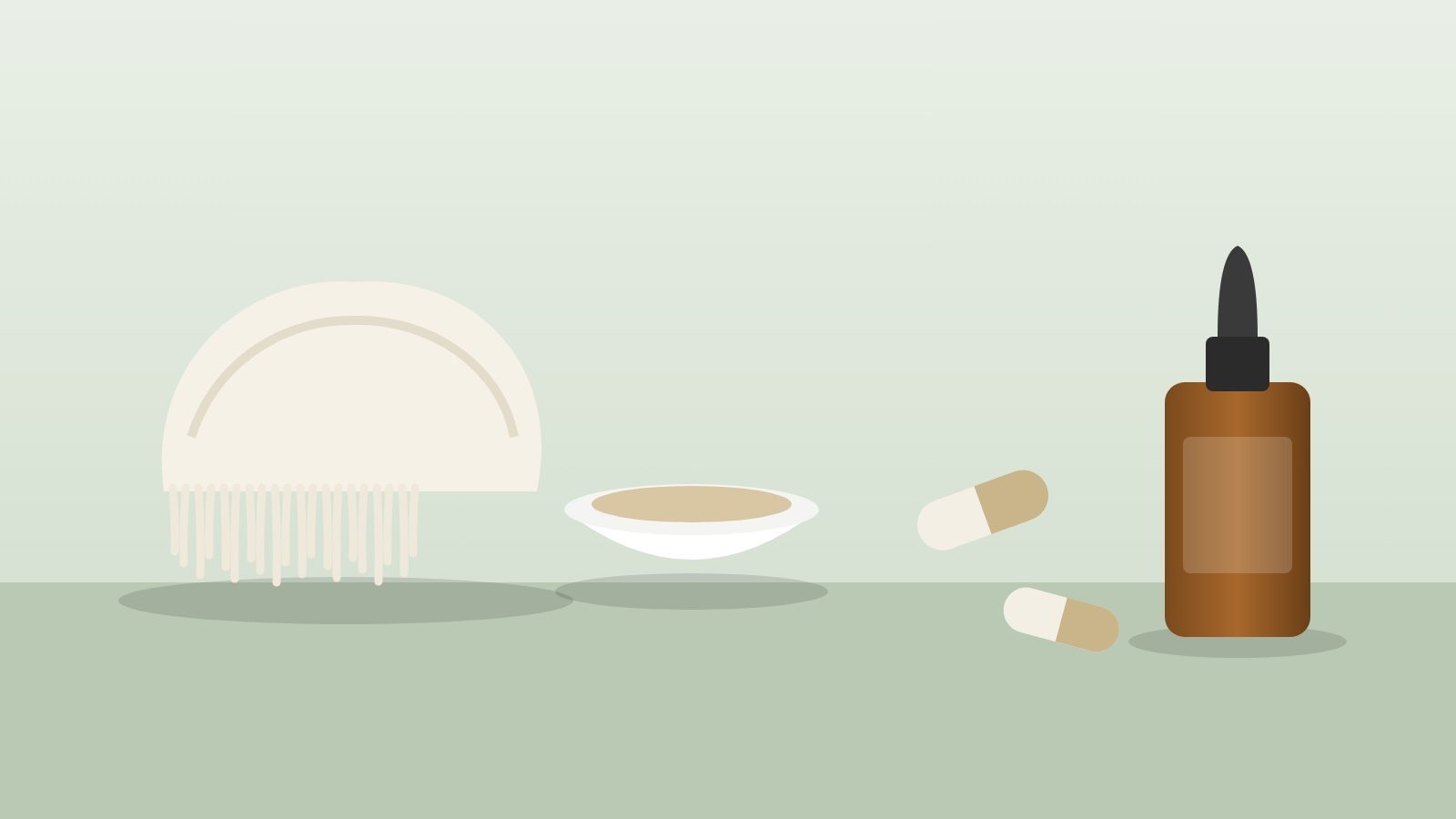
Quick Answer: Capsule, powder, tincture or gummy is the second question, not the first. We read every on-market single-ingredient lion’s mane label in the NIH Dietary Supplement Label Database on 12 October 2026: 117 labels from 58 brands. 56 of them (48%) never say which part of the mushroom is inside, fruiting body or mycelium. 27 (23%) list mycelium, a fermented “biomass” or a grain such as oats or brown rice. Only 34 (29%) name the fruiting body alone. None of the 7 liquid tinctures states a milligram amount on its Supplement Facts panel, and only 6 of the 108 labels that give an amount reach 3,000 mg per serving, the daily amount of dried powder in the best-known trial. None of the human trials we found used a tincture or a tea, and none compared one form with another. What they specified was the material: dried lion’s mane powder, a fruiting-body extract, or a mycelium enriched in erinacine A.
Search for lion’s mane and the first choice the shops put in front of you is the format: capsules, a tub of powder, a dropper bottle, gummies. The format changes the price per serving and how easy it is to take every day. It does not tell you what you are getting. To see how much the labels themselves tell you, we pulled every lion’s mane product label in the National Institutes of Health’s Dietary Supplement Label Database (DSLD) and read the ingredient panel of each one. If you want the dose question rather than the format question, our lion’s mane dosage guide covers it, and our page on lion’s mane gummies covers that one format in detail.
What we counted
The DSLD is maintained by the NIH Office of Dietary Supplements and holds the label text of supplements sold in the United States. On 12 October 2026 we searched it for “hericium”, “lions mane” and “lion’s mane mushroom”, kept on-market labels whose product name is lion’s mane or Hericium, and removed any that add another active ingredient: other mushrooms such as reishi or chaga, black pepper extract, ginkgo, caffeine, vitamins or probiotics. Nutrition-facts lines such as calories and capsule ingredients such as cellulose were not counted as actives.
That left 117 single-ingredient lion’s mane labels from 58 brands. These are labels, not distinct products: some brands file a separate label for each bottle size, so one product can appear more than once.
| Form on the label | Labels | Share |
|---|---|---|
| Capsule | 61 | 52% |
| Powder | 42 | 36% |
| Liquid (tincture, drops) | 7 | 6% |
| Gummy | 5 | 4% |
| Tablet | 2 | 2% |
No product in the set was filed as a tea. Lion’s mane tea exists, mostly as loose dried mushroom or as a blend with other herbs, but the blends fall outside a single-ingredient count and loose mushroom sold as food is not in the supplement database.
The question the label should answer first: which part of the mushroom?
Lion’s mane can be sold as the fruiting body, which is the shaggy white mushroom you can cook, or as mycelium, the root-like network that grows through a substrate. When mycelium is grown on grain and the whole thing is dried and milled, the grain goes into the powder too. Labels in the database describe this in several ways: “mycelium”, “myceliated brown rice”, “fermented brown rice biomass”, “cultured on organic oats”, or a grain listed among the ingredients.
| What the label says about the part | Labels | Share of 117 |
|---|---|---|
| Fruiting body only | 34 | 29% |
| Mycelium, biomass or a grain substrate | 27 | 23% |
| Does not say | 56 | 48% |
The split is similar across formats, which is the point of this page. Among capsules, 16 name the fruiting body only, 13 list mycelium or grain and 32 say neither. Among powders the figures are 12, 10 and 20. Among the 7 liquids they are 2, 3 and 2. Choosing a capsule over a powder does not move you into the half of the market that tells you what is inside.
The 27 mycelium-or-grain labels include several large brands, and some of them also mention the fruiting body, for example a “full spectrum” product that lists both. We counted any mention of mycelium, biomass or a grain substrate in that group, so it is a count of what the label discloses, not a judgement about quality. A label that says nothing may contain fruiting body, mycelium or both; you cannot tell from the panel.
What the human trials actually used
The published trials did not test formats against each other. They each used one specified material, and that material is what you would need to match.
| Trial | What participants took | How long | Main result |
|---|---|---|---|
| Mori 2009, adults 50 to 80 with mild cognitive impairment (n=30) | Four 250 mg tablets containing 96% dried lion’s mane (Yamabushitake) powder, three times a day | 16 weeks | Higher cognitive scores than placebo at weeks 8, 12 and 16; scores fell significantly 4 weeks after stopping |
| Saitsu 2019 | Supplements containing the fruiting body | 12 weeks | MMSE improved; two other memory tests did not |
| Li 2020, mild Alzheimer’s disease | Three 350 mg capsules a day of erinacine A-enriched mycelium (5 mg/g erinacine A) | 49 weeks | MMSE improved in the mycelium group; daily-living scores differed between groups |
| Docherty 2023, healthy adults 18 to 45 (n=41) | 1.8 g a day (three 600 mg capsules), a “proprietary blend of organic Hericium erinaceus mushroom complex” | 28 days | Faster on one test 60 minutes after a single dose; trend toward lower stress (p=0.051); null and some negative findings |
| Surendran 2025, healthy adults 18 to 35 (n=18) | A single 3 g dose of a 10:1 fruiting-body extract | Single dose | No overall effect on cognition or mood; one test improved |
| Nagano 2010, women (n=30) | Lion’s mane in cookies | 4 weeks | Lower depression and “indefinite complaints” scores than before |
Three things stand out. First, the materials differ: dried whole powder, a fruiting-body extract, and a mycelium standardized to a named compound are not interchangeable, and the mycelium trial specified its erinacine A content rather than leaving it open. Second, even a trial product can leave the part unstated: the 2023 Docherty study describes its capsules only as a “proprietary blend of organic Hericium erinaceus mushroom complex”. Third, nothing in this list is a tincture or a tea. None of the trials was designed to compare one format with another.
Capsules vs powder: the same question in different packaging
Of the labels that give an amount, the median serving is 1,000 mg for capsules (60 labels, range 450 to 2,400 mg) and 1,000 mg for powders (41 labels, range 500 to 3,500 mg). Gummies run lower, with a median of 750 mg across 5 labels, and the two tablets declare 350 and 650 mg.
Across all 108 labels that state an amount, only 6 reach 3,000 mg per serving, the daily amount of dried powder in the Mori trial (four 250 mg tablets, three times a day, at 96% mushroom powder, which is just under 3 g). 72 sit between 1,000 and 2,999 mg and 30 are under 1,000 mg. That does not make any of them wrong, because many labels direct more than one serving a day. It does mean that the number on the front of the tub is rarely the trial number, and that it is meaningful only once you know whether it is whole mushroom, extract or mycelium on grain.
Powder is usually cheaper per gram and easier to take in larger amounts. Capsules make a fixed amount easy to repeat. Neither format changes what the material is.
Tinctures: no milligrams on the panel
All 7 liquid lion’s mane labels in the database leave the milligram amount off the Supplement Facts panel as filed. Five give a volume in millilitres, for example 0.75 mL or 2.25 mL of a fruiting-body extract, and two list the amount as not present. A volume of liquid tells you how much to take from the dropper; without the concentration it does not tell you how much mushroom that is.
Where a tincture label does give a figure, read the line that produces it. A common pattern is an extract ratio with an “equivalent to” weight: a small amount of a 10:1 extract described as equal to ten times that weight of dried mushroom. That equivalence is the manufacturer’s statement about the starting material, not a measured amount of any compound. The 3 g single dose in the Surendran trial was 3 g of a 10:1 fruiting-body extract, which on the same logic is described as the equivalent of 30 g of dried mushroom, and it still did not improve overall cognition or mood compared with placebo.
Tea and fresh lion’s mane
None of the human trials we found used tea. The fruiting body is a food mushroom: the authors of the 2025 Surendran trial note that “up to 300g of fresh fruiting body are often consumed in the form of mushroom steaks.” Cooking it or steeping dried slices is a reasonable way to eat it. There is no trial data to tell you how much of what was tested in capsules ends up in a cup of tea, so a tea cannot be matched to any of the doses above.
Beta-glucans, ratios and the compounds nobody lists
Only 27 of the 117 labels (23%) state a beta-glucan or polysaccharide content, and 26 (22%) state an extraction ratio such as 8:1 or 20:1. Just one label in the set names erinacines or hericenones, the compounds the mycelium and fruiting-body research centres on, and the only trial in the table above that measured a compound was the erinacine A mycelium study.
A beta-glucan percentage is still useful. It is one of the few numbers on a mushroom label that describes content rather than a weight of starting material. But it is not what any of these trials dosed, so it helps you compare products rather than match a study.
How to read a lion’s mane label in 30 seconds
- Find the part. Look for “fruiting body”, “mycelium”, “biomass”, or a grain (oats, brown rice, sorghum) in the ingredient lines. On nearly half of labels you will find none of them; that is your answer about how much the label tells you.
- Find the amount and what it is an amount of. Whole dried mushroom, an extract with a ratio, or a liquid volume. Only the first can be compared directly with the 3 g a day of dried powder in the Mori trial.
- Treat “equivalent to” as a claim about starting material. It is not a measured content.
- Use a beta-glucan figure to compare products, not to match a trial.
- Pick the format last. Capsule, powder or drops is about convenience and cost once the first three answers are known.
If you take lion’s mane with prescription medicines, ask a pharmacist first. A 2025 systematic review notes that side effects are commonly unreported in the studies and lists stomach discomfort, headache and allergic reactions as potential side effects; our dosage guide covers what the trials report on safety and the highest amounts tested.
Advertisement
Herbal Lab Lion’s Mane Tincture. This is a paid placement, not a pick from the label count above. Herbal Lab’s own Supplement Facts panel lists a 1 mL serving with a “Lion’s Mane Mushroom Botanical Blend” of 1,000 mg, made up of 90 mg of a 10:1 lion’s mane extract described as “equivalent to 900 mg of Lion’s Mane fruit body powder” and 100 mg of lion’s mane powder whose part is not named, in organic vegetable glycerin and distilled water. The 1,000 mg on the blend line therefore counts the extract at its stated equivalent; it gives no beta-glucan figure. Read it against the checklist above before you buy.
View on Herbal Lab (code HERBAL15)
Sponsored link — we may earn a commission at no extra cost to you. These statements have not been evaluated by the Food and Drug Administration. This product is not intended to diagnose, treat, cure, or prevent any disease.
Frequently Asked Questions
Are lion’s mane capsules or powder better?
Neither format is better in itself. In the 117 single-ingredient labels we read, capsules and powders both had a median serving of 1,000 mg and a similar share of labels that never say whether the contents are fruiting body or mycelium (32 of 61 capsules, 20 of 42 powders). Powder is usually cheaper per gram; capsules are easier to repeat. Check the part and the amount first.
Is lion’s mane tincture as good as capsules?
There is no trial that compared them. None of the 7 liquid lion’s mane labels in the NIH database gives a milligram amount on its Supplement Facts panel, so a tincture usually cannot be matched to a trial dose. None of the human trials we found used a tincture.
Is lion’s mane tea effective?
No human trial we found used lion’s mane tea, so there is no tested tea dose. The fruiting body is a food mushroom and can be cooked or steeped, but how much of what was tested in capsules ends up in a cup is unknown.
Should lion’s mane be fruiting body or mycelium?
Trials used both: dried lion’s mane powder and fruiting-body products in some, and a mycelium standardized to 5 mg/g erinacine A in another. What matters is that the label tells you which, and how much. 56 of 117 labels we read do not say.
What does “mycelium on grain” mean on a lion’s mane label?
It means the mushroom’s root-like mycelium was grown on a grain such as oats or brown rice and the two were dried and milled together, so part of the powder is grain. 27 of the 117 labels we read list mycelium, a fermented biomass or a grain substrate.
How many lion’s mane labels list beta-glucans?
27 of the 117 single-ingredient labels (23%) state a beta-glucan or polysaccharide content. Only one names erinacines or hericenones.
The Bottom Line
Capsules, powder, tinctures and gummies are packaging choices. The trials behind lion’s mane specified a material, dried powder, a fruiting-body extract or an erinacine-enriched mycelium, and none of them tested a format against another. On the market, 48% of single-ingredient labels never say which part of the mushroom is inside, no liquid in the database gives a milligram amount, and only 6 of 108 labels with an amount reach the 3 g of dried powder used in the best-known trial. Read the part and the amount first, and pick the format last.
Sources
- NIH Office of Dietary Supplements. Dietary Supplement Label Database (DSLD), API search for “hericium”, “lions mane” and “lion’s mane mushroom”, on-market labels, and the full label for each result. Our count: 117 single-ingredient lion’s mane labels from 58 brands; 61 capsule, 42 powder, 7 liquid, 5 gummy, 2 tablet; part stated as fruiting body only 34, mycelium/biomass/grain 27, not stated 56; capsules 16/13/32, powders 12/10/20, liquids 2/3/2; beta-glucan or polysaccharide stated 27; extraction ratio stated 26; erinacine or hericenone named 1; amount stated 108, median 1,000 mg (capsules 60 labels, 450 to 2,400 mg; powders 41 labels, 500 to 3,500 mg; gummies 5 labels, median 750 mg; tablets 350 and 650 mg); 6 labels at 3,000 mg or more, 72 at 1,000 to 2,999 mg, 30 under 1,000 mg; 0 of 7 liquids state a milligram amount (5 give a volume in mL, 2 list the amount as not present). dsld.od.nih.gov. Checked 12 October 2026.
- Mori K, et al. Improving effects of the mushroom Yamabushitake (Hericium erinaceus) on mild cognitive impairment: a double-blind placebo-controlled clinical trial. Phytother Res, 2009;23(3):367-372. “four 250 mg tablets containing 96% of Yamabushitake dry powder three times a day for 16 weeks”; scores “decreased significantly” 4 weeks after stopping. PMID 18844328. Checked 12 October 2026.
- Saitsu Y, et al. Improvement of cognitive functions by oral intake of Hericium erinaceus. Biomed Res, 2019;40(4):125-131. Supplements “containing fruiting body”, 12 weeks; “MMSE alone” improved. PMID 31413233. Checked 12 October 2026.
- Li IC, et al. Prevention of Early Alzheimer’s Disease by Erinacine A-Enriched Hericium erinaceus Mycelia Pilot Double-Blind Placebo-Controlled Study. Front Aging Neurosci, 2020;12:155. “three H. erinaceus mycelia (EAHE) capsules (350 mg/capsule; containing 5 mg/g erinacine A active ingredient) per day”, 49 weeks. PMID 32581767. Checked 12 October 2026.
- Docherty S, Doughty FL, Smith EF. The Acute and Chronic Effects of Lion’s Mane Mushroom Supplementation on Cognitive Function, Stress and Mood in Young Adults. Nutrients, 2023;15(22):4842. 1.8 g a day, 41 adults, 28 days; full text: three 600 mg capsules of “a proprietary blend of organic Hericium erinaceus mushroom complex”, taken “every morning after having breakfast”; bioactive components named as “hericenones and erinacines”; Stroop faster at 60 minutes (p=0.005); stress trend p=0.051. PMID 38004235; full text. Checked 12 October 2026.
- Surendran G, et al. Acute effects of a standardised extract of Hericium erinaceus (Lion’s Mane mushroom) on cognition and mood in healthy younger adults. Front Nutr, 2025;12:1405796. “3g of 10:1 extract”, 18 participants; “did not demonstrate a significant overall improvement”; “up to 300g of fresh fruiting body are often consumed in the form of mushroom steaks”. PMID 40276537. Checked 12 October 2026.
- Nagano M, et al. Reduction of depression and anxiety by 4 weeks Hericium erinaceus intake. Biomed Res, 2010;31(4):231-237. 30 women, HE cookies, 4 weeks. PMID 20834180. Checked 12 October 2026.
- Menon A, et al. Benefits, side effects, and uses of Hericium erinaceus as a supplement: a systematic review. Front Nutr, 2025. “Although commonly unreported, potential side effects of HE include stomach discomfort, headache, and allergic reactions.” PMID 40959699. Checked 12 October 2026.
- Herbal Lab, Lion’s Mane Tincture product page and Supplement Facts image: serving 1 mL, 120 servings; “Lion’s Mane Mushroom Botanical Blend 1000mg”; extract 10:1 90 mg “Equivalent to 900 mg of Lion’s Mane fruit body powder”; powder 100 mg; other ingredients organic vegetable glycerin, distilled water. Checked 12 October 2026.