Turmeric and Ginger Benefits: What Each One Is Proven For
Reviewed by the HealthyMag Editorial Team. Last updated: July 2026.
Ginger and turmeric show up together in golden lattes, wellness shots, curries, and capsule stacks, usually with big promises attached: less inflammation, better digestion, relief from aches. Because they are close botanical cousins with warm, earthy flavors, pairing them feels natural. But how much of the hype holds up when you look at the actual research? The honest answer is that each spice has a real evidence base, the combination is safe and enjoyable for most people, and the specific “1 + 1 = 3” synergy claims are more marketing than science. This guide walks through what each one actually does, where the evidence is strong and where it is thin, and how to use them sensibly.
What ginger and turmeric are
Ginger (Zingiber officinale) and turmeric (Curcuma longa) are both rhizomes, the thick underground stems of flowering plants in the same botanical family (Zingiberaceae). That shared ancestry is part of why they taste and behave similarly, and why they are so often used side by side.
Turmeric’s reputation rests largely on a group of yellow pigments called curcuminoids, of which curcumin is the most studied. Curcumin is what most turmeric research and most supplements are standardized to. It is worth knowing that whole dried turmeric is only about 2 to 5 percent curcumin by weight, which is why “turmeric” and “curcumin” are not interchangeable. We cover that distinction in detail in our guide to curcumin vs turmeric.
Ginger’s activity comes from a different set of compounds, chiefly gingerols in the fresh root and shogaols that form when it is dried or heated. These are responsible for both its pungent bite and much of its studied biological activity, particularly its effects on nausea and digestion.
Turmeric and curcumin benefits (the evidence)
The strongest evidence for turmeric concerns joint pain. A 2016 systematic review and meta-analysis by Daily and colleagues in the Journal of Medicinal Food pooled randomized controlled trials of turmeric extracts and curcumin for arthritis symptoms. It concluded that roughly 1,000 mg per day of curcumin significantly reduced pain and improved physical function in people with osteoarthritis, with an effect on pain broadly comparable to common anti-inflammatory drugs in short-term studies. The authors were careful to note that the trials were small and relatively short, so they called for larger, longer studies before drawing firm conclusions.
Beyond joints, curcumin is being studied for a range of inflammatory and metabolic conditions, and laboratory work consistently shows it can dampen inflammatory signaling pathways. But the human clinical evidence outside of arthritis is more preliminary. It is fair to say turmeric is a promising anti-inflammatory with genuinely encouraging joint-pain data, rather than a proven treatment for everything it gets marketed for. If joint comfort is your goal, our science-based guide to the recommended dosage of turmeric for inflammation is a useful next read.
Ginger benefits (the evidence: nausea, then joints)
Ginger’s best-supported benefit, by a wide margin, is nausea. A 2014 systematic review and meta-analysis in Nutrition Journal found that ginger significantly reduced nausea severity in pregnancy compared with placebo, and described it as a harmless and possibly effective option for pregnancy-associated nausea (though it noted the number of studies was limited and vomiting frequency did not change as clearly). Ginger has also been studied for chemotherapy-related and post-operative nausea, where reviews report meaningful benefits. This is the area where ginger’s reputation is most firmly earned.
Ginger’s second, more modest, evidence area is osteoarthritis pain. A 2015 meta-analysis of randomized placebo-controlled trials in Osteoarthritis and Cartilage found ginger “modestly efficacious” for reducing pain in patients with mainly knee and hip osteoarthritis, while explicitly flagging that the trials were small, varied in quality, and that some people experienced mild digestive side effects. So ginger can help joints somewhat, but the effect is smaller and the evidence weaker than for nausea, and weaker than turmeric’s joint data. For a broader view of how both spices compare with other options, see our roundup of the best anti-inflammatory supplements.
Do they work better together?
This is the crux of the matter, and it deserves a straight answer: we do not have strong direct evidence that ginger and turmeric taken together outperform either one alone. Most of the well-designed randomized trials study a single spice or a single standardized extract. The combination is popular because it is intuitive, palatable, and combines two mechanisms, ginger’s digestive and anti-nausea effects with curcumin’s anti-inflammatory activity, that address different problems and do not obviously conflict.
There is a reasonable theoretical case for pairing them. They target somewhat different pathways and complaints, so a person dealing with both an upset stomach and achy joints might logically benefit from both. But logical and proven are not the same thing. When you see a product or article claim that the two spices create powerful “synergy,” treat that as an inference from studies of each spice individually, not as a conclusion from head-to-head trials of the blend. The practical takeaway is encouraging but modest: combining them is safe, pleasant, and lets you tap into two separate evidence bases, but do not expect a multiplied effect that the science has not demonstrated.
The absorption problem (piperine and fat)
Turmeric has a real weakness: curcumin is poorly absorbed. Taken on its own, much of it is broken down or eliminated before it reaches the bloodstream, which is one reason culinary amounts in food, while healthy, deliver relatively little curcumin to your tissues.
Two kitchen-friendly tricks help. First, black pepper. A frequently cited 1998 study by Shoba and colleagues in Planta Medica found that adding 20 mg of piperine (the active compound in black pepper) to curcumin increased curcumin’s bioavailability in human volunteers by about 2,000 percent, largely by slowing how quickly the body clears it. This is why so many turmeric supplements include piperine and why traditional recipes pair turmeric with pepper. Second, fat. Curcumin is fat-soluble, so consuming turmeric alongside oil, coconut milk, yogurt, or a fatty meal helps it dissolve and absorb. Ginger does not share this absorption problem to the same degree, so these tricks mainly matter for the turmeric half of the pair.
How to take ginger and turmeric
There is no single “right” way. Food, tea, and supplements each have a place depending on your goal and how much active compound you want.
| Method | What it looks like | Best for | Notes |
|---|---|---|---|
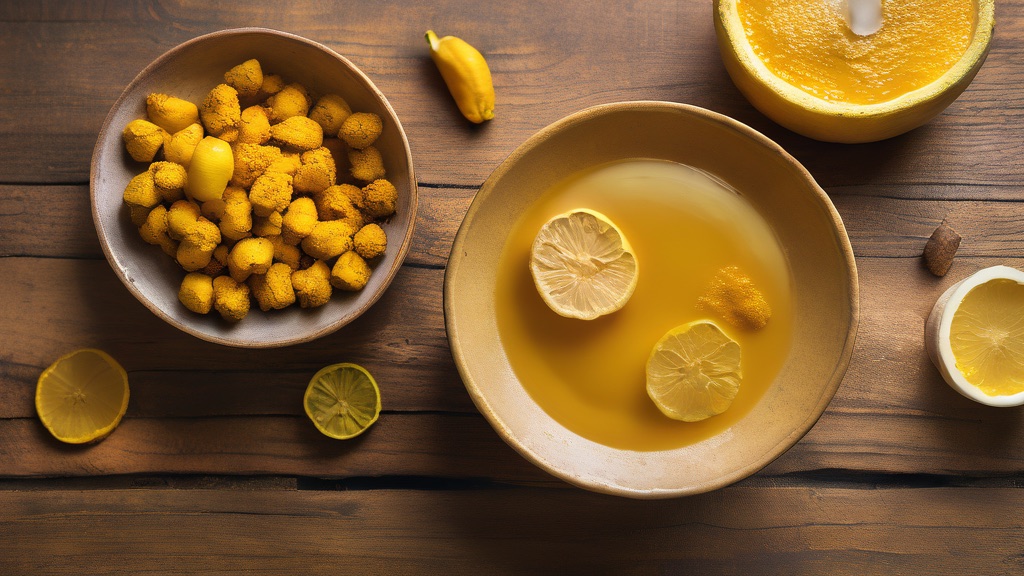
| Ginger turmeric tea | Fresh or dried root (or teabags) steeped in hot water, often with lemon, honey, or a pinch of black pepper | A gentle daily habit, mild nausea, digestive comfort, warmth | Pleasant and low-dose; delivers modest amounts of active compounds. Add pepper and a little fat for the turmeric |
| Cooking | Curries, stir-fries, soups, golden milk with coconut milk | Everyday nutrition and flavor; part of an anti-inflammatory diet | Fat and pepper in the dish naturally boost curcumin uptake; culinary doses are safe long-term |
| Supplements | Standardized curcumin extract (often with piperine) and/or ginger extract capsules | Targeting the doses used in research, e.g. joint pain or nausea | Delivers far more active compound than food; also carries the most interaction and side-effect risk. Choose products that state standardized content |
A sensible approach for most people: enjoy the tea and cooking freely, and reserve concentrated supplements for a specific, evidence-backed goal, ideally after a word with your clinician if you take medication or have a health condition.
Safety, doses, and interactions
As foods and beverages, ginger and turmeric have an excellent safety record and are well tolerated. Concentrated supplements are where caution belongs. In the research, curcumin doses around 1,000 mg per day (of standardized extract, not raw turmeric powder) are typical for joint studies, while ginger is often studied around 1 to 1.5 grams per day for nausea. More is not necessarily better.
Key safety points to keep in mind:
- Blood thinners: Both spices can have mild blood-thinning effects at high supplemental doses, which may add to the effect of medications like warfarin or antiplatelet drugs. Talk to your doctor before combining.
- Gallbladder: Turmeric can stimulate the gallbladder to contract, so people with gallstones or bile-duct obstruction should be cautious with high doses.
- GI upset: High doses of either spice can cause heartburn, reflux, or digestive discomfort in some people.
- Pregnancy: Culinary amounts are generally considered fine, and modest ginger is a studied nausea remedy in pregnancy, but high-dose supplements of either spice are not well studied in pregnancy and should be avoided unless a doctor advises otherwise.
- Surgery and other medications: Because of the mild blood-thinning effect, it is common advice to stop high-dose supplements before surgery. High-dose turmeric may also affect blood sugar and interact with some drugs.
Rarely, concentrated turmeric or curcumin supplements have been linked to liver problems in susceptible individuals, which is one more reason to be more careful with pills than with the spice rack. Our article on the serious side effects of turmeric covers this in more depth.
The bottom line
Ginger and turmeric are a genuinely good, low-risk pairing for most healthy adults, with real (if modest) evidence behind them and a lot of culinary upside. Turmeric’s curcumin has the best data for joint pain, ginger has the best data for nausea and some support for osteoarthritis, and combining them is pleasant and complementary even though rigorous trials on the exact combination are lacking. Use pepper and a little fat to make the turmeric count, keep supplement doses reasonable, and treat them as a supportive habit rather than a cure.
One caution before the capsules. Culinary amounts are one thing; concentrated extracts are another. The US Drug-Induced Liver Injury Network has logged ten turmeric-associated liver injury cases, five hospitalised and one death, and three of seven products tested also contained black pepper — the same piperine that boosts absorption. We go through those cases in turmeric side effects: 10 liver cases. It does not make turmeric dangerous at food doses, but it is a reason to keep supplement doses modest and to stop if you notice dark urine, pale stools or yellowing skin.
Frequently Asked Questions
What are the benefits of ginger and turmeric together?
Individually, turmeric’s curcumin has good evidence for easing arthritis joint pain, and ginger is well supported for reducing nausea with some benefit for osteoarthritis pain. Taken together they combine two complementary mechanisms, and the pairing is pleasant and low-risk. However, there is little direct trial evidence that the combination outperforms either spice alone, so most “synergy” claims are inferred from studies of each one separately.
Is it good to take ginger and turmeric every day?
For most healthy adults, daily use in food, tea, or moderate supplements is generally considered safe and can be a reasonable part of an anti-inflammatory eating pattern. Culinary amounts have an excellent safety record. If you take medications (especially blood thinners), are pregnant, or have a condition like gallstones, check with your clinician before making concentrated supplements a daily habit.
Does ginger and turmeric reduce inflammation?
Turmeric’s curcumin has anti-inflammatory activity in the lab and reduces joint pain in randomized trials at around 1,000 mg per day of standardized extract. Ginger also has anti-inflammatory properties and modestly reduces osteoarthritis pain. So there is real evidence for anti-inflammatory effects, though it is strongest for joint symptoms and more modest than supplement marketing often implies.
How much ginger and turmeric should I take?
In research, curcumin joint-pain benefits appear around 1,000 mg per day of standardized extract (not raw turmeric powder), and ginger for nausea is often studied at about 1 to 1.5 grams per day. There is no official combined dose, and more is not better. For everyday wellness, tea and cooking are plenty; reserve higher supplemental doses for a specific goal and ideally discuss them with your doctor.
Can you take ginger and turmeric together?
Yes. They are close botanical relatives, taste good together, and there is no known harmful interaction between them for most people. Pairing turmeric with black pepper and a source of fat improves curcumin absorption. The main cautions apply to high-dose supplements alongside certain medications, not to the two spices being combined with each other.
What are the side effects?
At food and tea levels, side effects are uncommon. At high supplemental doses, either spice can cause heartburn, reflux, or digestive upset, and both have mild blood-thinning effects. Turmeric can stimulate the gallbladder and, rarely, concentrated curcumin supplements have been linked to liver issues in susceptible people. Starting low and using standardized products helps.
Who should not take ginger and turmeric?
People on blood thinners or antiplatelet drugs, those with gallstones or bile-duct obstruction, anyone scheduled for surgery, and people who are pregnant or breastfeeding should be cautious with high-dose supplements and talk to a healthcare provider first. Anyone with liver disease or on multiple medications should also check before starting concentrated curcumin or ginger products. Culinary use is generally fine for most of these groups, but individual advice matters.
The Bottom Line
Ginger and turmeric are well-studied, safe-for-most, and genuinely useful culinary spices whose combination is more about sensible, complementary habit than proven synergy. Lean on turmeric-plus-pepper for joints, ginger for nausea, keep supplement doses modest, mind the interactions, and enjoy them as a supportive part of your diet, not a replacement for medical care.
🔎 Our researched pick: Curcumitol-Q is a curcumin supplement built around the absorption problem described above, for readers who want curcumin in a concentrated form rather than from turmeric in food.
Affiliate link — if you buy through it we may earn a commission at no extra cost to you.
Sources
- Daily JW, Yang M, Park S. Efficacy of Turmeric Extracts and Curcumin for Alleviating the Symptoms of Joint Arthritis: A Systematic Review and Meta-Analysis of Randomized Clinical Trials. Journal of Medicinal Food. 2016;19(8):717-729. https://www.liebertpub.com/doi/abs/10.1089/jmf.2016.3705
- Shoba G, Joy D, Joseph T, Majeed M, Rajendran R, Srinivas PS. Influence of piperine on the pharmacokinetics of curcumin in animals and human volunteers. Planta Medica. 1998;64(4):353-356. https://pubmed.ncbi.nlm.nih.gov/9619120/
- Viljoen E, Visser J, Koen N, Musekiwa A. A systematic review and meta-analysis of the effect and safety of ginger in the treatment of pregnancy-associated nausea and vomiting. Nutrition Journal. 2014;13:20. https://pmc.ncbi.nlm.nih.gov/articles/PMC3995184/
- Bartels EM, Folmer VN, Bliddal H, et al. Efficacy and safety of ginger in osteoarthritis patients: a meta-analysis of randomized placebo-controlled trials. Osteoarthritis and Cartilage. 2015;23(1):13-21. https://www.oarsijournal.com/article/S1063-4584(14)01276-X/fulltext