How Much Potassium Per Day? 3,400 mg, and One Potato Covers the Typical Gap
Quick Answer: The Adequate Intake for potassium is 3,400 mg a day for adult men and 2,600 mg for adult women. Most people fall short, but not by as much as the headlines suggest: in the US national food survey for 2013 to 2016, the median man ate 2,923 mg and the median woman 2,275 mg, so the typical gap is roughly 480 mg for men and 325 mg for women. A medium baked potato has 610 mg and a banana 422 mg. Supplements are a poor tool for this: NIH notes most potassium-only supplements contain up to 99 mg, because an FDA rule requires prescription labeling for coated potassium tablets of 100 mg or more after reports of small-bowel injury. Potassium lowers blood pressure, especially in people with high blood pressure and high salt intake, but a 2020 dose-response meta-analysis found the benefit levels off, and at very high added amounts blood pressure rose in people on blood pressure drugs. People with kidney disease or taking ACE inhibitors, ARBs or potassium-sparing diuretics should not raise potassium without their doctor.
Potassium is the mineral that sits on the other side of the sodium problem. Most Americans eat too much sodium and not quite enough potassium. The first gap is large; the second is smaller than you might think, which changes how you should close it.
How much potassium you need
The Adequate Intakes set by the National Academies, as published by NIH’s Office of Dietary Supplements:
| Age | Men | Women | Pregnancy | Breastfeeding |
|---|---|---|---|---|
| 14 to 18 | 3,000 mg | 2,300 mg | 2,600 mg | 2,500 mg |
| 19 to 50 | 3,400 mg | 2,600 mg | 2,900 mg | 2,800 mg |
| 51 and older | 3,400 mg | 2,600 mg |
No upper limit has been set for potassium from food in healthy people, because the kidneys excrete the excess. That changes for people whose kidneys cannot, as covered below.
How much Americans actually eat
From the USDA’s usual-intake tables for NHANES 2013 to 2016, food and drink only:
| Group | Median intake | AI | Gap (our subtraction) | Share above AI |
|---|---|---|---|---|
| Men 19 to 50 | 2,875 mg | 3,400 mg | 525 mg | 28% |
| Men 51 to 70 | 3,039 mg | 3,400 mg | 361 mg | 34% |
| Men 71 and older | 2,829 mg | 3,400 mg | 571 mg | 25% |
| Women 19 to 50 | 2,242 mg | 2,600 mg | 358 mg | 29% |
| Women 51 to 70 | 2,346 mg | 2,600 mg | 254 mg | 35% |
| Women 71 and older | 2,225 mg | 2,600 mg | 375 mg | 28% |
About 30% of adult men and 31% of adult women were above the AI. Most people are below it, but the median shortfall is a few hundred milligrams, not thousands. Compare that with sodium, where the median man is about 1,700 mg over the limit; our guide to how much sodium per day has the numbers.
Closing the gap with food
From NIH’s food table, a single serving of several common foods covers the typical gap:
| Food | Potassium |
|---|---|
| Dried apricots, half cup | 755 mg |
| Lentils, cooked, 1 cup | 731 mg |
| Acorn squash, mashed, 1 cup | 644 mg |
| Prunes, half cup | 635 mg |
| Potato, baked, flesh only, 1 medium | 610 mg |
| Kidney beans, canned, 1 cup | 607 mg |
| Orange juice, 1 cup | 496 mg |
| Banana, 1 medium | 422 mg |
| Milk, 1%, 1 cup | 366 mg |
| Salmon, farmed, 3 ounces | 326 mg |
Why supplements are a poor fit
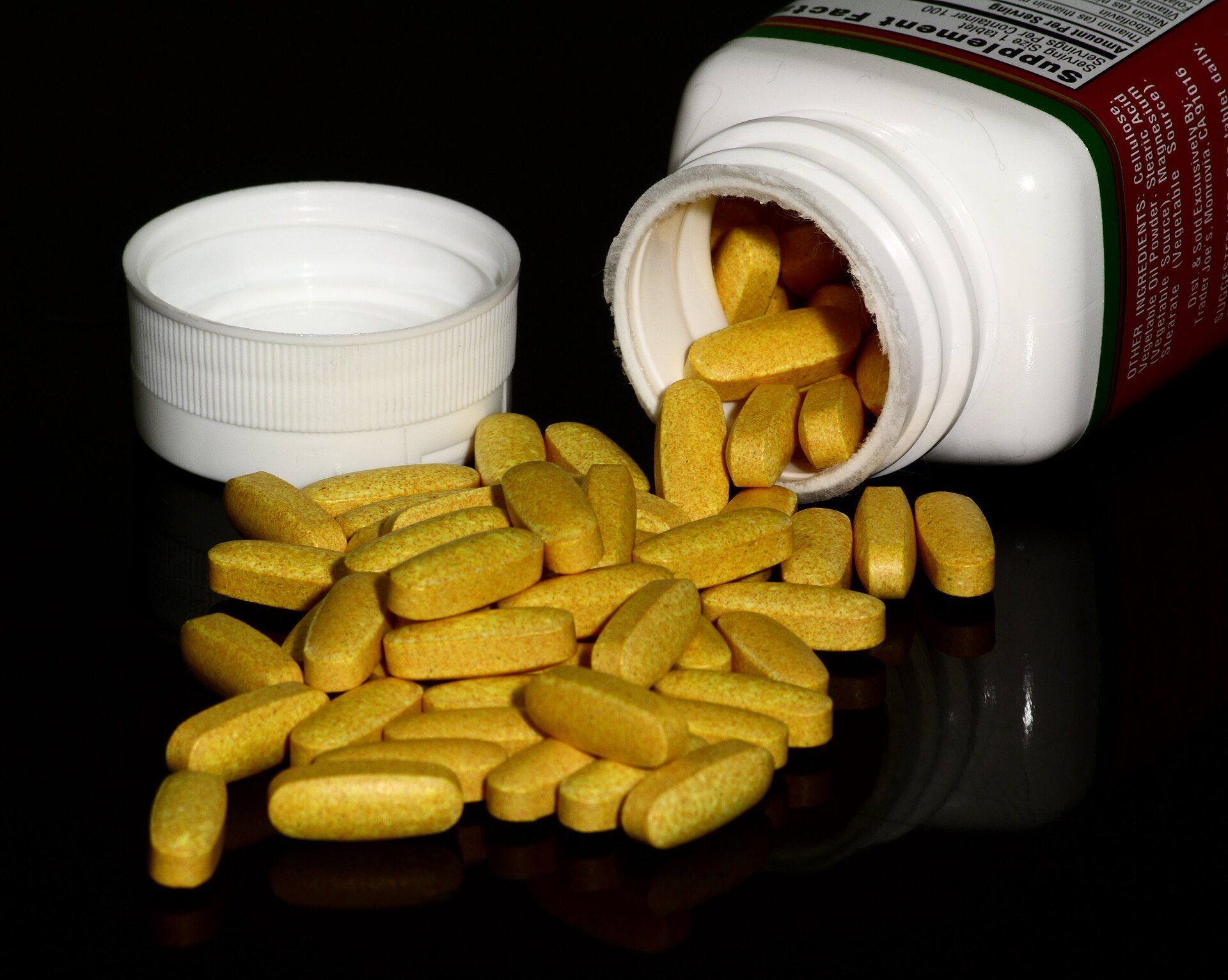
NIH’s fact sheet notes that most potassium-only supplements contain up to 99 mg of potassium. That number is not arbitrary. An FDA regulation, 21 CFR 201.306, requires coated tablets supplying 100 mg or more of potassium to carry prescription labeling, citing reports of small-bowel lesions, including obstruction, bleeding and perforation, associated with enteric-coated potassium tablets.
So covering a 480 mg gap with a 99 mg supplement would take about five tablets, where one potato or banana does the same job. Prescription potassium exists for people with a diagnosed low level, and it is dosed and monitored by a doctor for that reason.
Potassium and blood pressure
The main reason potassium matters is blood pressure. A 2020 dose-response meta-analysis in the Journal of the American Heart Association by Filippini and colleagues pooled 32 randomized trials of potassium supplementation lasting at least four weeks, mostly in people with high blood pressure. Three findings stand out:
- The blood-pressure-lowering effect was stronger in people with hypertension and in those eating more sodium.
- The relationship was U-shaped: the benefit weakened once the extra potassium excreted exceeded about 30 mmol a day (roughly 1,170 mg, our conversion at 39.1 mg per mmol).
- Above an extra 80 mmol a day (roughly 3,130 mg), blood pressure rose in people already taking blood pressure medicine, though not in untreated participants.
In other words, closing a modest gap is where the benefit is. Large added amounts are not better and may be worse for people on medication. The same logic sits behind potassium-enriched salt substitutes, which lower sodium and add potassium at once; in a large trial covered in our sodium guide, they reduced strokes and deaths in older adults with high blood pressure.
Who should not add potassium on their own
NIH notes that in people whose kidneys cannot excrete potassium normally, because of chronic kidney disease or medicines such as ACE inhibitors or potassium-sparing diuretics, even intakes below the AI can cause hyperkalemia, a high blood potassium that can affect the heart rhythm. ARBs such as losartan are in the same group of medicines NIH flags. If you have kidney disease or take these drugs, talk to your doctor before adding potassium-rich salt substitutes, supplements or large amounts of high-potassium foods.
One swap that moves both numbers: for people with healthy kidneys and no potassium-raising medicines, a potassium salt substitute used in place of regular salt lowers sodium and adds potassium in the same step. Compare potassium salt substitutes on Amazon.
Affiliate link: as an Amazon Associate we earn from qualifying purchases, at no extra cost to you. Do not use a potassium salt substitute if you have kidney disease or take ACE inhibitors, ARBs or potassium-sparing diuretics unless your doctor agrees.
Frequently Asked Questions
How much potassium do you need per day?
3,400 mg a day for adult men and 2,600 mg for adult women, the Adequate Intakes set by the National Academies. Pregnancy raises the target to 2,900 mg and breastfeeding to 2,800 mg for adults.
How much potassium do most people get?
In NHANES 2013 to 2016, the median adult man ate 2,923 mg and the median adult woman 2,275 mg a day from food. About 30% of adults met the Adequate Intake.
Why do potassium supplements only have 99 mg?
Because an FDA regulation requires coated potassium tablets that supply 100 mg or more to carry prescription labeling, following reports of small-bowel injury from enteric-coated potassium tablets. NIH notes most potassium-only supplements contain up to 99 mg.
Is a banana a day enough potassium?
A medium banana has 422 mg, close to the median man’s gap of about 480 mg and more than the median woman’s gap of about 325 mg. It helps, but a baked potato (610 mg), a cup of lentils (731 mg) or half a cup of dried apricots (755 mg) supplies more.
Can you get too much potassium?
Not from food in healthy people, which is why no upper limit is set. In people with kidney disease or on ACE inhibitors, ARBs or potassium-sparing diuretics, even normal intakes can raise blood potassium too far, so they should follow their doctor’s advice.
Does potassium lower blood pressure?
Yes, especially in people with high blood pressure and high sodium intake. A 2020 meta-analysis of 32 trials found the effect levels off with larger added amounts, and very high added amounts raised blood pressure in people already on blood pressure medicine.
The Bottom Line
Men need 3,400 mg of potassium a day and women 2,600 mg. Most people fall a few hundred milligrams short, a gap one potato, banana or cup of beans closes. Potassium-only supplements are capped at 99 mg for a safety reason, so food does the job better. The blood pressure benefit is real but levels off, and people with kidney disease or on certain blood pressure drugs should not raise potassium without their doctor.
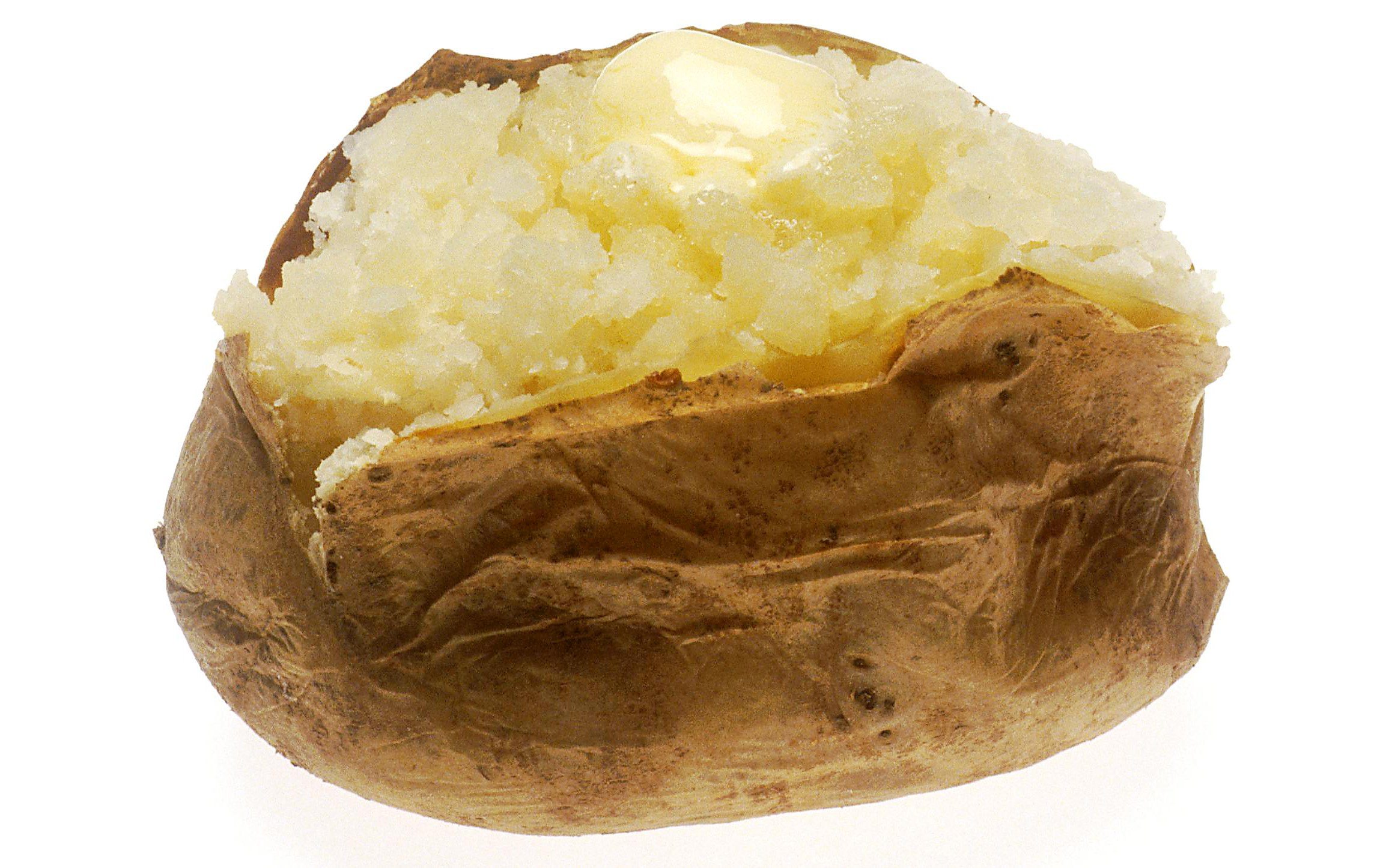
Featured photo: baked potato with butter, by Renee Comet, Wikimedia Commons, public domain.
Sources
- NIH Office of Dietary Supplements. Potassium Fact Sheet for Health Professionals (updated 2 June 2022): AIs 3,400 mg men and 2,600 mg women aged 19+, pregnancy 2,900 mg, lactation 2,800 mg; no UL set; in chronic kidney disease or with ACE inhibitors or potassium-sparing diuretics, intakes below the AI can cause hyperkalemia; ACE inhibitors and ARBs such as losartan among medicines affecting potassium; most potassium-only supplements contain up to 99 mg; food values including dried apricots 755 mg, lentils 731, potato 610, banana 422. ods.od.nih.gov. Checked 26 September 2026.
- USDA Agricultural Research Service. Usual Nutrient Intake from Food and Beverages, by Gender and Age, What We Eat in America, NHANES 2013-2016 (2019), Table A 42, Potassium. Medians: men 19-50 2,875 mg, 51-70 3,039, 71+ 2,829, 19+ 2,923; women 19-50 2,242, 51-70 2,346, 71+ 2,225, 19+ 2,275. Above AI: men 19-50 28%, 51-70 34%, 71+ 25%, 19+ 30%; women 19-50 29%, 51-70 35%, 71+ 28%, 19+ 31%. ars.usda.gov (PDF). Checked 26 September 2026.
- Code of Federal Regulations, 21 CFR 201.306, Potassium salt preparations intended for oral ingestion by man: coated tablets supplying 100 mg or more of potassium must bear prescription labeling and a warning about small-bowel lesions (stenosis, obstruction, hemorrhage, perforation) associated with enteric-coated potassium tablets. ecfr.gov. Checked 26 September 2026.
- Filippini T, Naska A, Kasdagli MI, et al. Potassium intake and blood pressure: a dose-response meta-analysis of randomized controlled trials. Journal of the American Heart Association, 2020;9(12):e015719. PMID 32500831. 32 trials; U-shaped relationship, weakening above about 30 mmol/day added excretion, blood pressure increase above about 80 mmol/day in drug-treated hypertension; stronger effect with hypertension and high sodium intake. Checked 26 September 2026.