How Much Sodium Per Day? Under 2,300 mg, and 97% of Men Go Over

Quick Answer: Adults should keep sodium under 2,300 mg a day, about one teaspoon of table salt, according to the Dietary Guidelines for Americans and the FDA. That figure is the Chronic Disease Risk Reduction intake: above it, lowering sodium is expected to reduce the risk of high blood pressure and heart disease. Almost nobody is under it. In the US national food survey for 2013 to 2016, 97% of men and 79% of women ate more than 2,300 mg a day from food alone; the median man ate 4,018 mg. The FDA says more than 70% of it comes from packaged and prepared foods, not the salt shaker. Cutting back works: a Cochrane meta-analysis found that reducing salt by about 4.4 g a day lowered systolic blood pressure by about 4 mm Hg, and in a trial of 20,995 older adults with high blood pressure or a past stroke, swapping regular salt for a potassium-enriched salt substitute cut strokes by 14% and deaths by 12%.
Sodium is the nutrient Americans overshoot by the widest margin. The recommendation is simple. The gap between it and what people actually eat is the part worth knowing, because it tells you where the extra sodium comes from and how much you would need to change.
How much sodium you should have
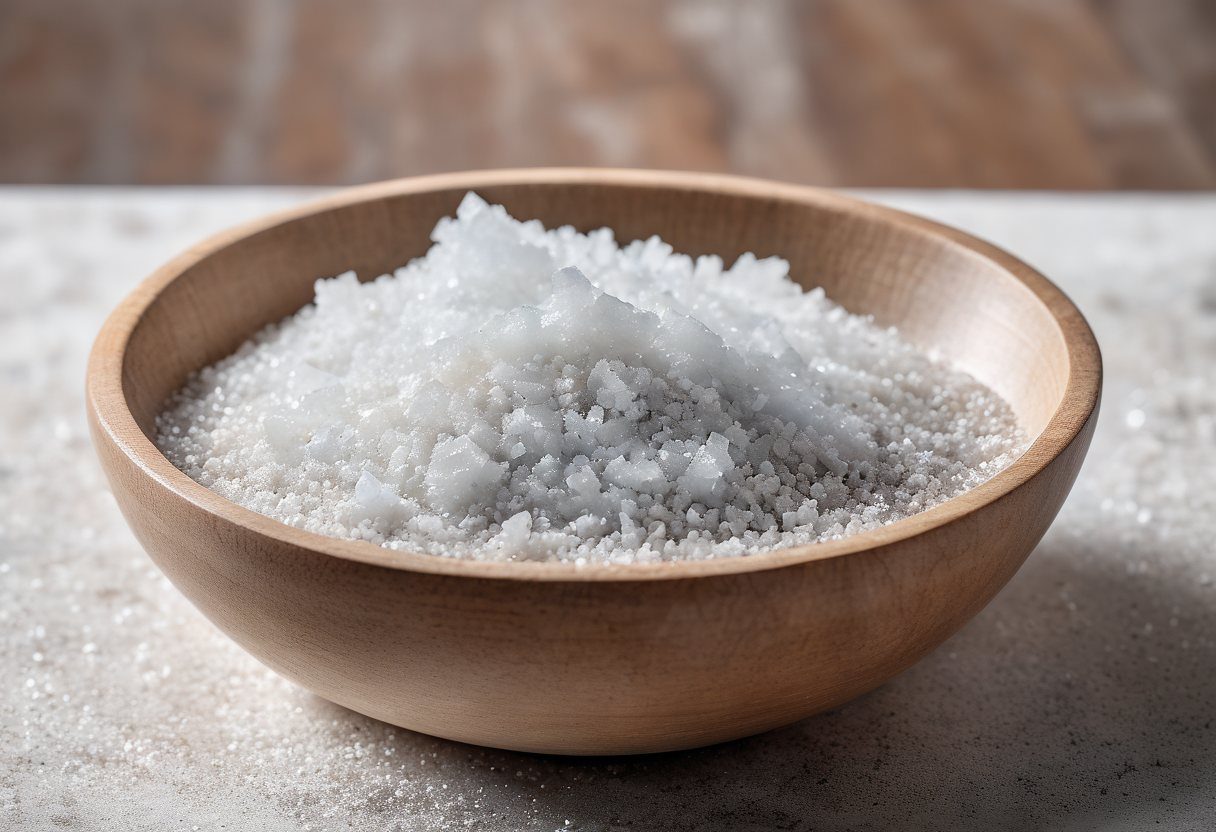
The FDA’s Daily Value for sodium is less than 2,300 mg a day, and the Dietary Guidelines for Americans recommend the same limit for adults. The FDA translates it: about one teaspoon of table salt. Children under 14 have lower limits.
The USDA intake tables list two reference values for sodium. The Adequate Intake, 1,500 mg a day for adults, is roughly what the body needs. The Chronic Disease Risk Reduction intake (CDRR), 2,300 mg, is the level above which cutting back is expected to lower chronic disease risk. The 2,300 mg on food labels is the second number.
How much Americans actually eat
The USDA’s usual-intake tables from NHANES 2013 to 2016 show how far over most people are, from food and drink alone:
| Group | Median sodium per day | Share above 2,300 mg |
|---|---|---|
| Men 19 to 50 | 4,188 mg | over 97% |
| Men 51 to 70 | 3,913 mg | 97% |
| Men 71 and older | 3,431 mg | 91% |
| Women 19 to 50 | 3,072 mg | 84% |
| Women 51 to 70 | 2,848 mg | 77% |
| Women 71 and older | 2,589 mg | 66% |
Across all adults, 97% of men and 79% of women exceeded the 2,300 mg level, and 90% of everyone aged one and over did. Even among men aged 19 to 50, the bottom 5% of eaters were at 2,637 mg, already above the limit. The FDA’s own summary figure is an average of about 3,400 mg a day.
Where it comes from
The FDA’s central point is the one most people get wrong: more than 70% of dietary sodium comes from packaged and prepared foods, not from salt added while cooking or at the table. That is why putting the salt shaker away rarely closes the gap on its own: for the median man, the gap is about 1,700 mg a day (4,018 minus 2,300, our subtraction).
The FDA’s practical tool is the Nutrition Facts label. As a general guide, 5% Daily Value or less of sodium per serving is low and 20% or more is high. Check the serving size, because the label’s numbers apply to one serving, and a package often holds several.
Does cutting back actually help?
Yes, and two strong pieces of evidence show how much.
Blood pressure. A 2013 Cochrane systematic review in the BMJ by He, Li and MacGregor pooled 34 trials with 3,230 people. A modest salt reduction, about 4.4 grams of salt a day, lowered systolic blood pressure by 4.18 mm Hg and diastolic by 2.06 mm Hg on average. In people with high blood pressure the fall was larger, 5.39 mm Hg systolic.
Strokes and deaths. The Salt Substitute and Stroke Study, published in the New England Journal of Medicine in 2021, enrolled 20,995 people who had a history of stroke or were 60 or older with high blood pressure. Half replaced regular salt with a salt substitute containing potassium. Over about 4.7 years, the salt substitute group had:
- 14% fewer strokes (rate ratio 0.86)
- 13% fewer major cardiovascular events (0.87)
- 12% fewer deaths from any cause (0.88)
Serious problems from high potassium were not more common with the substitute (rate ratio 1.04, not significant).
How to get under 2,300 mg
- Read labels on the foods you buy most. Bread, deli meats, cheese, canned soups, sauces and snacks add up. Use the 5% and 20% Daily Value guide.
- Cook more of your own meals, since packaged and prepared foods supply most sodium.
- At restaurants, the FDA suggests asking for sauces and dressings on the side and checking whether nutrition information is available.
- Swap table salt for a potassium salt substitute if you are an older adult with high blood pressure and your doctor agrees. That is the swap the SSaSS trial tested.
The same national survey shows gaps in the other direction for other nutrients; see how much magnesium men need and how much fiber per day. Potassium, which works against sodium on blood pressure, has its own gap; see how much potassium per day.
The swap the trial tested: a salt substitute that replaces part of the sodium chloride with potassium chloride, used in place of regular salt in cooking and at the table. In SSaSS it was followed by fewer strokes, heart events and deaths in older adults with high blood pressure. Compare potassium salt substitutes on Amazon.
Affiliate link: as an Amazon Associate we earn from qualifying purchases, at no extra cost to you. If you have kidney disease or take medicines that raise potassium, ask your doctor before using a potassium-based salt substitute.
Frequently Asked Questions
How much sodium should you have per day?
Less than 2,300 mg a day for adults, about one teaspoon of table salt, according to the FDA and the Dietary Guidelines for Americans. That is the Daily Value on food labels. The body’s actual need, the Adequate Intake, is about 1,500 mg.
How much sodium do Americans eat?
About 3,400 mg a day on average, according to the FDA. In NHANES 2013 to 2016, the median man ate 4,018 mg and the median woman 2,929 mg from food and drink, and 90% of people aged one and over exceeded 2,300 mg.
How much salt is 2,300 mg of sodium?
About one teaspoon of table salt, according to the FDA. Salt is sodium chloride, so a teaspoon of salt weighs more than 2,300 mg; the 2,300 mg figure refers to the sodium in it. Sea salts count the same way; our look at how much Celtic salt per day compares their sodium with table salt.
Where does most sodium come from?
Packaged and prepared foods. The FDA says more than 70% of dietary sodium comes from them, not from salt added while cooking or eating.
How much does reducing salt lower blood pressure?
In a Cochrane meta-analysis of 34 trials, cutting salt by about 4.4 grams a day lowered systolic blood pressure by about 4 mm Hg on average, and by about 5.4 mm Hg in people with high blood pressure.
Are salt substitutes safe?
In the SSaSS trial of 20,995 older adults with high blood pressure or a past stroke, a potassium-enriched salt substitute reduced strokes, heart events and deaths, and serious high-potassium events were not more common. People with kidney disease or on medicines that raise potassium should ask a doctor first.
The Bottom Line
The limit is 2,300 mg of sodium a day, and nine in ten Americans are over it, mostly because of packaged and prepared food rather than the salt shaker. Reading labels, cooking more, and for older adults with high blood pressure, switching to a potassium salt substitute, are the changes with evidence behind them: lower blood pressure in the Cochrane review, and fewer strokes and deaths in the largest salt trial yet run.
Featured photo: salt piles at the Salinas del Carmen salt pans, by H. Zell, Wikimedia Commons, CC BY-SA 3.0, cropped.
Sources
- USDA Agricultural Research Service. Usual Nutrient Intake from Food and Beverages, by Gender and Age, What We Eat in America, NHANES 2013-2016 (2019), Table A 41, Sodium. AI 1,500 mg and CDRR 2,300 mg for adults. Medians: men 19-50 4,188 mg, 51-70 3,913, 71+ 3,431; women 19-50 3,072, 51-70 2,848, 71+ 2,589. Share above CDRR: men 19-50 over 97%, 51-70 97%, 71+ 91%, 19+ 97%; women 19-50 84%, 51-70 77%, 71+ 66%, 19+ 79%; all ages 1+ 90%. Men 19-50 5th percentile 2,637 mg. Medians men 19+ 4,018 mg, women 19+ 2,929 mg. ars.usda.gov (PDF). Checked 25 September 2026.
- US Food and Drug Administration. Sodium in Your Diet (content current as of 5 March 2024): Americans eat about 3,400 mg a day on average; limit under 2,300 mg, about 1 teaspoon of table salt; Daily Value less than 2,300 mg; over 70% from packaged and prepared foods; 5% DV low, 20% DV high; restaurant tips. fda.gov. Checked 25 September 2026.
- He FJ, Li J, MacGregor GA. Effect of longer term modest salt reduction on blood pressure: Cochrane systematic review and meta-analysis of randomised trials. BMJ, 2013;346:f1325. PMID 23558162. 34 trials, 3,230 participants; salt reduction of about 4.4 g/day; systolic -4.18 mm Hg, diastolic -2.06 mm Hg; hypertensive systolic -5.39 mm Hg. Checked 25 September 2026.
- Neal B, Wu Y, Feng X, et al. Effect of salt substitution on cardiovascular events and death. New England Journal of Medicine, 2021;385(12):1067-1077. PMID 34459569. 20,995 participants, mean 4.74 years; stroke rate ratio 0.86, major cardiovascular events 0.87, death 0.88; serious hyperkalemia 1.04 (not significant). Checked 25 September 2026.