Saffron for Mood and Depression: What the Research Actually Shows
This article contains affiliate links. We only recommend products we have independently researched. Reviewed by the HealthyMag Editorial Team. Last updated: June 2026.
Saffron is the most expensive spice in the world by weight — pricier than gold gram-for-gram — because each thread is a hand-picked stigma from a crocus flower, and it takes roughly 150,000 flowers to make a single kilogram. So it is genuinely surprising that this culinary luxury has accumulated some of the most credible clinical-trial evidence of any natural antidepressant. Where most “mood-boosting” supplements rest on a single shaky study or animal data, saffron has been tested in over a dozen randomized controlled trials in humans, several of them comparing it directly against pharmaceutical antidepressants. Below is exactly what that research shows — with the numbers — and, just as importantly, where the limits and the real safety risks are.
What saffron actually is
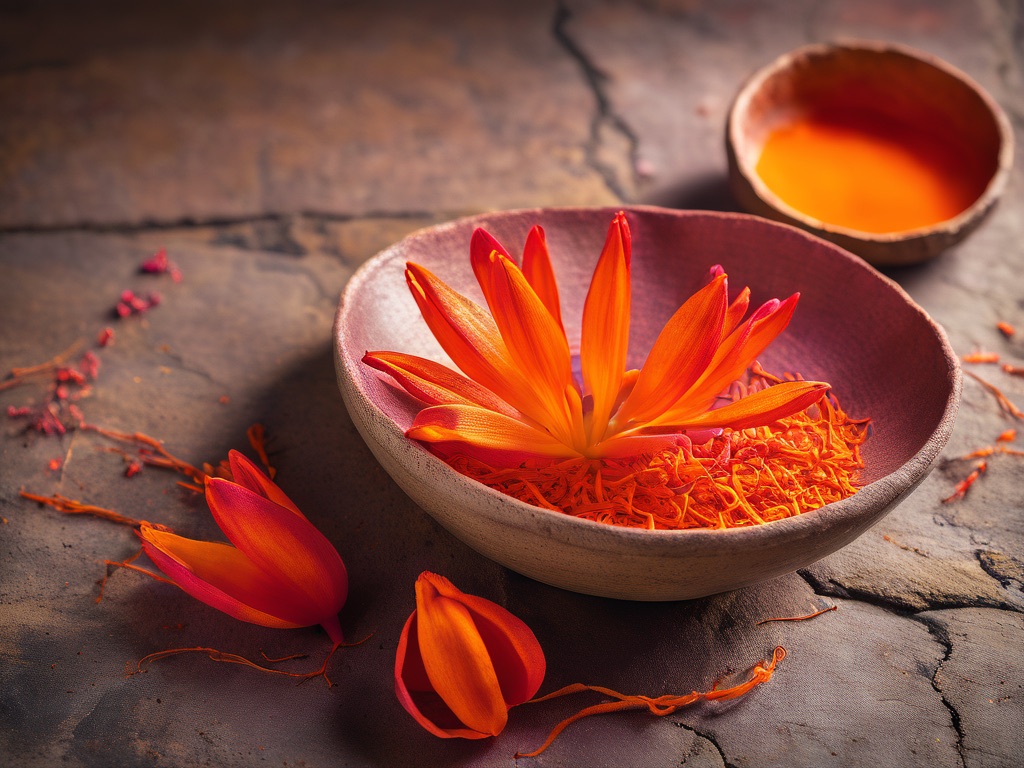
Saffron comes from Crocus sativus, a purple-flowered autumn crocus. The red threads are the dried stigmas of the flower. Its color, aroma, and apparent mood effects are attributed to a handful of active compounds: crocin and crocetin (carotenoid pigments responsible for the deep red), safranal (the volatile compound behind the aroma), and picrocrocin (the bitter taste). In mood research, crocins and safranal are considered the key actors.
The leading hypothesis for how saffron affects mood is that these compounds act on the same serotonin system that mainstream antidepressants target — saffron’s constituents appear to inhibit the reuptake of serotonin, increasing its availability in the brain — while also delivering antioxidant and anti-inflammatory effects, both of which are increasingly linked to depression. This is a hypothesis about mechanism, not a settled fact, but it is biologically plausible and consistent with the clinical results.
The depression and mood evidence
This is where saffron separates itself from the crowd. Several independent randomized, double-blind, placebo-controlled trials — the gold standard — have tested standardized saffron against a placebo for clinical depression.
The foundational trial, by Akhondzadeh and colleagues (2005, Phytotherapy Research), randomized 40 adult outpatients with major depression to either 30 mg/day of saffron stigma extract or placebo for 6 weeks. Saffron produced a significantly greater improvement on the Hamilton Depression Rating Scale than placebo (p < 0.001), with no meaningful difference in side effects between the groups.
Those individual trials were later pooled. A systematic review and meta-analysis by Khaksarian and colleagues (2019, Psychology Research and Behavior Management) combined the placebo-controlled data and found a standardized mean difference of −0.86 in favor of saffron (95% CI: −1.73 to 0.00) — a large effect by conventional benchmarks — while noting substantial heterogeneity between studies.
The evidence is not limited to Iranian adult-depression trials. Lopresti and colleagues (2018, Journal of Affective Disorders) ran an 8-week placebo-controlled trial in 68 adolescents aged 12–16 with mild-to-moderate anxiety or depressive symptoms, using the standardized affron® extract at 14 mg twice daily. Based on the teens’ own self-reports, total internalizing (anxiety plus depression) symptoms fell by about 33% in the saffron group versus 17% on placebo, with the extract well tolerated.
Saffron has also been studied as an add-on to existing antidepressant medication. Lopresti and colleagues (2019, Journal of Psychopharmacology) gave affron® (14 mg twice daily) or placebo to 139 adults already taking an antidepressant who still had lingering symptoms. On the clinician-rated MADRS, depressive symptoms dropped 41% with saffron versus 21% with placebo (p = 0.001) — though, candidly, the patients’ own self-rated scores showed no significant difference, so the authors called for further research. We flag that honestly: the add-on data are promising but mixed.
How saffron compares to antidepressants
The most striking studies put saffron head-to-head against actual prescription antidepressants. In a double-blind, randomized pilot trial, Noorbala and colleagues (2005, Journal of Ethnopharmacology) compared saffron 30 mg/day with fluoxetine (Prozac) 20 mg/day over 6 weeks in patients with mild-to-moderate depression and found no statistically significant difference between the two in symptom improvement (P = 0.71). Earlier work compared saffron to imipramine with the same “non-inferior” result.
When these comparison trials were pooled, the Khaksarian meta-analysis reported a standardized mean difference of just 0.11 between saffron and fluoxetine (95% CI: −0.20 to 0.43) — statistically indistinguishable — and concluded that saffron was “well comparable” to fluoxetine, often with fewer side effects.
| Factor | Standardized Saffron Extract (~30 mg/day) | SSRI (e.g., fluoxetine 20 mg/day) |
|---|---|---|
| Effectiveness for mild-to-moderate depression | Comparable in head-to-head trials | Established standard of care |
| Evidence base | Multiple RCTs + meta-analyses; mostly small, many from one country | Decades of large-scale trials, FDA-approved |
| Typical onset | Improvements often seen by 4–6 weeks (some by 5 weeks) | Usually 2–6 weeks |
| Common side effects | Generally mild; occasional nausea, headache, appetite change | Nausea, sexual dysfunction, weight change, insomnia |
| Severe depression | Not adequately tested; not appropriate as sole treatment | Validated across severity levels |
| Prescription needed | No (sold as a supplement) | Yes |
A crucial caveat: these trials studied mild-to-moderate depression, often in people not on other medication, and most enrolled relatively few participants. “As good as Prozac in a small trial” is encouraging, but it is not a license to stop prescribed medication or to self-treat severe depression. Treat saffron as a serious, evidence-backed option worth discussing with a clinician — not a guaranteed swap.
Other studied benefits: anxiety, PMS, and appetite
Saffron’s mood effects appear to extend to several adjacent conditions where real trial data exist.
Anxiety. Anxiety and depression are tightly intertwined, and the same trials that measured depression frequently measured anxiety too. The adolescent affron® study above tracked combined anxiety-and-depression (internalizing) symptoms and saw meaningful reductions. If anxiety is your main concern, it’s worth reading our deeper dives on ashwagandha for stress and sleep and on magnesium for sleep and anxiety, both of which have their own distinct evidence bases.
PMS and PMDD. Agha-Hosseini and colleagues (2008, BJOG) gave women with premenstrual syndrome 30 mg/day of saffron (15 mg twice daily) or placebo across two menstrual cycles. The result was dramatic: a 50% or greater reduction in symptoms occurred in roughly 76% of the saffron group versus only about 8% of the placebo group, with significant superiority on both the daily symptom record and the Hamilton depression scale.
Appetite and snacking. Gout and colleagues (2010, Nutrition Research) tested a saffron extract (Satiereal) versus placebo in 60 mildly overweight women over 8 weeks. The saffron group reported reduced snacking and increased satiety, with a meaningful drop in between-meal snacking frequency — effects the authors linked to saffron’s mood-improving action. This is a modest, single-product finding, not proof of “saffron for weight loss,” but it is a real, published result.
Dosage & how to choose a standardized extract
The single most important point about buying saffron for mood is this: the clinical trials did not use cooking saffron from the spice rack. They used a standardized extract with a verified content of active compounds. If a product isn’t standardized, you have no way to know whether you’re getting a dose anywhere near what was tested.
What the research supports when choosing a supplement:
- Dose: Around 28–30 mg per day is the dose used across the depression and mood trials. More is not better — trials did not show added benefit from higher doses, and very high amounts carry real risk (see safety below).
- Standardization: Look for an extract standardized to its active markers — crocins and safranal. The most-studied branded extract, affron®, is standardized to at least 3.5% Lepticrosalides (a measure of those actives). Standardization is what makes the dose meaningful.
- Third-party testing: Saffron is the world’s most adulterated spice — commonly cut with marigold, safflower, or dyed corn silk. Choose a product that is third-party tested for identity, potency, and contaminants, ideally with a certificate of analysis.
- Form: Capsules or tablets delivering a measured 28–30 mg of standardized extract are simplest. Whole threads are wonderful in food but unreliable for hitting a therapeutic dose.
If you’re building a broader routine for sleep and mood, it’s worth grounding your choices in evidence rather than marketing — our roundup of the best supplements for sleep, ranked by evidence applies the same standardize-and-verify logic across the category.
Dosage & safety
At the studied dose of about 30 mg/day, saffron has been well tolerated in trials lasting 6 to 12 weeks, with side effects no more frequent than placebo in most studies. When side effects did occur, they were typically mild: nausea, headache, changes in appetite, and occasionally dry mouth or anxiety.
The picture changes sharply at high doses. Saffron is safe as a food, but large medicinal amounts are toxic. Doses approaching 5 grams (5,000 mg) are considered toxic, and amounts around 12–20 grams can be lethal. There is an enormous gap between the 30 mg in a supplement and the multi-gram doses that cause harm — but it is exactly why you should never assume “more is better” or megadose saffron extract.
Drug interactions & who should avoid saffron
This section matters more than any benefit above. Saffron is an active compound that influences serotonin, blood clotting, and the uterus — so it genuinely interacts with medications and conditions.
- Antidepressants (SSRIs, SNRIs, MAOIs). Because saffron appears to raise serotonin activity, combining it with an SSRI (such as sertraline, fluoxetine, or escitalopram) or other serotonergic drug creates a theoretical risk of serotonin syndrome — a potentially dangerous build-up of serotonin causing agitation, rapid heart rate, high blood pressure, tremor, and confusion. Notably, the add-on trials that combined ~30 mg/day saffron with ongoing antidepressants did not report increased adverse events, which is reassuring — but those were supervised studies. Do not add saffron to a prescribed antidepressant on your own; talk to your prescriber first.
- Blood thinners and antiplatelet drugs. Saffron may have mild blood-thinning effects, so combining it with warfarin, aspirin, clopidogrel, or similar agents could theoretically increase bleeding risk. Use only with medical guidance.
- Blood pressure and blood sugar medications. Saffron may modestly lower blood pressure and blood glucose; if you take medication for either, monitor for additive effects.
- Pregnancy — avoid. This is firm. High doses of saffron act as a uterine stimulant and have historically been used as an abortifacient; large amounts are linked to miscarriage and preterm labor. Supplemental doses of saffron should be avoided in pregnancy. (Ordinary culinary amounts in food have not shown this harm, but the concentrated supplement is a different matter.)
- Breastfeeding, bipolar disorder, and bleeding disorders. There is insufficient safety data in breastfeeding; saffron, like other serotonergic agents, could theoretically affect mood cycling in bipolar disorder; and those with bleeding disorders should be cautious. When in doubt, avoid and ask a clinician.
Above all: if you have moderate-to-severe depression, suicidal thoughts, or are already on psychiatric medication, saffron is not a do-it-yourself solution. It is a tool to discuss with a professional, not to replace one.
Frequently Asked Questions
Does saffron really help depression?
The evidence is genuinely strong for a natural product. Multiple randomized, placebo-controlled trials and a pooled meta-analysis show that standardized saffron extract (about 30 mg/day) significantly outperforms placebo for mild-to-moderate depression, with a large effect size (standardized mean difference around −0.86). The main limitations are small sample sizes and that many trials came from a single research group, so larger independent studies are still needed.
How much saffron should I take for mood?
Mood trials almost universally used a standardized extract delivering about 28–30 mg per day, often split into two doses. More than that has not shown additional benefit and increases the risk of side effects, so there’s no reason to exceed the studied dose. Always use a standardized, third-party-tested product rather than loose cooking threads.
Is saffron as effective as antidepressants?
In several head-to-head trials, saffron 30 mg/day performed about as well as fluoxetine (Prozac) 20 mg/day and imipramine for mild-to-moderate depression, with no statistically significant difference and sometimes fewer side effects. Important caveat: those trials were small and studied milder depression. Saffron has not been shown to replace antidepressants for severe depression, and you should never stop prescribed medication without medical supervision.
How long does saffron take to work?
In most trials, measurable improvements in mood appeared within about 4 to 6 weeks of daily use, and one large recent study reported benefits to mood and stress emerging as early as 5 weeks. This is a similar timeline to conventional antidepressants — it is not an instant fix, and consistent daily dosing matters.
Can you take saffron with antidepressants?
Not without medical supervision. Because saffron increases serotonin activity, combining it with an SSRI, SNRI, or MAOI carries a theoretical risk of serotonin syndrome, a dangerous excess of serotonin. Some supervised add-on trials combined saffron with antidepressants without increased adverse events, but you should only do this if your prescribing doctor agrees and monitors you.
Does saffron have side effects?
At the studied 30 mg/day dose, side effects are generally mild and no more common than placebo — occasional nausea, headache, appetite change, or dry mouth. The serious risks come from high doses: amounts near 5 grams are toxic, and very high doses can be dangerous, which is why you should never megadose saffron supplements.
Can I just cook with saffron instead of taking a supplement?
Culinary saffron is wonderful for flavor but unreliable for mood benefits, because you can’t verify how much active crocin and safranal you’re getting, and saffron is one of the most frequently adulterated spices. The trials used standardized extracts at a precise dose, so a tested supplement is the only way to reliably reproduce the studied amount.
Is saffron safe during pregnancy?
Supplemental saffron should be avoided during pregnancy. High doses stimulate uterine contractions and have historically been used to induce abortion, and large amounts are linked to miscarriage and preterm labor. Normal culinary amounts in food have not shown the same harm, but the concentrated supplement is a different and riskier matter — check with your obstetrician.
The Bottom Line
Saffron is one of the few “natural antidepressants” whose reputation is actually backed by randomized controlled trials. At roughly 30 mg/day of a standardized extract, it consistently beats placebo for mild-to-moderate depression, holds its own against fluoxetine and imipramine in head-to-head trials, and shows additional promise for PMS, anxiety, and appetite control. The honest limitations: the trials are mostly small, many come from a handful of research groups, the add-on-to-medication data are mixed, and severe depression has not been adequately tested. If you want to try it, buy a standardized, third-party-tested extract (affron® is the most-studied) at the studied dose, give it 4–6 weeks, and — this is non-negotiable — clear it with your doctor first if you take an antidepressant, a blood thinner, or any chronic medication, and avoid it entirely in pregnancy. Used thoughtfully, saffron is a credible, evidence-based option. Used carelessly — stacked on an SSRI or megadosed — it carries real risk.
Sources
- Akhondzadeh S, et al., “Crocus sativus L. in the treatment of mild to moderate depression: a double-blind, randomized and placebo-controlled trial,” Phytotherapy Research, 2005. https://pubmed.ncbi.nlm.nih.gov/15852492/
- Khaksarian M, et al., “The efficacy of Crocus sativus (Saffron) versus placebo and Fluoxetine in treating depression: a systematic review and meta-analysis,” Psychology Research and Behavior Management, 2019. https://pmc.ncbi.nlm.nih.gov/articles/PMC6503633/
- Noorbala AA, Akhondzadeh S, Tahmacebi-Pour N, Jamshidi AH, “Hydro-alcoholic extract of Crocus sativus L. versus fluoxetine in the treatment of mild to moderate depression: a double-blind, randomized pilot trial,” Journal of Ethnopharmacology, 2005. https://pubmed.ncbi.nlm.nih.gov/15707766/
- Lopresti AL, et al., “affron®, a standardised extract from saffron (Crocus sativus L.) for the treatment of youth anxiety and depressive symptoms: A randomised, double-blind, placebo-controlled study,” Journal of Affective Disorders, 2018. https://pubmed.ncbi.nlm.nih.gov/29510352/
- Lopresti AL, et al., “Efficacy of a standardised saffron extract (affron®) as an add-on to antidepressant medication for the treatment of persistent depressive symptoms in adults: A randomised, double-blind, placebo-controlled study,” Journal of Psychopharmacology, 2019. https://journals.sagepub.com/doi/abs/10.1177/0269881119867703
- Agha-Hosseini M, et al., “Crocus sativus L. (saffron) in the treatment of premenstrual syndrome: a double-blind, randomised and placebo-controlled trial,” BJOG, 2008. https://pubmed.ncbi.nlm.nih.gov/18271889/
- Gout B, et al., “Satiereal, a Crocus sativus L extract, reduces snacking and increases satiety in a randomized placebo-controlled study of mildly overweight, healthy women,” Nutrition Research, 2010. https://www.sciencedirect.com/science/article/abs/pii/S0271531710000655