Rhodiola Rosea for Fatigue and Stress: What the Research Actually Shows
This article contains affiliate links. We only recommend products we have independently researched. Reviewed by the HealthyMag Editorial Team. Last updated: June 2026.
Few supplements occupy the strange middle ground that Rhodiola rosea does. On one side, it has a centuries-long folk reputation across Scandinavia, Russia, and the mountains of Central Asia as the herb that helped people endure cold, altitude, and exhaustion. On the other, it has something most “ancient remedies” lack: a stack of actual randomized controlled trials in humans. The catch is that those trials are often small, sometimes industry-sponsored, and rarely replicated. So what does the science really say if you’re tired, stressed, or struggling to focus?
Below, we walk through every major claim — fatigue, stress and burnout, cognition, and physical performance — and grade the evidence honestly, including the places where it’s thin.
What Rhodiola rosea actually is
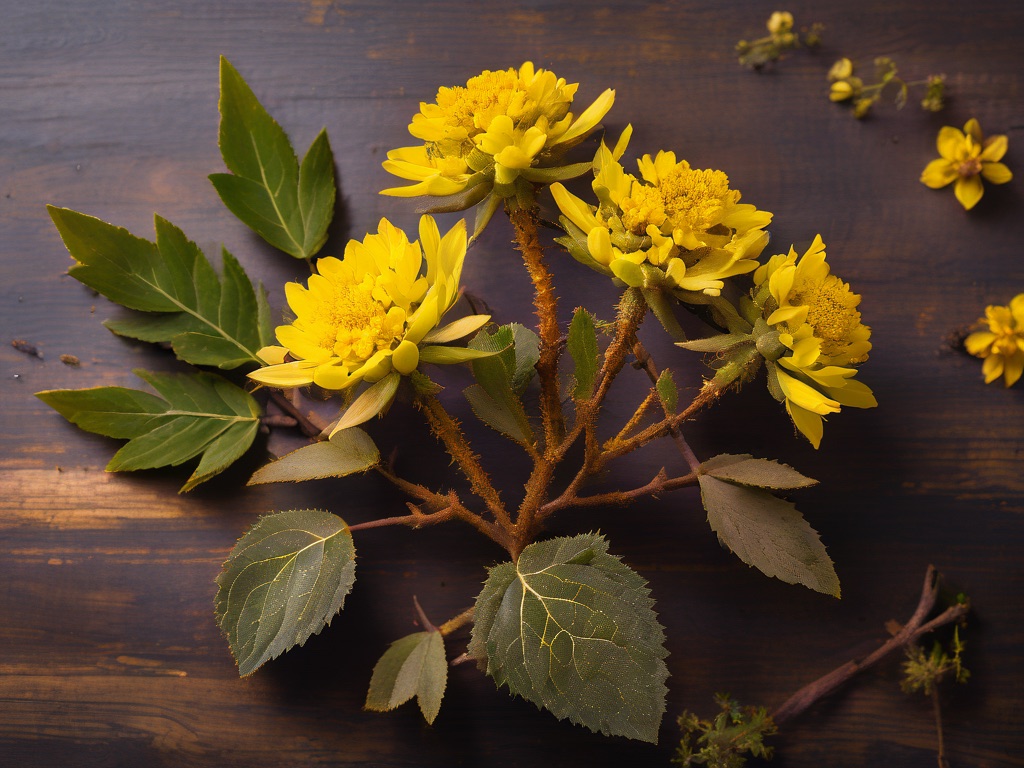
Rhodiola rosea (also called golden root or arctic root) is a flowering plant that grows in cold, high-altitude regions. It’s classified as an adaptogen — a loosely defined category of plants thought to help the body resist physical and mental stress by nudging stress-response systems (like the hypothalamic-pituitary-adrenal axis) back toward balance rather than simply stimulating or sedating you.
The two compound groups credited with rhodiola’s effects are rosavins (rosavin, rosin, rosarin) and salidroside (sometimes listed as rhodioloside). Crucially, almost every credible clinical trial used a standardized extract — most often SHR-5 (made by the Swedish Herbal Institute) or WS 1375 — normalized to roughly 3% rosavins and 1% salidroside, the natural ratio found in the root. This matters enormously: a random rhodiola powder off a shelf may contain little of either, or may not even be genuine R. rosea, since cheaper Rhodiola species are sometimes substituted.
The fatigue evidence: rhodiola’s strongest case
Fatigue is where rhodiola has the most consistent human data, and several trials are worth knowing by name.
1. Physicians on night duty (Darbinyan et al., 2000). This double-blind, placebo-controlled crossover study gave 56 healthy young physicians either 170 mg/day of SHR-5 or placebo during demanding night shifts. After two weeks, the rhodiola group performed significantly better on a composite of mental-fatigue tests — short-term memory, associative thinking, calculation, and audio-visual perception — improving roughly 20% over placebo. It’s a small study, but night-shift physicians are a near-perfect real-world model of combined sleep loss and stress.
2. Military cadets (Shevtsov et al., 2003). In a larger randomized, double-blind, placebo-controlled trial, 161 cadets aged 19-21 received a standard or higher dose of SHR-5 or placebo. Both active groups showed a “pronounced antifatigue effect,” with an antifatigue index around 1.02-1.04 versus 0.90 for placebo (p < 0.001). Notably, the higher dose offered no extra benefit — more was not better.
3. Stress-related fatigue (Olsson, von Schéele & Panossian, 2009). This 28-day double-blind trial randomized 60 adults with stress-related fatigue to 576 mg/day of SHR-5 or placebo. The rhodiola group improved significantly on the Pines burnout scale and on attention/concentration measures, and showed a blunted cortisol response to the morning awakening stress — a plausible biological fingerprint of an adaptogen at work.
A 2012 systematic review by Ishaque and colleagues in BMC Complementary and Alternative Medicine pulled these and other fatigue/wellbeing trials together. Its verdict is the honest framing you should carry into any purchase: rhodiola may help physical and mental fatigue, but “none of the included studies are free of plausible bias,” no two studies measured the same outcome, and none fully complied with modern reporting standards. The signal is real but the evidence base is shaky.
Stress and burnout
Rhodiola is marketed heavily for burnout, and there is supportive data — though it’s weaker than the fatigue trials because the key studies lacked placebo controls. In a multicenter, open-label trial (Kasper & Dienel, 2017, Neuropsychiatric Disease and Treatment), 118 outpatients with burnout took 400 mg/day of WS 1375 for 12 weeks. Most outcome measures improved — emotional exhaustion, fatigue, and “lack of joy” all moved in the right direction, with some change visible within the first week.
The important asterisk: the authors themselves wrote that, being open-label and uncontrolled, the results “remain preliminary and may not be considered confirmatory.” Without a placebo group, you can’t separate the herb from expectation and natural recovery. An earlier open-label study of WS 1375 at 200 mg twice daily in 101 people with life-stress symptoms reached similar upbeat-but-uncontrolled conclusions. If your main goal is stress, it’s worth comparing rhodiola against the more robustly studied ashwagandha — we cover the trade-offs in our deep dive on ashwagandha for stress, sleep, and strength.
Mental performance and cognition
The cognitive benefits of rhodiola are tightly linked to its anti-fatigue effect: it appears to help thinking most when you’re depleted — sleep-deprived, stressed, or near the end of a long day — rather than boosting a well-rested brain. The Darbinyan night-duty study and the Shevtsov cadet study both measured cognition under fatigue and found improvements in concentration, processing speed, and short-term memory.
There’s also a small body of work on mood. A 2015 trial (Mao et al., Phytomedicine) compared rhodiola (340 mg/day SHR-5), the antidepressant sertraline (50 mg/day), and placebo in 57 people with mild-to-moderate depression over 12 weeks. Rhodiola reduced Hamilton Depression scores by 5.1 points versus 8.2 for sertraline and 4.6 for placebo — meaning it landed between the two but did not significantly beat placebo. However, only 30% of the rhodiola group reported side effects versus 63% on sertraline, leading the authors to suggest a more favorable benefit-to-risk profile for milder cases. This is interesting, not definitive: rhodiola is not a treatment for clinical depression, and anyone with depression should work with a clinician.
Physical performance: the weakest claim
Here’s where we have to be blunt. Rhodiola is widely sold as an endurance and “energy” aid, and the evidence is genuinely mixed. A 2025 systematic review and meta-analysis (Frontiers in Nutrition) pooled 26 trials in 668 participants and reported improvements in VO2 max, time to exhaustion, and time-trial performance, with bigger effects at doses above 600 mg/day. That sounds encouraging — but individual trials frequently contradict each other. Some acute-dosing studies show small gains in perceived effort and aerobic capacity an hour before exercise, while others (such as a marathon-runner study) found no benefit at all. The picture is one of small, inconsistent effects that may not translate to your gym session. If physical performance is your priority, the evidence for rhodiola is thinner than for several alternatives — for the hormonal-performance angle, see our analysis of tongkat ali for testosterone.
How rhodiola compares to ashwagandha
The two most popular adaptogens are often confused. They are not interchangeable.
| Factor | Rhodiola rosea | Ashwagandha |
|---|---|---|
| Best-studied use | Fatigue, mental performance under stress | Chronic stress, anxiety, sleep |
| Felt effect | Mildly activating / alerting | Calming, slightly sedating |
| Active markers | 3% rosavins, 1% salidroside | Withanolides (often 5%) |
| Typical dose | 200-400 mg/day standardized extract | 300-600 mg/day standardized extract |
| Best time to take | Morning or early afternoon | Often evening |
| Evidence quality | Real RCTs, but small and mixed | Generally larger, more consistent |
A simple rule of thumb: if you feel wired and anxious, ashwagandha is the more logical first try; if you feel flat, foggy, and exhausted, rhodiola fits better. Because rhodiola can feel mildly stimulating, it’s a poor bedtime choice — if sleep is your real problem, start with our evidence-ranked guide to the best supplements for sleep instead.
Dosage and how to choose a standardized extract
This is the section that separates a product that might work from one that almost certainly won’t. The clinical trials above used specific, standardized extracts — so your goal is to match them as closely as possible.
- Dose: 200-400 mg/day is the sweet spot for fatigue and stress. Higher doses (the cadet and depression trials went to ~600-680 mg) didn’t reliably outperform lower ones, so there’s little reason to megadose.
- Standardization: Look for 3% rosavins and 1% salidroside on the label. This 3:1 ratio mirrors the natural root and the trial extracts (SHR-5, WS 1375). A product that lists only milligrams of “rhodiola root powder” with no standardization is a gamble.
- Authenticity and purity: Adulteration with cheaper Rhodiola species and heavy-metal contamination have both been documented in this category. Choose a brand that is third-party tested (USP, NSF, or an independent lab certificate of analysis) to confirm both identity and purity.
- Timing: Take it in the morning or early afternoon, ideally before food, and avoid taking it late in the day.
If you decide to try rhodiola, prioritize a third-party-tested, standardized extract from a reputable manufacturer over the cheapest tub on the shelf — in this category, price is often a signal of whether you’re actually getting the herb the studies tested.
Safety
Across the trials, rhodiola was generally well tolerated, with side effects that were usually mild and short-lived. The most commonly reported are dizziness, dry mouth, mild jitteriness or overstimulation, and trouble sleeping — the last two especially if taken later in the day or at higher doses. In the sertraline comparison trial, rhodiola produced markedly fewer adverse events than the prescription antidepressant.
That said, “well tolerated in short trials” is not the same as “proven safe for everyone, long-term.” Most studies ran 4-12 weeks, so the effects of years of daily use are simply not established.
Drug interactions and who should avoid it
Because rhodiola has mild stimulant-like, mood-modulating activity, a few groups should be cautious or avoid it entirely:
- People on antidepressants or MAOIs: Rhodiola may affect serotonin and other neurotransmitter pathways. Combining it with SSRIs, SNRIs, or especially MAOIs could theoretically raise the risk of overstimulation or serotonin-related effects. Don’t stack it with prescription antidepressants without medical guidance.
- People with bipolar disorder: Anything with mood-elevating, activating properties carries a theoretical risk of triggering agitation or mania. Avoid unless cleared by a psychiatrist.
- Anyone sensitive to stimulants: If caffeine makes you jittery or anxious, rhodiola may do the same — start low.
- Pregnant or breastfeeding women: There’s insufficient safety data, so the standard, conservative advice is to avoid it.
- People with diabetes or on blood-pressure or blood-sugar medication: Rhodiola may have mild effects on these systems; monitor and consult your prescriber.
Frequently Asked Questions
Does rhodiola really work for fatigue?
For stress-related and physical/mental fatigue, yes — there is real randomized-trial evidence, including a study where night-shift physicians improved about 20% on mental-performance tests versus placebo. The effect is modest and the studies are small, but fatigue is rhodiola’s strongest, most consistent use.
How much rhodiola should I take?
Most clinical trials used 200-400 mg/day of a standardized extract (3% rosavins, 1% salidroside). Higher doses didn’t reliably work better, so starting at the lower end is sensible. Take it in the morning or early afternoon.
How long does rhodiola take to work?
Some people notice reduced fatigue within a few days, and several trials saw measurable changes within one to two weeks. For stress and burnout outcomes, give it at least 4 weeks at a consistent daily dose before judging whether it helps you.
Can you take rhodiola every day?
Most studies dosed it daily for 4-12 weeks with good tolerability, so daily short-term use appears reasonable. Long-term daily safety (months to years) hasn’t been well studied, so periodic breaks and check-ins with a clinician are prudent.
Does rhodiola have side effects?
It’s usually well tolerated, but the most common side effects are dizziness, dry mouth, mild jitteriness, and difficulty sleeping — the latter especially if taken late in the day or at higher doses. Starting with a lower dose reduces the risk of overstimulation.
Is rhodiola better than ashwagandha?
Neither is universally “better” — they do different things. Rhodiola is mildly activating and best for fatigue and focus when you’re depleted; ashwagandha is calming and better for chronic stress, anxiety, and sleep. Ashwagandha also has somewhat larger, more consistent trials behind it.
Can rhodiola help with depression?
One 12-week trial found rhodiola landed between sertraline and placebo for mild-to-moderate depression without significantly beating placebo, but with far fewer side effects than the drug. It is not a treatment for clinical depression, and anyone experiencing depression should work with a healthcare provider rather than self-treating.
Should I take rhodiola at night?
No — because rhodiola can feel mildly stimulating, taking it in the evening may interfere with sleep. Morning or early afternoon is best. If your main concern is sleep, a sleep-targeted supplement is a better fit.
The Bottom Line
Rhodiola rosea is one of the more credible supplements in the adaptogen aisle — but credible is not the same as powerful. Its strongest case is reducing fatigue and supporting mental performance when you’re stressed or sleep-deprived, backed by several genuine randomized trials. Its evidence for burnout is promising but largely uncontrolled, and its case for physical performance is mixed and weak. Across the board, the studies are small, occasionally industry-linked, and rarely replicated, which is exactly why honest reviews keep landing on “may help” rather than “will help.”
If you want to try it, the smart play is to match the science: a third-party-tested, standardized extract (3% rosavins, 1% salidroside) at 200-400 mg taken in the morning, for at least four weeks. Keep your expectations measured, skip it if you’re pregnant, bipolar, or on antidepressants without medical guidance, and treat it as one modest tool — not a fix for a sleep deficit or chronic overwork that needs a real-life solution.
Sources
- Darbinyan V, Kteyan A, Panossian A, et al. “Rhodiola rosea in stress induced fatigue — a double blind cross-over study of a standardized extract SHR-5 with a repeated low-dose regimen on the mental performance of healthy physicians during night duty,” Phytomedicine, 2000. https://pubmed.ncbi.nlm.nih.gov/11081987/
- Shevtsov VA, Zholus BI, Shervarly VI, et al. “A randomized trial of two different doses of a SHR-5 Rhodiola rosea extract versus placebo and control of capacity for mental work,” Phytomedicine, 2003. https://pubmed.ncbi.nlm.nih.gov/12725561/
- Olsson EM, von Schéele B, Panossian AG. “A randomised, double-blind, placebo-controlled, parallel-group study of the standardised extract SHR-5 of the roots of Rhodiola rosea in the treatment of subjects with stress-related fatigue,” Planta Medica, 2009. https://pubmed.ncbi.nlm.nih.gov/19016404/
- Ishaque S, Shamseer L, Bukutu C, Vohra S. “Rhodiola rosea for physical and mental fatigue: a systematic review,” BMC Complementary and Alternative Medicine, 2012. https://pmc.ncbi.nlm.nih.gov/articles/PMC3541197/
- Kasper S, Dienel A. “Multicenter, open-label, exploratory clinical trial with Rhodiola rosea extract in patients suffering from burnout symptoms,” Neuropsychiatric Disease and Treatment, 2017. https://pmc.ncbi.nlm.nih.gov/articles/PMC5370380/
- Edwards D, Heufelder A, Zimmermann A. “Therapeutic effects and safety of Rhodiola rosea extract WS 1375 in subjects with life-stress symptoms — results of an open-label study,” Phytotherapy Research, 2012. https://pubmed.ncbi.nlm.nih.gov/22228617/
- Mao JJ, Xie SX, Zee J, et al. “Rhodiola rosea versus sertraline for major depressive disorder: a randomized placebo-controlled trial,” Phytomedicine, 2015. https://pmc.ncbi.nlm.nih.gov/articles/PMC4385215/
- Liu Q, et al. “The effect of Rhodiola rosea supplementation on endurance performance and related biomarkers: a systematic review and meta-analysis,” Frontiers in Nutrition, 2025. https://pmc.ncbi.nlm.nih.gov/articles/PMC12507841/