AHA Heart-Healthy Diet: What to Eat and What to Limit
Reviewed by the HealthyMag Editorial Team. Last updated: July 2026.
In March 2026, the American Heart Association (AHA) published a new scientific statement, “2026 Dietary Guidance to Improve Cardiovascular Health”, in its flagship journal Circulation. It updates and supersedes the AHA’s widely cited 2021 dietary guidance and distills decades of nutrition science into nine practical features of a heart-healthy way of eating. Crucially, the statement is written for everyone — people at low, moderate, and high cardiovascular risk alike — and it insists that good eating should adapt to your budget, your culture, and your stage of life rather than force you into a rigid template.
If you have felt whiplash from years of conflicting headlines about eggs, fat, carbs, and coffee, this guidance is a welcome reset. It moves the conversation away from chasing or fearing single foods and toward the pattern on your plate over weeks and months. Here is what the 2026 AHA dietary guidance actually says, what changed, and how to put it to work at your next meal.
What the 2026 AHA guidance says
The statement, led by Alice H. Lichtenstein and colleagues, sets out nine features of a heart-healthy dietary pattern “across the life course.” They are meant to apply no matter where food is bought, prepared, or eaten — at home, at a restaurant, or on the go. In plain language, the nine features are:
- Balance the calories you eat with the energy you burn to reach and keep a healthy body weight.
- Eat plenty of vegetables and fruits, and choose a wide variety of them.
- Choose foods made mostly with whole grains rather than refined grains.
- Choose healthy sources of protein — mostly from plants (legumes, nuts), with fish and seafood, and low-fat or fat-free dairy if you eat dairy.
- Use liquid non-tropical plant oils and other unsaturated fats in place of saturated fats.
- Choose minimally processed foods instead of ultra-processed foods.
- Minimize added sugars in beverages and foods.
- Choose and prepare foods with little or no salt.
- If you do not drink alcohol, do not start; if you do, limit how much you drink.
Here is the same message as a simple “eat more / limit” table you can keep in mind at the store:
| Eat more | Limit |
|---|---|
| Vegetables and fruits (wide variety, deep colors) | Ultra-processed foods (packaged snacks, ready meals, processed meats) |
| Whole grains (oats, brown rice, whole-wheat, barley) | Refined grains (white bread, white rice, pastries) |
| Legumes, nuts, and seeds | Added sugars, especially sugar-sweetened drinks |
| Fish and seafood | Sodium and salty packaged foods |
| Liquid plant oils (olive, canola, sunflower) | Saturated fats and tropical oils (fatty/processed meat, butter, coconut/palm oil) |
| Low-fat or fat-free dairy (if you eat dairy) | Alcohol (avoid or limit) |
Patterns over single nutrients — the big idea
The single most important theme of the 2026 statement is that what matters for your heart is the whole pattern of how you eat, not any one nutrient or food in isolation. As the AHA puts it, people should “focus on their overall eating pattern rather than specific nutrients or foods.” This is deliberately different from the old habit of ranking foods as heroes or villains — the diet that fixates on a single number, whether grams of fat or grams of carbs, while ignoring everything else on the plate.
Why the shift? Because that is how the strongest evidence actually reads. Foods are eaten in combination, and nutrients interact. A handful of walnuts, a bowl of lentil soup, and a plate of grilled fish with olive oil and vegetables do more together than any one “miracle” ingredient does alone. Framing the goal as a flexible pattern is also more practical: it is something you can adjust as you move through different life stages, and it survives real life — birthdays, travel, tight weeks — far better than a strict list of banned foods. No single food is a magic bullet, and no single indulgence undoes an otherwise healthy pattern.
The foods to emphasize
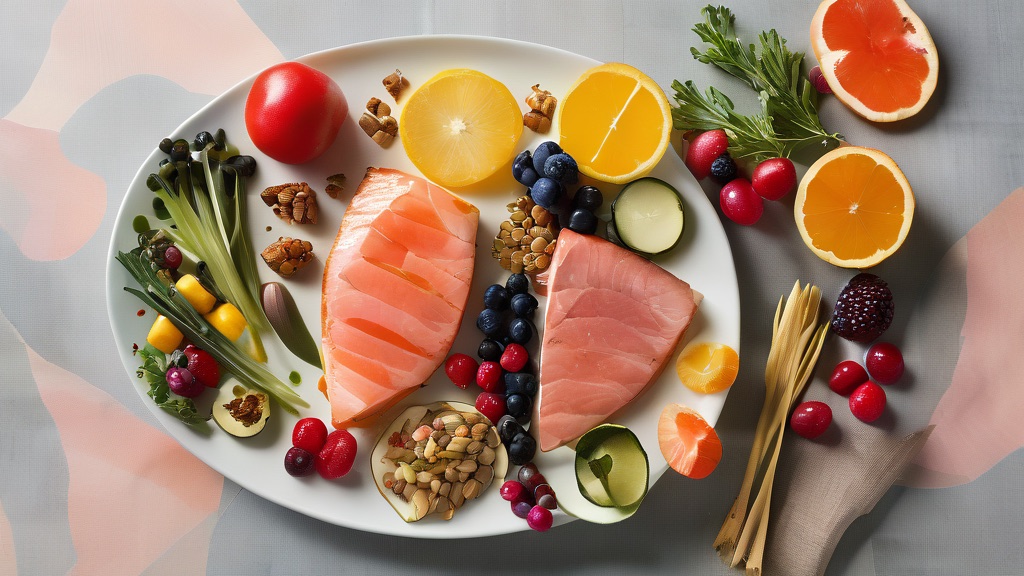
The plate the AHA describes is decidedly plant-forward. Vegetables and fruits sit at the center, and variety matters — different colors bring different fibers, vitamins, and plant compounds, so mixing them up beats eating the same two every day. Whole grains replace refined ones, keeping the bran and germ that carry fiber and nutrients.
On protein, the emphasis is on plants first — beans, lentils, chickpeas, nuts, and seeds — followed by fish and seafood, and low-fat or fat-free dairy for those who include it. When meat is eaten, leaner, less-processed cuts are preferred. For fats, the guidance is clear: swap saturated fats for unsaturated ones, using liquid non-tropical plant oils such as olive, canola, and sunflower oil in place of butter, lard, and tropical oils like coconut and palm. This “replace, don’t just remove” framing matters — the health benefit comes from what you put in place of saturated fat, not simply from cutting fat.
What to limit — ultra-processed foods, sodium, and added sugar
The clearest change of emphasis since 2021 is a stronger spotlight on ultra-processed foods. The AHA now explicitly urges choosing minimally processed foods instead, noting that current research links ultra-processed foods — think packaged snacks, sugary cereals, processed meats, and many ready-to-eat meals — to poorer health outcomes. Conveniently, cutting back on ultra-processed products often lowers your sodium and added-sugar intake at the same time, because those are exactly the products that tend to be loaded with both.
Sodium gets its own feature. The AHA has long recommended no more than 2,300 mg of sodium per day, with an ideal target of around 1,500 mg for most adults — yet the average American takes in well over 3,000 mg daily, most of it hidden in packaged and restaurant food rather than the salt shaker. That is why “prepare foods with minimal or no salt” and reading labels on packaged foods matter more than not adding table salt. Our reporting on how much salt is hiding in takeaway food shows just how quickly a single meal out can blow past a full day’s budget, and research on food preservatives and blood pressure underlines why the source of that sodium is worth paying attention to.
Added sugars round out the “limit” list, with sugar-sweetened beverages singled out as the biggest offender. The AHA’s long-standing guidance is to keep added sugar to roughly 100 calories (about 6 teaspoons) a day for most women and 150 calories (about 9 teaspoons) for most men — limits the vast majority of Americans exceed. Finally, the statement keeps a cautious line on alcohol: if you do not drink, there is no heart reason to start; if you do, keep it limited.
How it maps to Mediterranean and DASH eating
Although the 2026 statement does not name specific commercial diets, the pattern it describes lines up almost point-for-point with two of the most rigorously studied ways of eating: the Mediterranean diet and the DASH (Dietary Approaches to Stop Hypertension) pattern. Both are plant-forward, rich in vegetables, fruits, whole grains, legumes, nuts, and fish, and both lean on olive oil and other unsaturated fats while going easy on red and processed meat, sweets, and salt.
That overlap is not a coincidence — it reflects the same underlying evidence. Mediterranean-style eating has repeatedly been associated with lower cardiovascular risk, and the DASH pattern was specifically designed and tested to lower blood pressure. If you already follow a Mediterranean or DASH approach, you are, in effect, already following the 2026 AHA guidance. These patterns also carry benefits beyond the heart; our look at the Mediterranean diet and diabetes risk shows how the same plate that protects your arteries can help steady blood sugar too.
Making it practical and affordable
A recurring worry about “healthy eating” is that it is expensive or fussy. The 2026 guidance pushes back on that directly by stressing that a heart-healthy pattern is adaptable to cultural and personal food preferences and can be built from ordinary ingredients. Some of the cheapest foods in the store — dried or canned beans and lentils, oats, brown rice, frozen vegetables and fruit, canned fish, and eggs — are also among the most heart-friendly.
Practical starting points that require no special products: swap sugary drinks for water or unsweetened options; make half your plate vegetables and fruit; cook one or two plant-protein dinners a week using beans or lentils; choose the whole-grain version of bread, rice, and pasta; and cook more at home so you control the salt and skip the ultra-processed shortcut. Frozen and canned produce count and are often cheaper — just look for “no added salt” and “no added sugar” on the label. Because the framing is about the overall pattern, you do not have to overhaul everything at once; small swaps that stick beat a perfect plan you abandon in a week.
What it means for you
For most people, the 2026 AHA guidance is reassuring rather than alarming. If you already eat plenty of plants, choose whole grains, use olive oil, and cook at home, you are on solid ground. If your diet leans heavily on packaged convenience foods, fast food, and sugary drinks, the biggest single win is to shift toward less-processed, home-prepared meals — that one change tends to lower sodium, added sugar, and saturated fat all at once.
This is population-level guidance, not a personal prescription. Diet is one lever among several — physical activity, sleep, not smoking, and managing blood pressure, blood sugar, and cholesterol all matter too. If you have heart disease, high blood pressure, diabetes, kidney disease, or take medications, talk with your doctor or a registered dietitian before making big changes, since some people need more tailored targets. Knowing your own numbers helps here; our explainer on ApoB versus standard LDL cholesterol testing covers one metric worth discussing with your clinician.
Frequently Asked Questions
What is the best diet for heart health?
According to the 2026 AHA guidance, the best approach is not a branded diet but an overall pattern: plenty of vegetables, fruits, whole grains, legumes, nuts, fish, and liquid plant oils, with minimal ultra-processed food, added sugar, and sodium. Mediterranean and DASH eating both fit this pattern and are among the most studied. The most effective diet is the heart-healthy pattern you can sustain long term.
What does the American Heart Association recommend eating?
The AHA recommends a plant-forward plate: eat plenty and a wide variety of vegetables and fruits, choose whole grains over refined ones, get protein mostly from plants (beans, lentils, nuts) plus fish and low-fat dairy, and use liquid non-tropical plant oils instead of saturated fats. It also advises choosing minimally processed foods over ultra-processed ones.
What foods should you avoid for heart health?
The guidance says to limit — not necessarily eliminate — ultra-processed foods, sugar-sweetened beverages and other sources of added sugar, high-sodium packaged and restaurant foods, refined grains, and foods high in saturated and tropical fats such as fatty or processed meats, butter, and coconut or palm oil. Alcohol should be avoided or limited.
Is the Mediterranean diet AHA approved?
The 2026 statement does not endorse any commercial diet by name, but the eating pattern it describes closely matches the Mediterranean diet — plant-forward, rich in vegetables, whole grains, legumes, nuts, fish, and olive oil, and low in red meat, sweets, and salt. Mediterranean-style eating has strong evidence for lower cardiovascular risk, so it aligns well with AHA guidance.
How much sodium should I eat for heart health?
The AHA recommends no more than 2,300 mg of sodium per day, with an ideal target of about 1,500 mg for most adults. Most Americans consume well over 3,000 mg daily, and the majority comes from packaged and restaurant foods rather than the salt shaker — so reading labels and cooking at home matter more than skipping table salt.
Are eggs bad for your heart?
The 2026 guidance focuses on overall patterns rather than singling out individual foods like eggs. Eggs can fit within a heart-healthy pattern for many people, especially when the rest of the diet is plant-forward and low in ultra-processed food. If you have high cholesterol or heart disease, ask your doctor whether you need a more specific target.
What is the healthiest dietary pattern?
Based on the evidence the AHA cites, the healthiest patterns are plant-forward ones built on vegetables, fruits, whole grains, legumes, nuts, fish, and unsaturated plant oils, with minimal ultra-processed foods, added sugar, and sodium. The Mediterranean and DASH patterns are the best-studied real-world examples of this approach.
What changed in the 2026 AHA guidance compared with 2021?
The core message — patterns over single nutrients, plant-forward eating, replacing saturated with unsaturated fats — is reaffirmed. The clearest update is a stronger, explicit emphasis on choosing minimally processed foods over ultra-processed ones, reflecting newer research linking ultra-processed foods to worse health outcomes, alongside continued focus on limiting added sugar and sodium.
The Bottom Line
The 2026 AHA dietary guidance is less a new fad than a clear, evidence-based confirmation of what heart-healthy eating actually looks like: a plant-forward pattern rich in vegetables, fruits, whole grains, legumes, nuts, fish, and plant oils, with ultra-processed foods, added sugar, and sodium kept low. Its most useful idea is also its most freeing — aim for a good pattern over time, not a perfect plate every day. Mediterranean and DASH-style eating already embody this approach, so if you follow either, you are on track. Start with one or two swaps this week, keep them, and let the pattern do the work.
Sources
- Lichtenstein AH, Khera A, Anderson CAM, et al. 2026 Dietary Guidance to Improve Cardiovascular Health: A Scientific Statement From the American Heart Association. Circulation. 2026.
- 2026 Dietary Guidance to Improve Cardiovascular Health: A Scientific Statement From the American Heart Association — PubMed abstract.
- American Heart Association Newsroom. Following 9 key steps for a lifetime of eating well can support heart health.
- American Heart Association Professional Heart Daily. 2026 Dietary Guidance to Improve Cardiovascular Health.
- Lichtenstein AH, Appel LJ, Vadiveloo M, et al. 2021 Dietary Guidance to Improve Cardiovascular Health: A Scientific Statement From the American Heart Association. Circulation. 2021.
- American Heart Association. How Much Sodium Should I Eat Per Day?